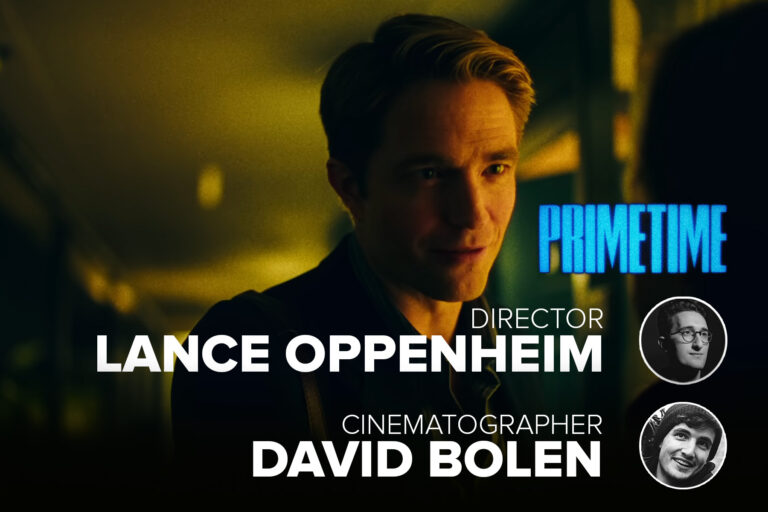
Director Xander Robin and cinematographer David Bolen both bring a vivid and surreal subjectivity across their narrative and documentary projects. A frequent collaborator with director/producer Lance Oppenheim, Bolen’s work includes Ren Faire, Some Kind of Heaven, Spermworld, Thelma, and the upcoming feature Primetime. Robin’s work includes Are We Not Cats, Chillin Island, and the Vimeo Staff Pick short film Lance Lizardi.
The pair recently collaborated on the feature documentary The Python Hunt, which premiered at South by Southwest last year. The film follows a group of eccentric hunters competing in Florida’s annual invasive python removal contest across 10 nights in the Everglades.
Xander and David sat down with Christian Hurley to discuss how they developed the film’s dreamlike visual language, maintaining a unified look across a team of five cinematographers, and capturing the chaos of the hunt itself. You can see a selection of their work below, and catch The Python Hunt on Digital VOD.
This article has been edited for clarity and length.
Can you tell me how the two of you met and how this creative partnership started?
XANDER: David and I met through Lance Oppenheim, who I’ve been friends with for a long time. A DP I normally work with, Matt Clegg, was unavailable for our first shoot in 2022, and Lance pitched it to David. He said, “we’re about to do this shoot in Florida. There’s this motel all these hunters stay at.” In reality we had no idea what this contest would even look like. Lance was just sort of manifesting what he thought it might be. All we knew was that we were going to shoot some material for the last 3 days of the 10 day Python Challenge. I was going to be there the first 7 days figuring out what was going on, and on day 5 we had to decide if we were going to pull the trigger on this.
I do credit David a lot, because that very first shoot is where the look of the film was created. We had a pitch deck and some materials, but a lot of it came instinctually out of finding the look there.
DAVID: I find the process of working with someone for the first time really fascinating. Feeling each other out and being like, “how far can I push with this person?” My favorite filmmakers are the ones who aren’t freaked out when you get crazy with it, and with Xander you could really push.
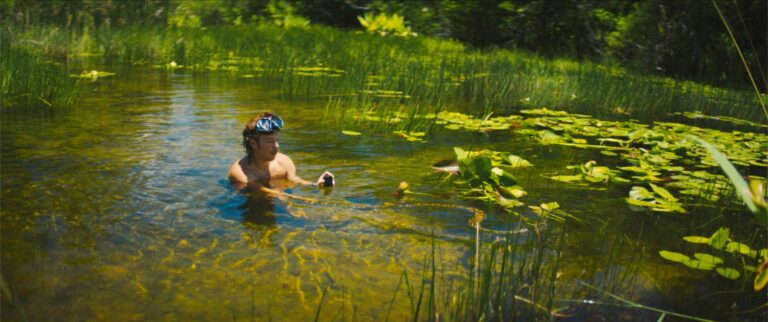
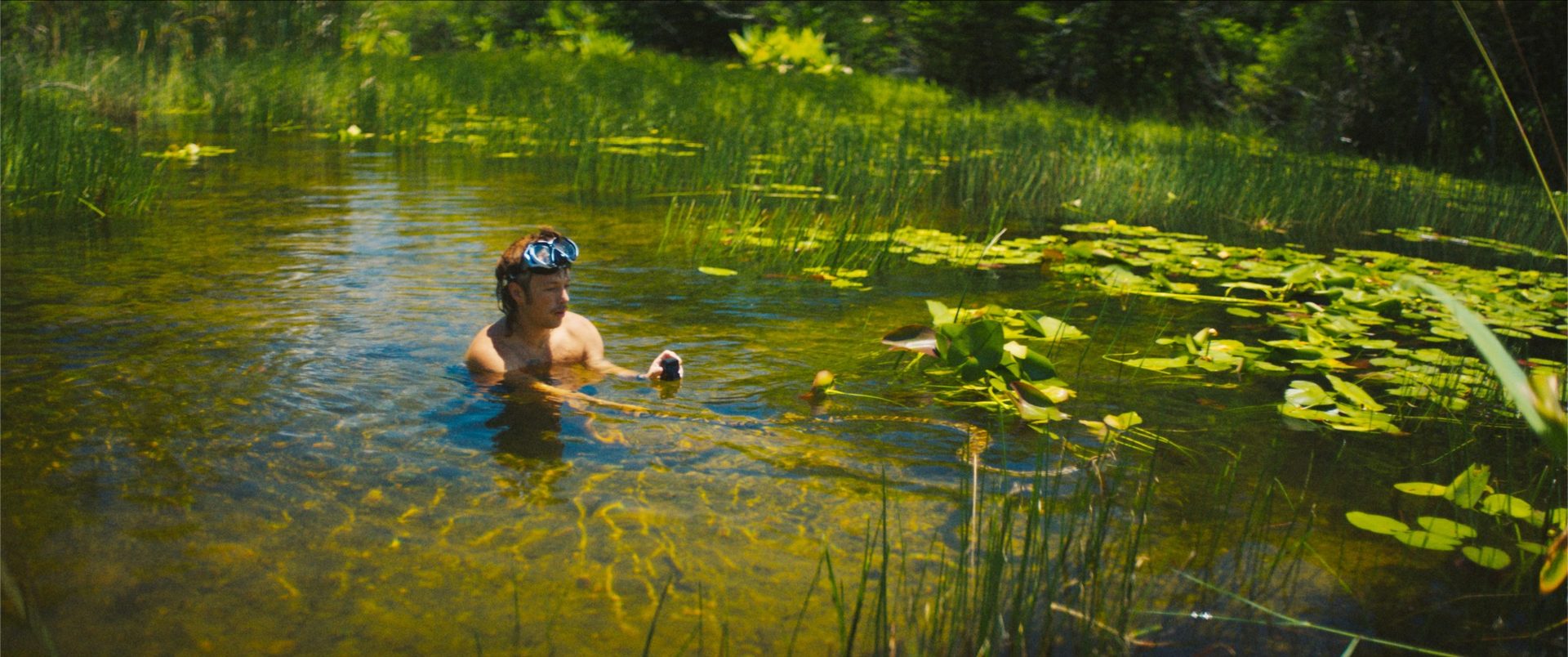
I think a lot of people have this objective to make documentaries feel like reality, and I think I’m more interested in making documentaries feel like dreams, and going into a subjective realm with it.
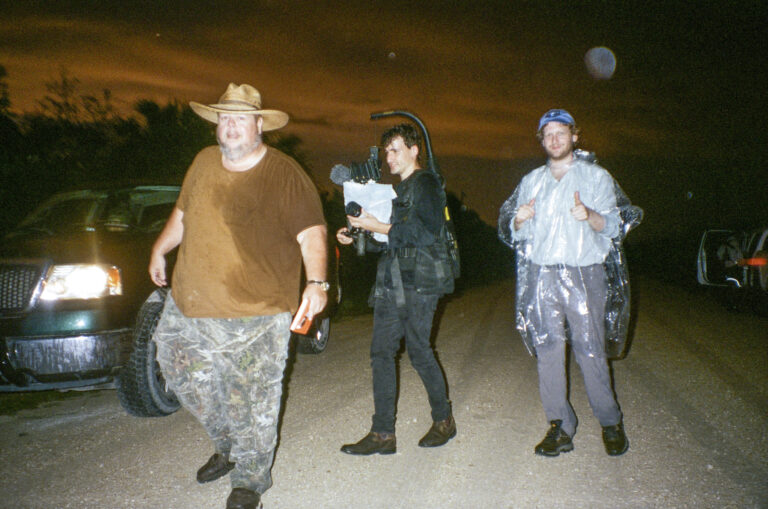
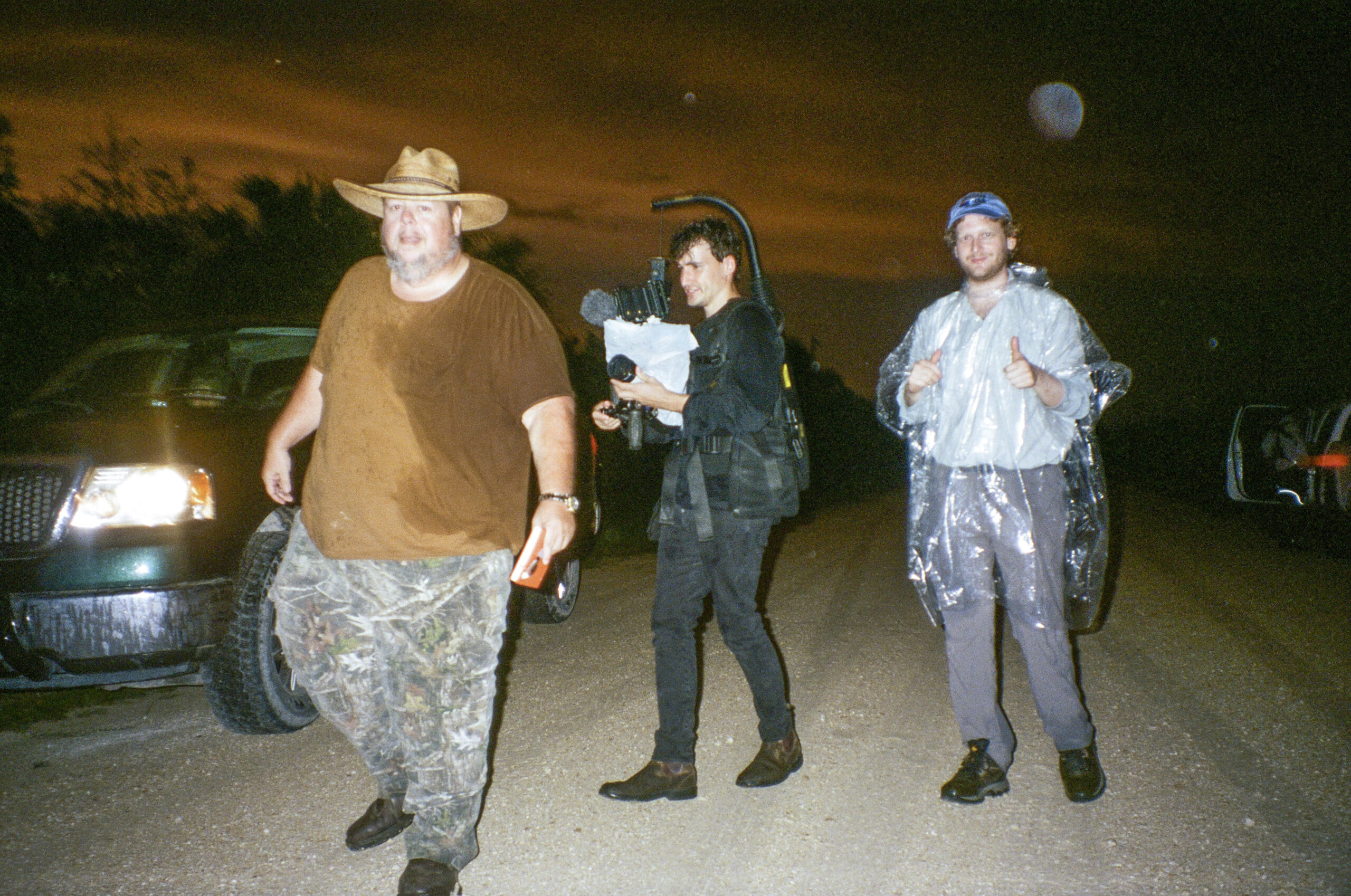
XANDER: It’s funny you mentioned dreams. Luckily, I feel like we were in a naturally dreamy universe. When we were talking about what we wanted this film to look like before I even stepped foot out there, we were talking about using Steadicams and thermals. Then, once I spent those first handful of days out there shooting by myself, I realized we needed to have the ability to run out of the car at any minute. So we needed it to be as stripped down as possible.
DAVID: Every time a python was caught, it was at the most unexpected moment. You’d be alert for, like, 6 hours just waiting, and nothing would happen, and then you kind of mellow out and get tired. Then at 3 AM, when you’re at your sleepiest, someone’s screaming, and you grab the camera and run out, and it’s the most adrenaline you’ve ever felt in your life. You had to be ready at any moment, because if you don’t start recording immediately, you’ve missed the catch.
Xander, could you walk us through the inspiration for the Florida look you were going for?
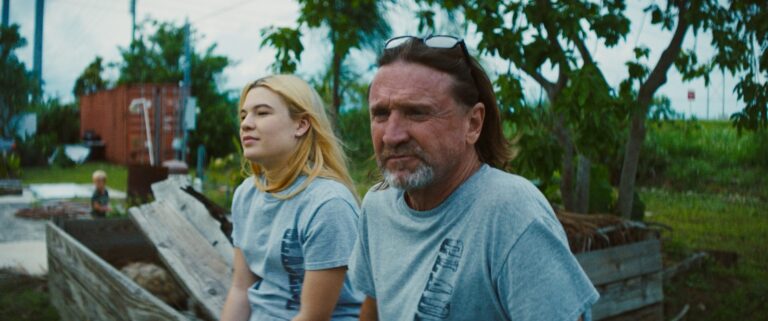
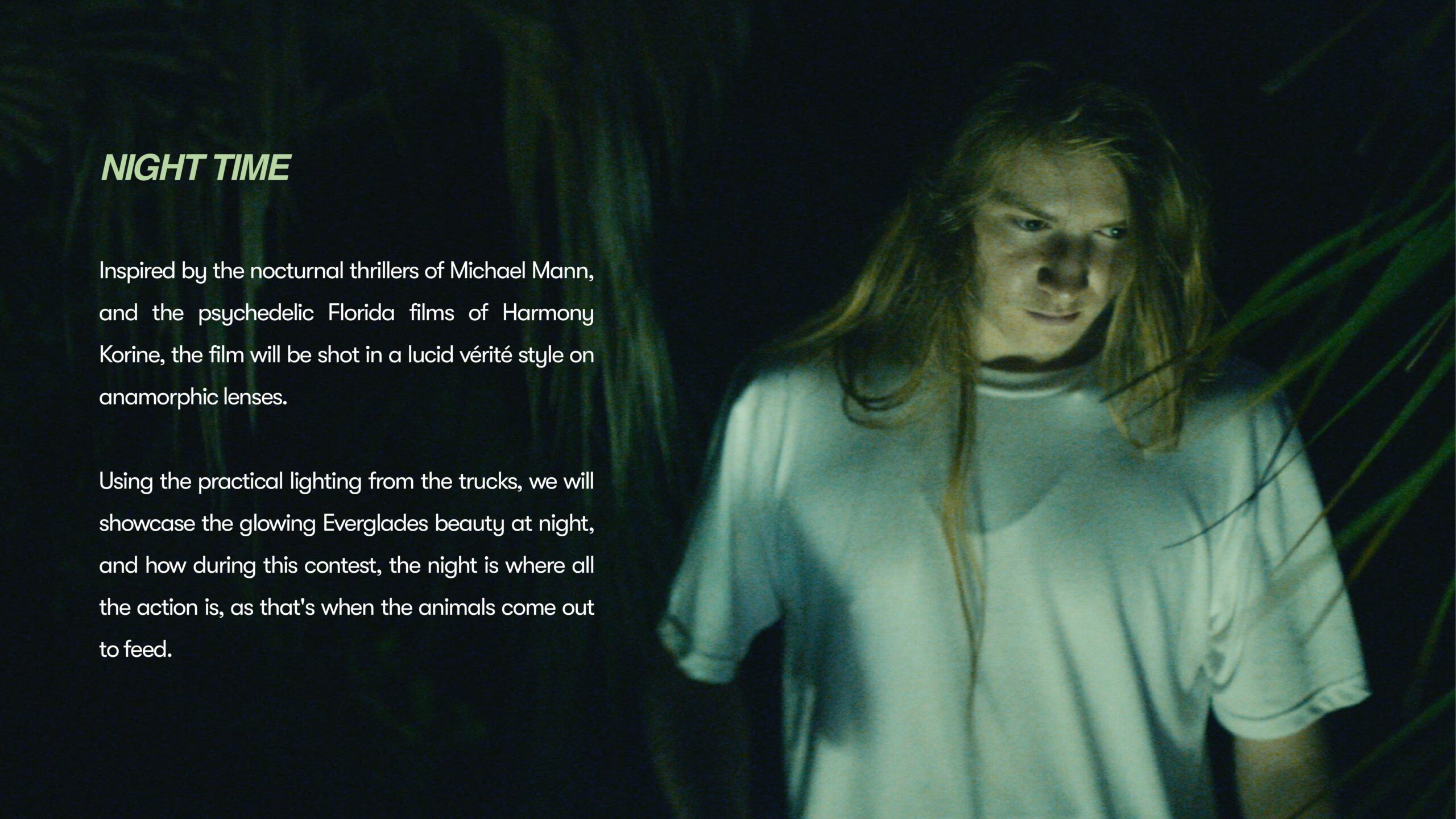
XANDER: I love Miami Vice and Michael Mann‘s work. That was the first thing I was thinking about, because I had to figure out how we could push into the night and romanticize and embrace it as much as possible. Michael Mann avoids earth tones and psychedelic colors, but it has that romantic feeling I wanted. I also love Harmony Korine’s work, like Spring Breakers. Embracing color and the kind of party atmosphere that was naturally there with the people we were gravitating to.
David, you’ve worked in both documentary and narrative, which I’m sure require different approaches in prep. What for you is the most useful conversation to have with a director when approaching a documentary?
DAVID: Well, I think a lot of directors and DPs go into documentaries without actually having any sense of a look. There’s this feeling in documentary sometimes, where it’s like, “just grab the FX6 and a little zoom lens and cover the thing.”
I think you need to talk to your director and really try to understand what the approach is. Then, as a DP, it’s up to you to look at the references of the past and find what you really like and dislike together, and figure out how you can push past these references and do something that’s unique to you. That’s why, when we shot the first couple days, it was so fun exploring together, and finding what we were really into.
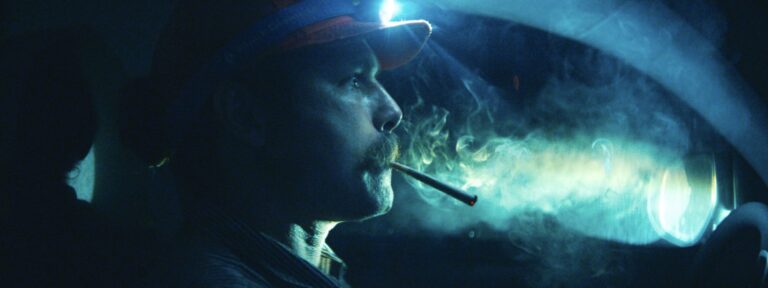
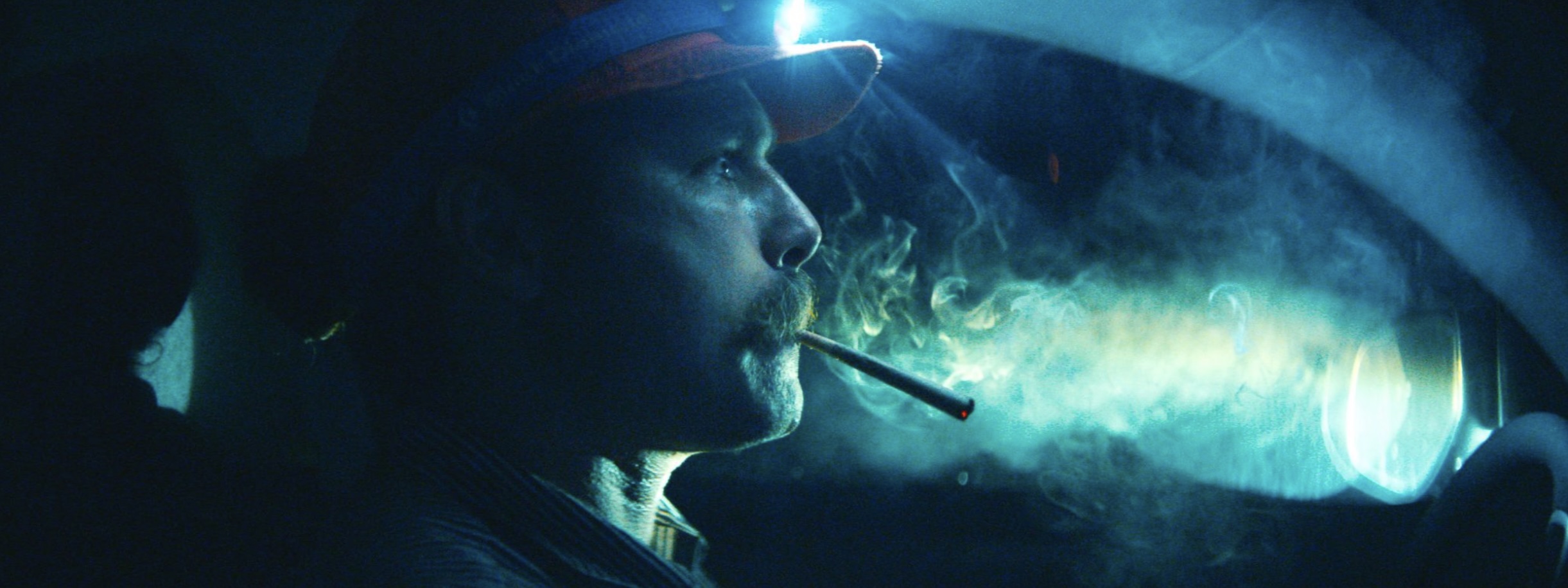
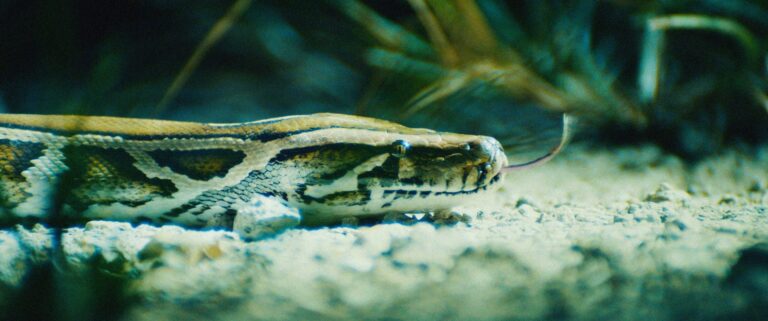
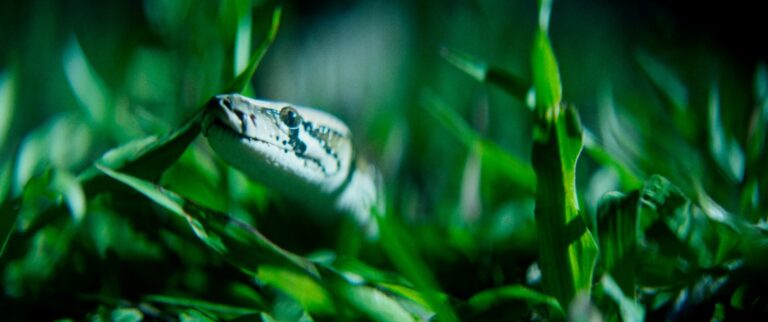
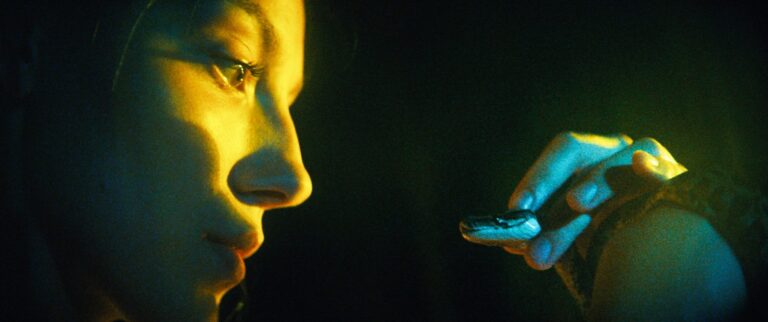
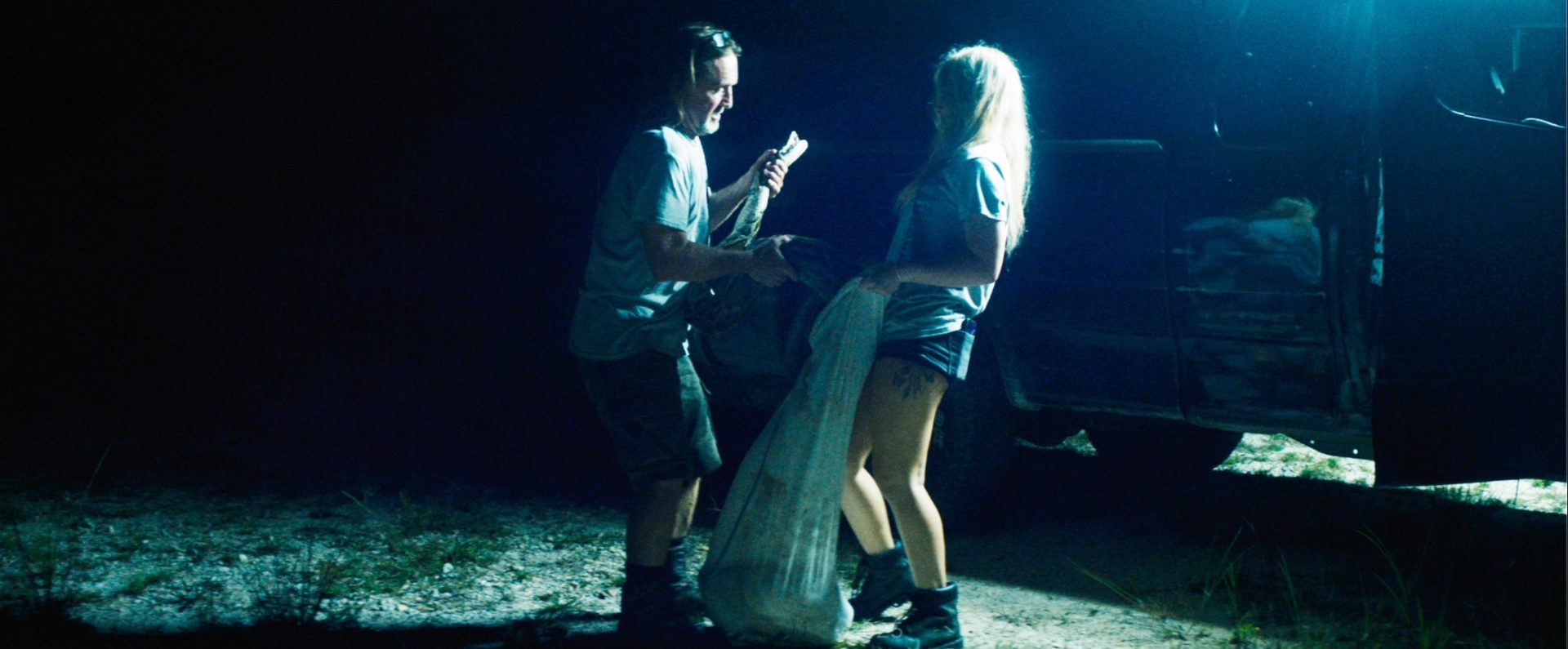
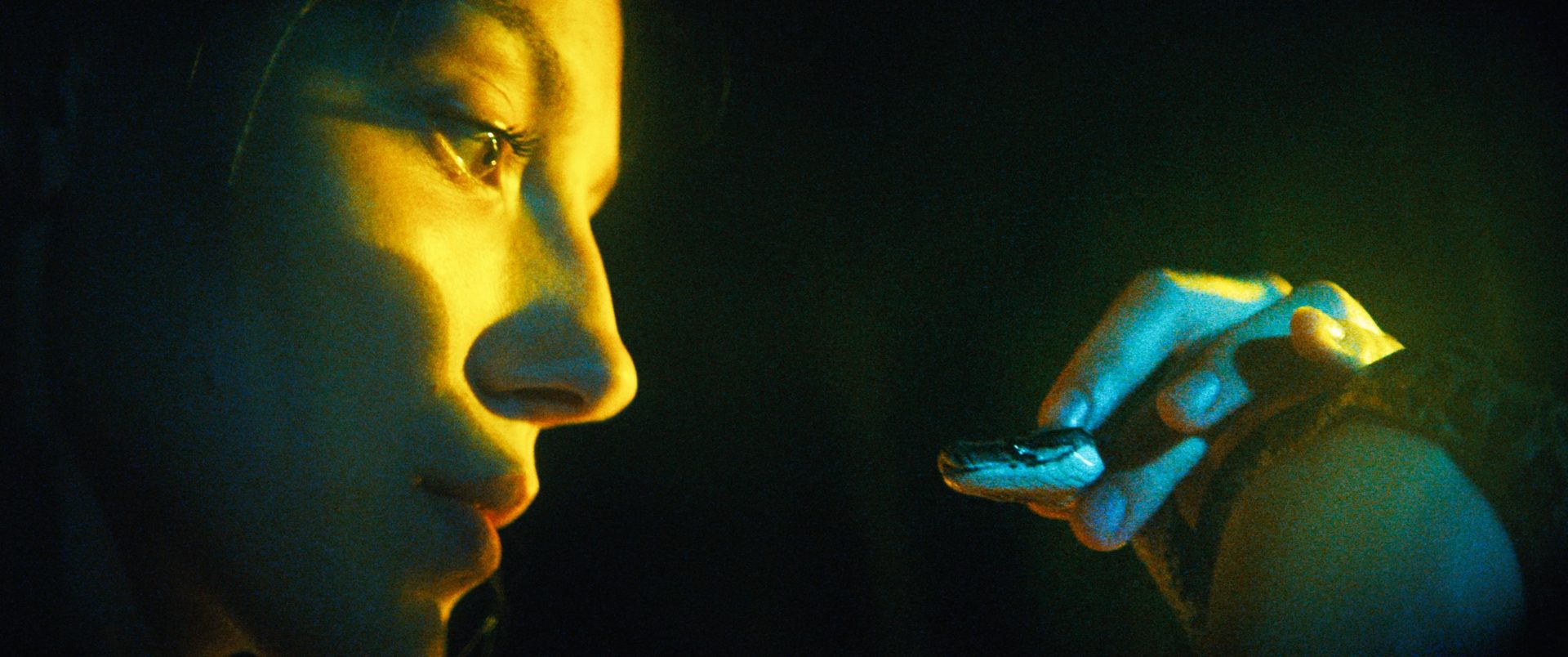
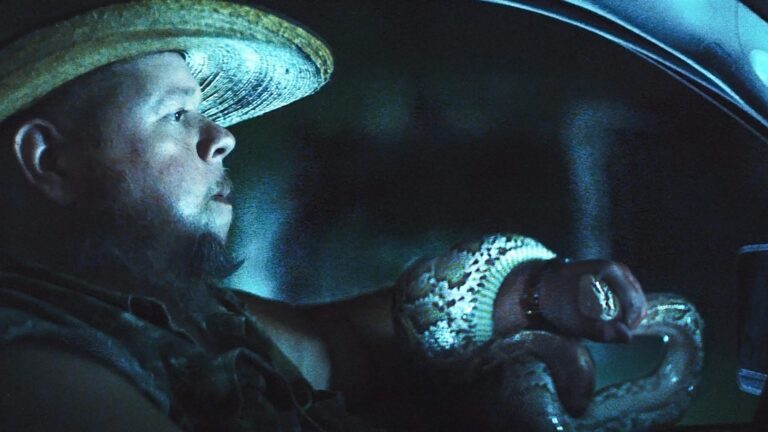
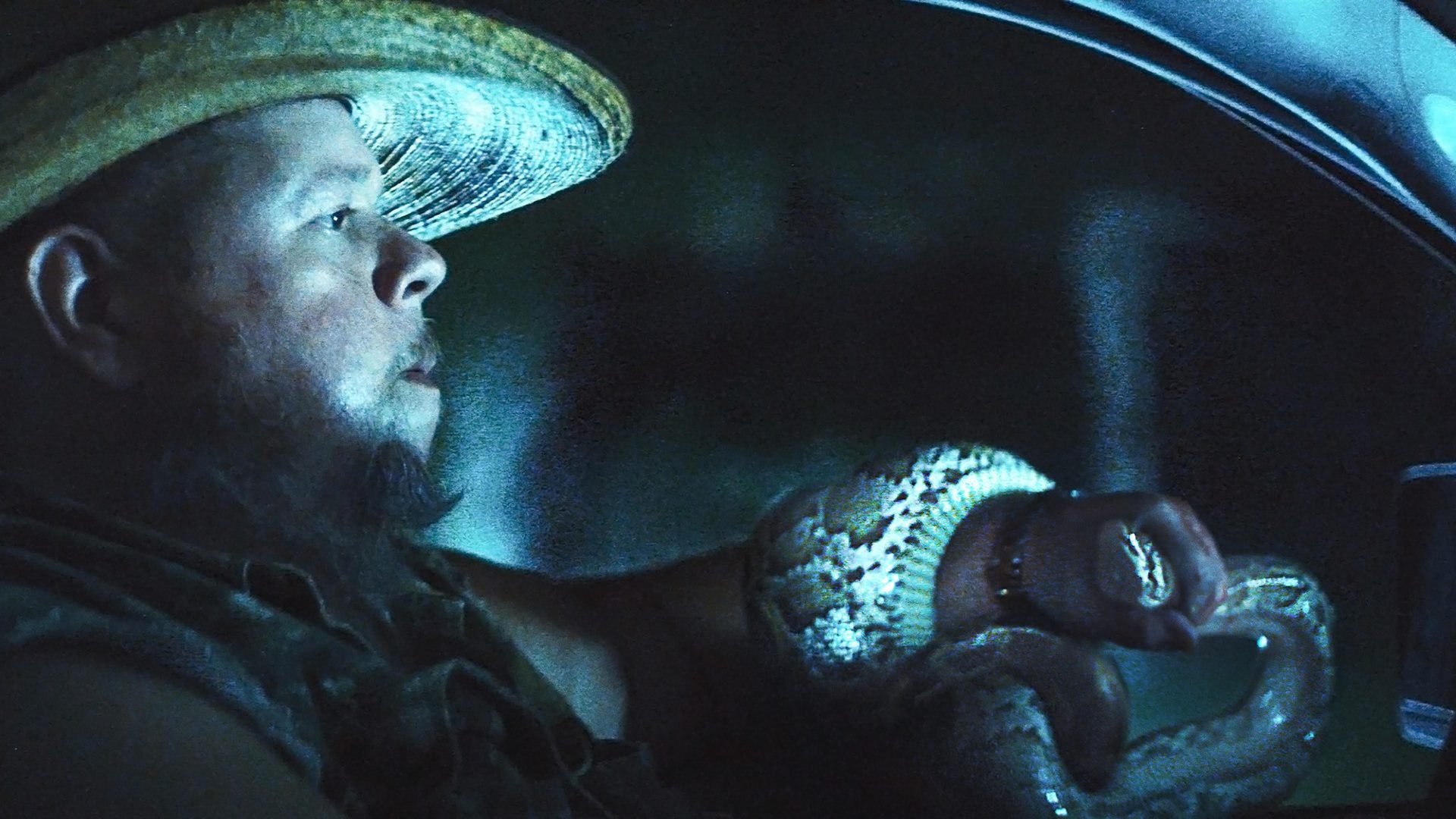
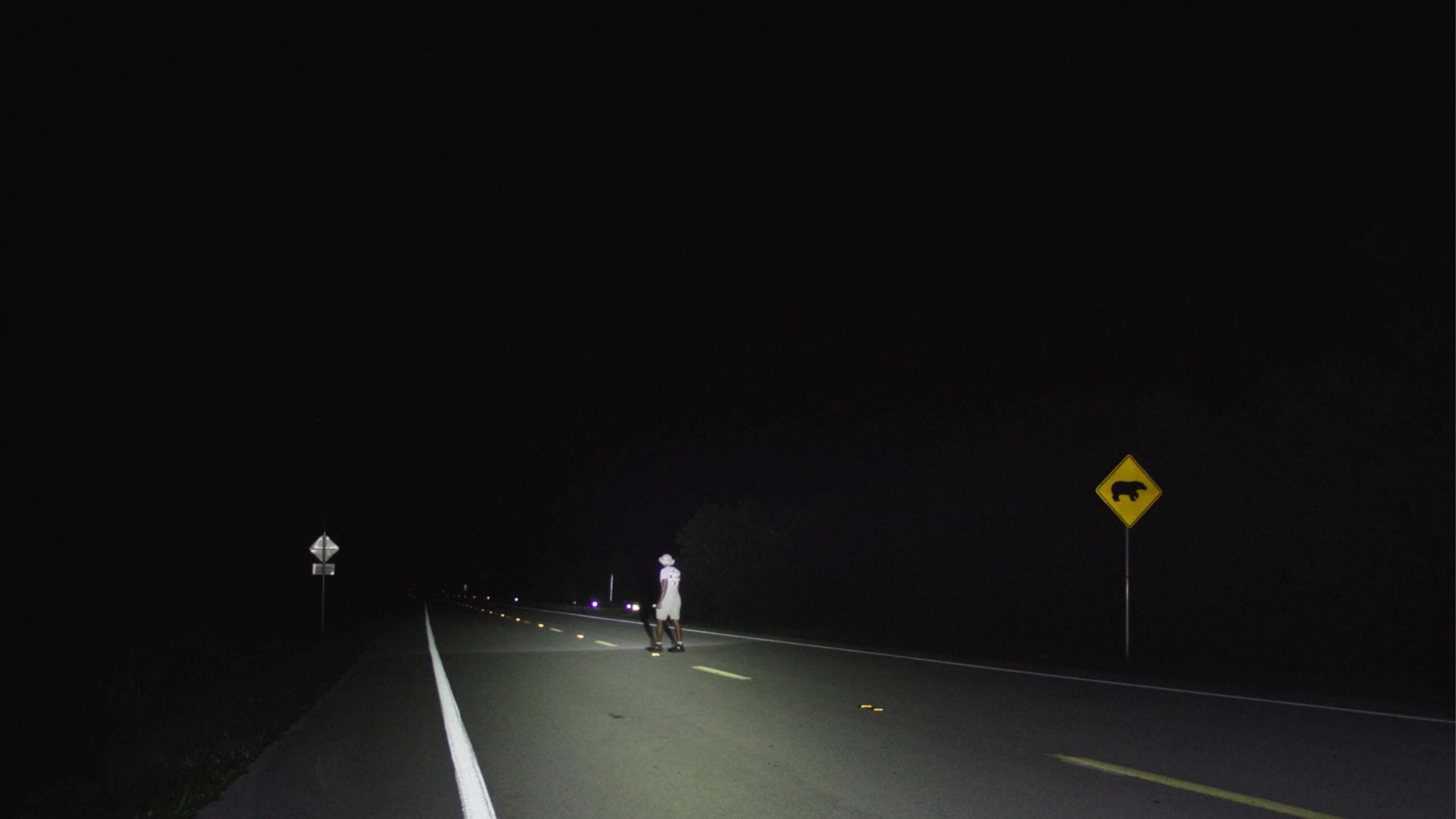
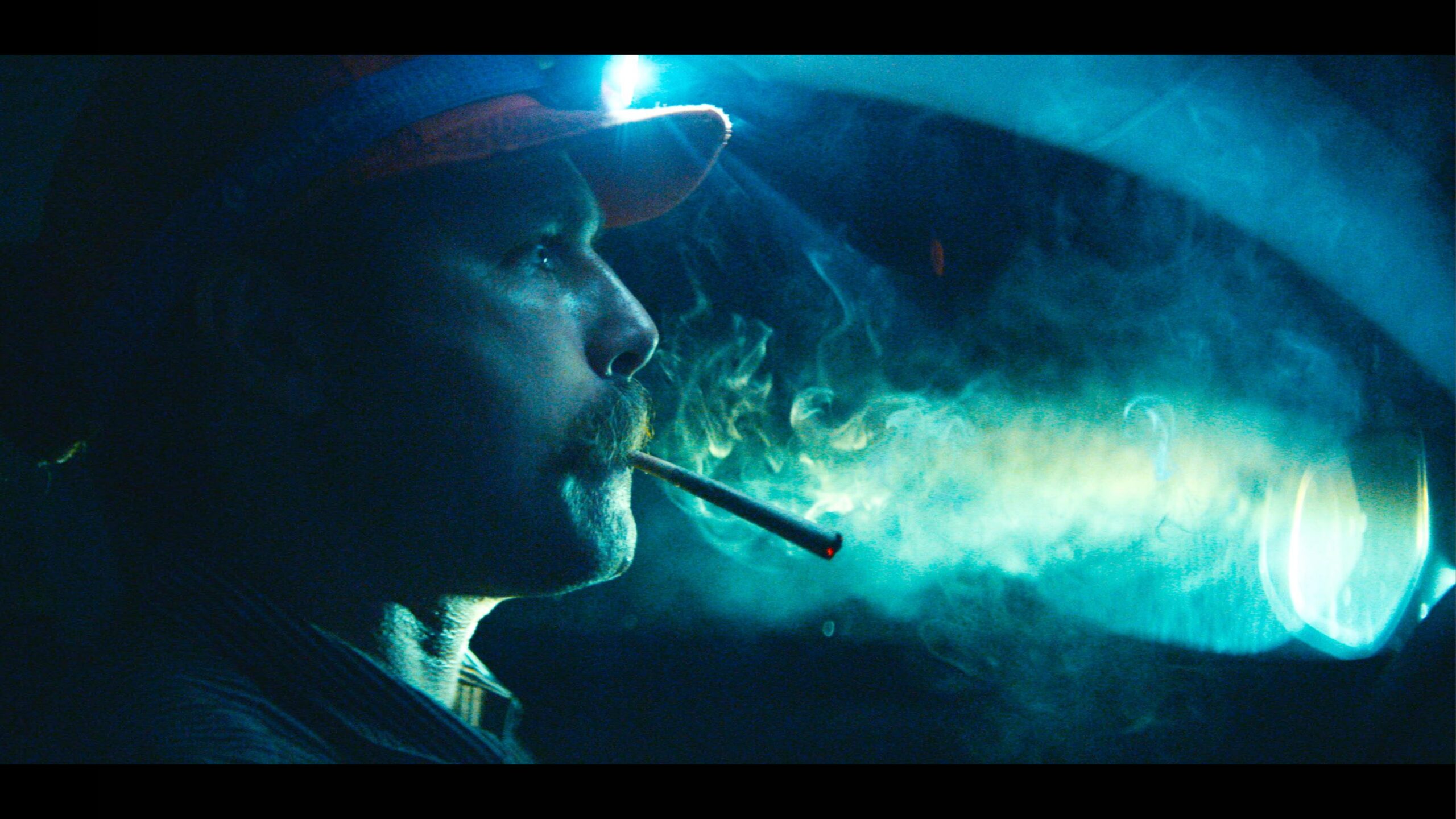
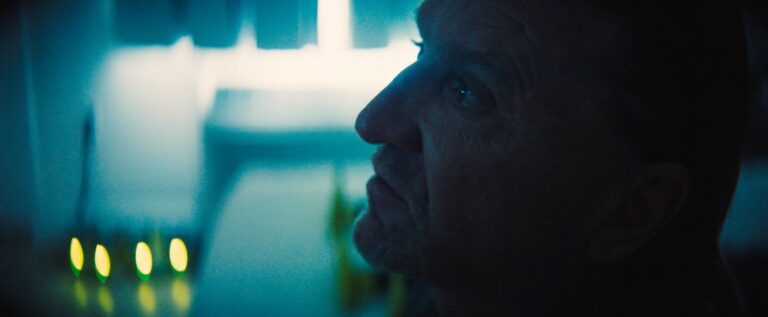
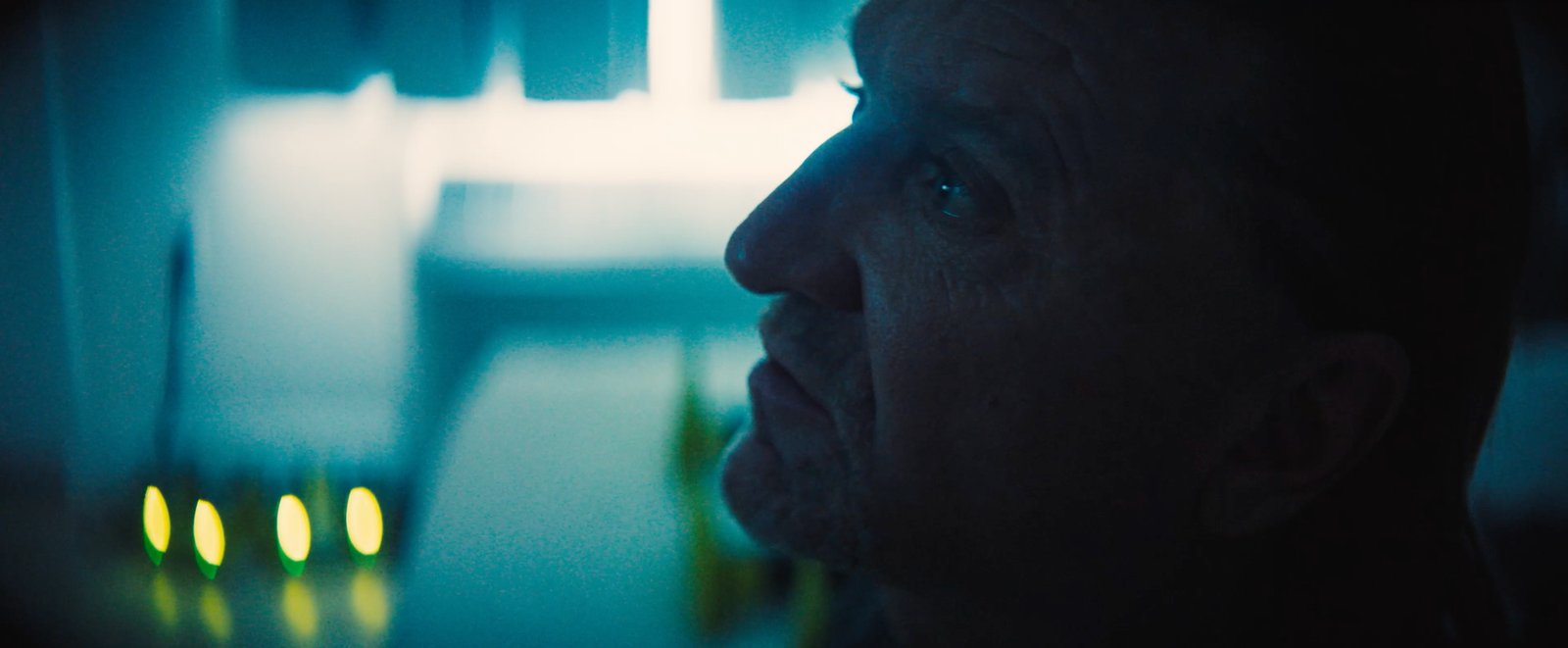
I remember when we shot this image of him smoking. It was 3 AM, we were so tired, we hadn’t caught a snake yet, and then I caught this image, and I was like, “Oh my god. This is what the film should be.” So this was kind of a guiding light when the other DPs came on. This is kind of the nuclear energy that we want, where the image almost feels radioactive.
So much of this takes place at night, and l imagine you needed to be nimble. Walk me through the kit that you were working with. What was your camera? What were your lenses? How did you capture the hunt?
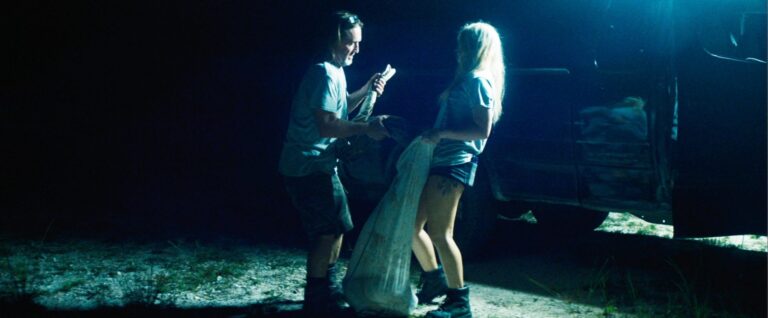
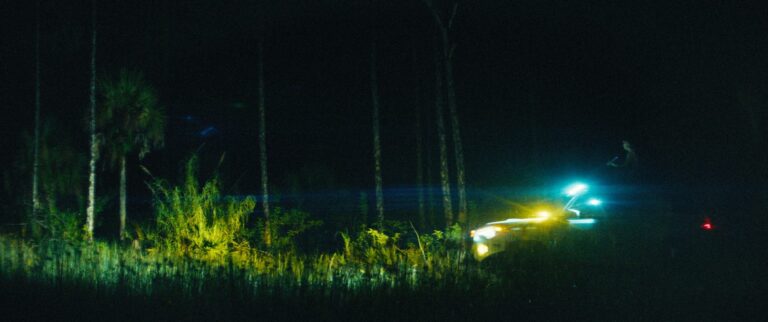
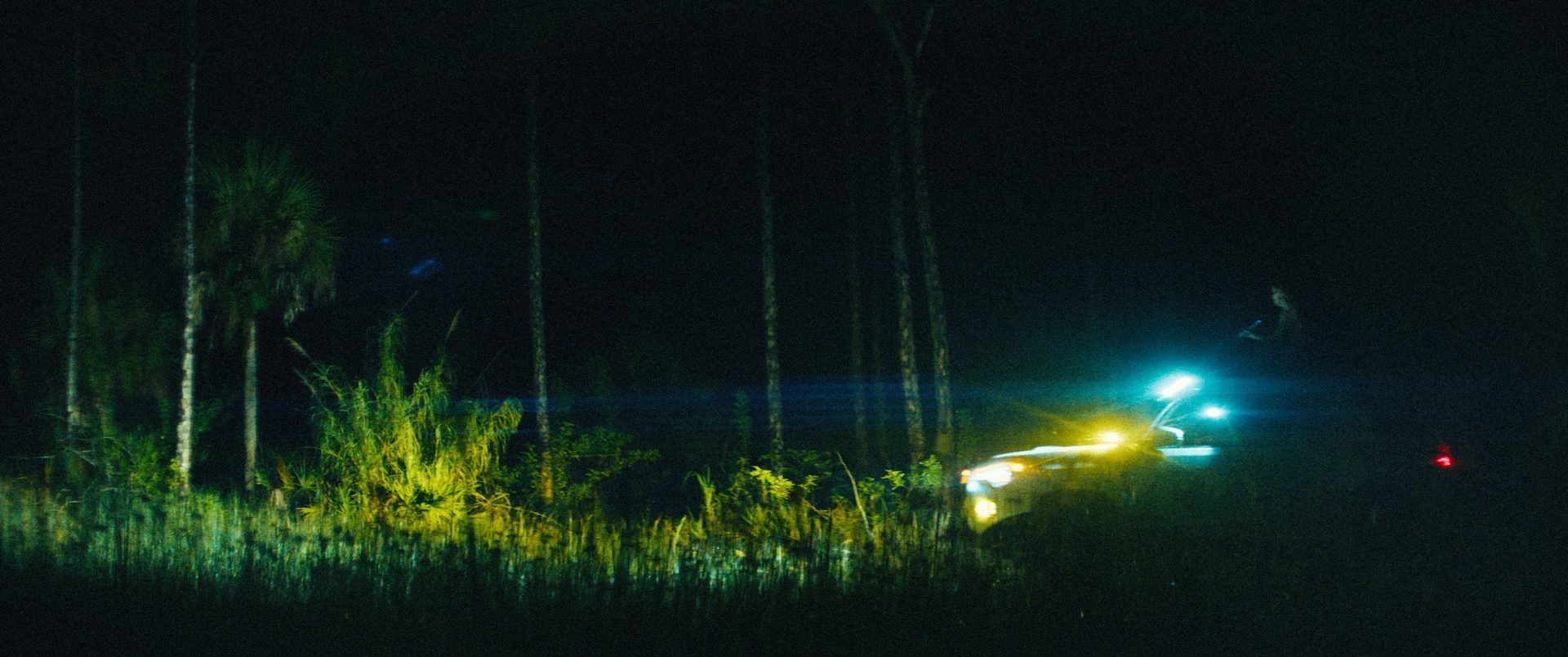
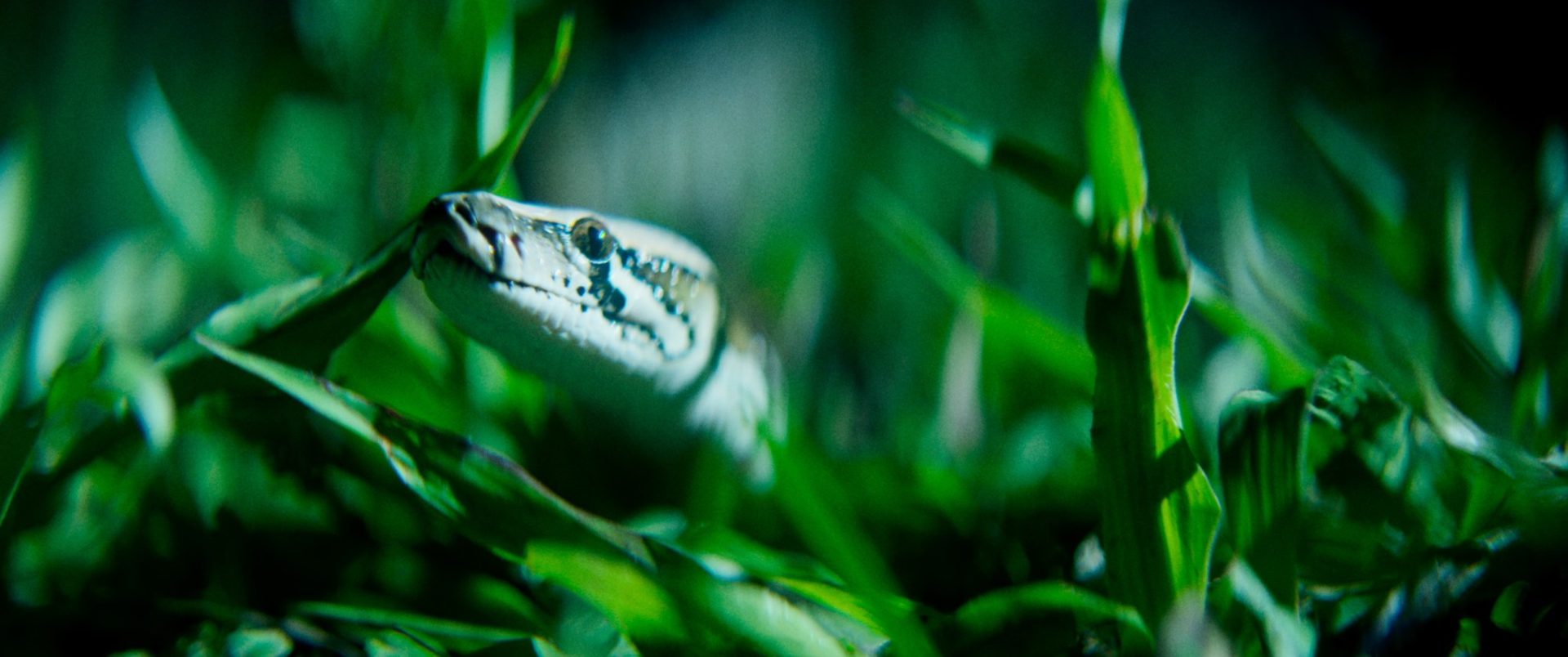
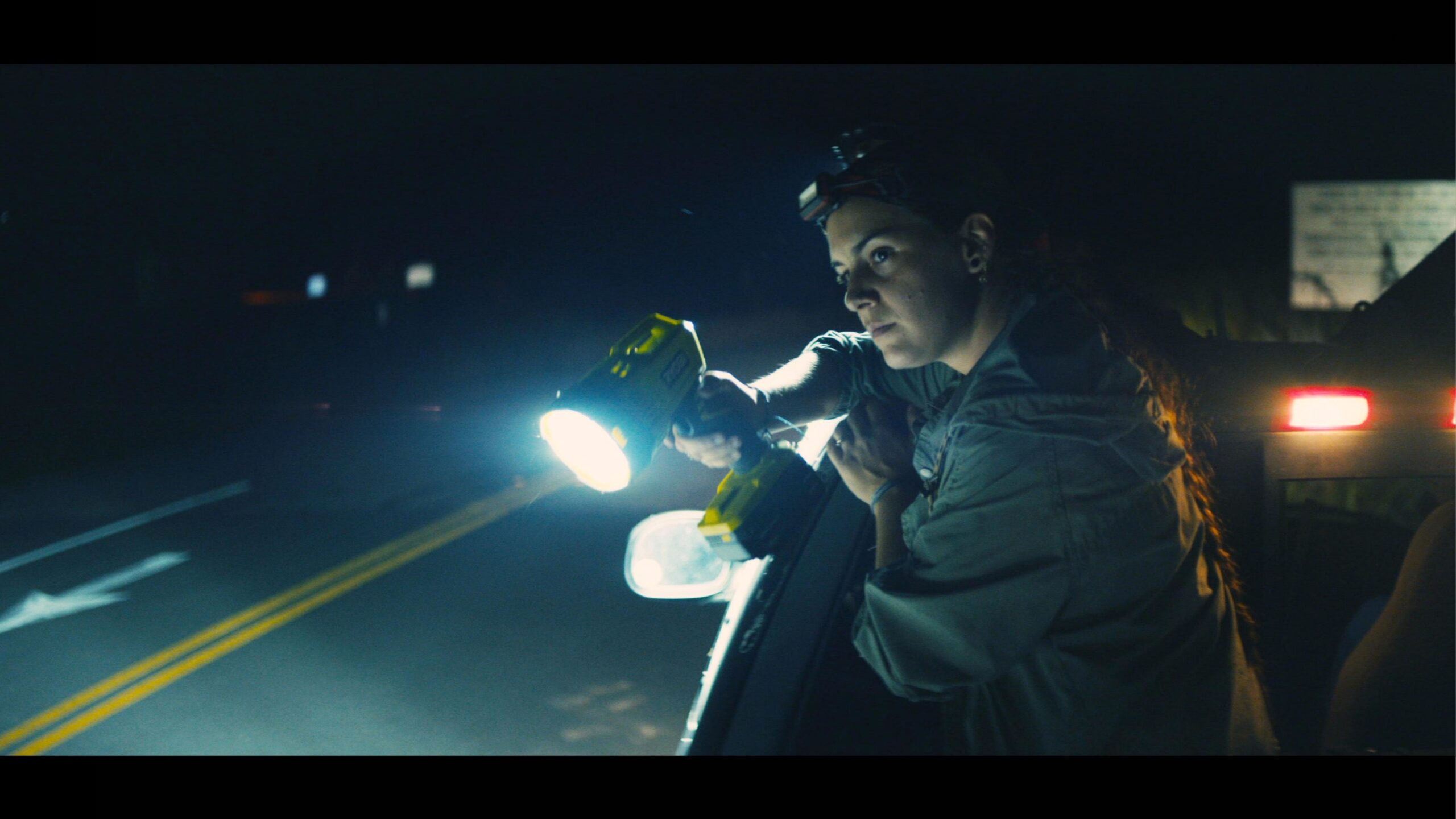
DAVID: I mean, Florida is my favorite place to shoot, and it probably has been for the past 10 years. I love all of Harmony Korine‘s work, and the way he shoots Florida in anamorphic. There’s something about the texture of the place, the way the bokeh looks in the trees, and the widescreen aspect of it all. So anamorphic was an obvious choice for me. Since these hunts primarily happen at night, I was also really attracted to the idea of everything being lit with flashlights. I knew those anamorphic flares and that texture would be really fascinating.
I pitched Xander on Kowa anamorphics, which are really funky, strange vintage lenses, but they’re also very small, which is unique for anamorphic. Anamorphic lenses are often massive, which is bad for documentary work, but Kowas are tiny, so they’re easy to run with when shooting handheld.
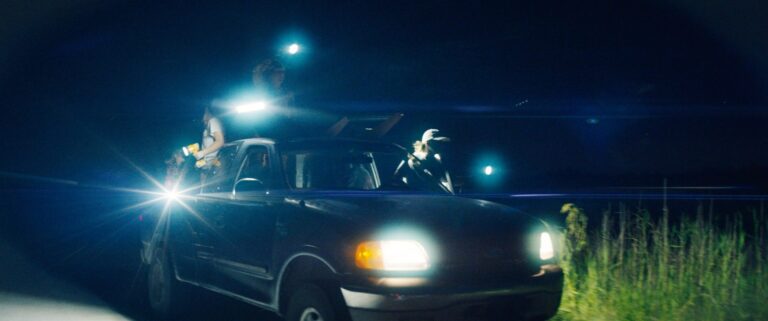
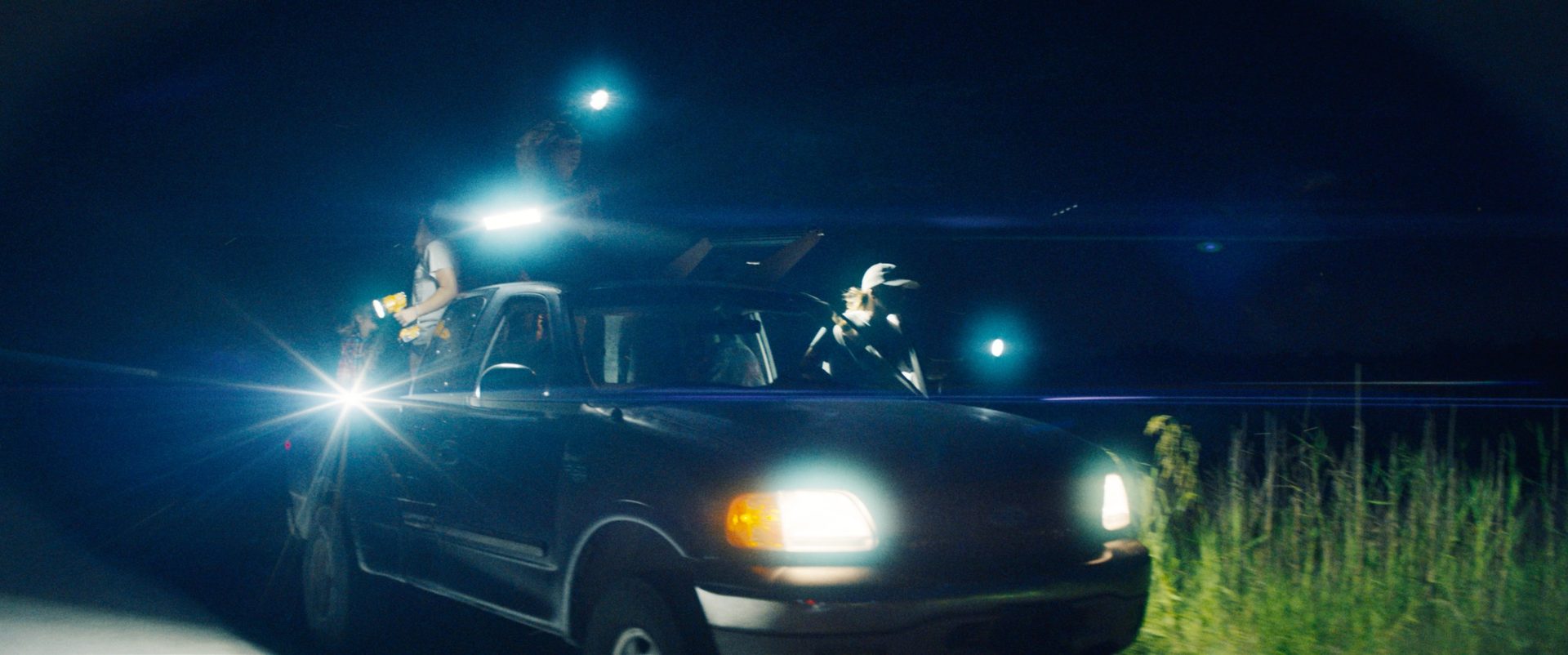
XANDER: There’s something sort of limiting about the prime lenses, but also having a fixed focal length made sense with how 360 we wanted everything to be during these hunts.
DAVID: The number one thing with using primes is it gives you that immersion. You can’t be at a distance. Primarily, we shot on a 50 millimeter Kowa lens. So you have to be super close with the camera if you wanna be in the action.
Did it take time for your subjects to get comfortable with you being that close to them? How open were they to being filmed?
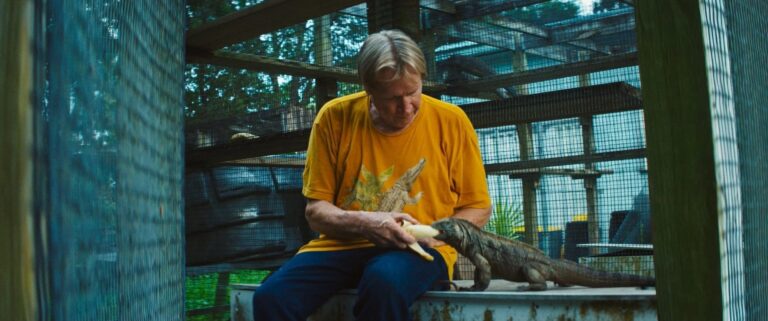
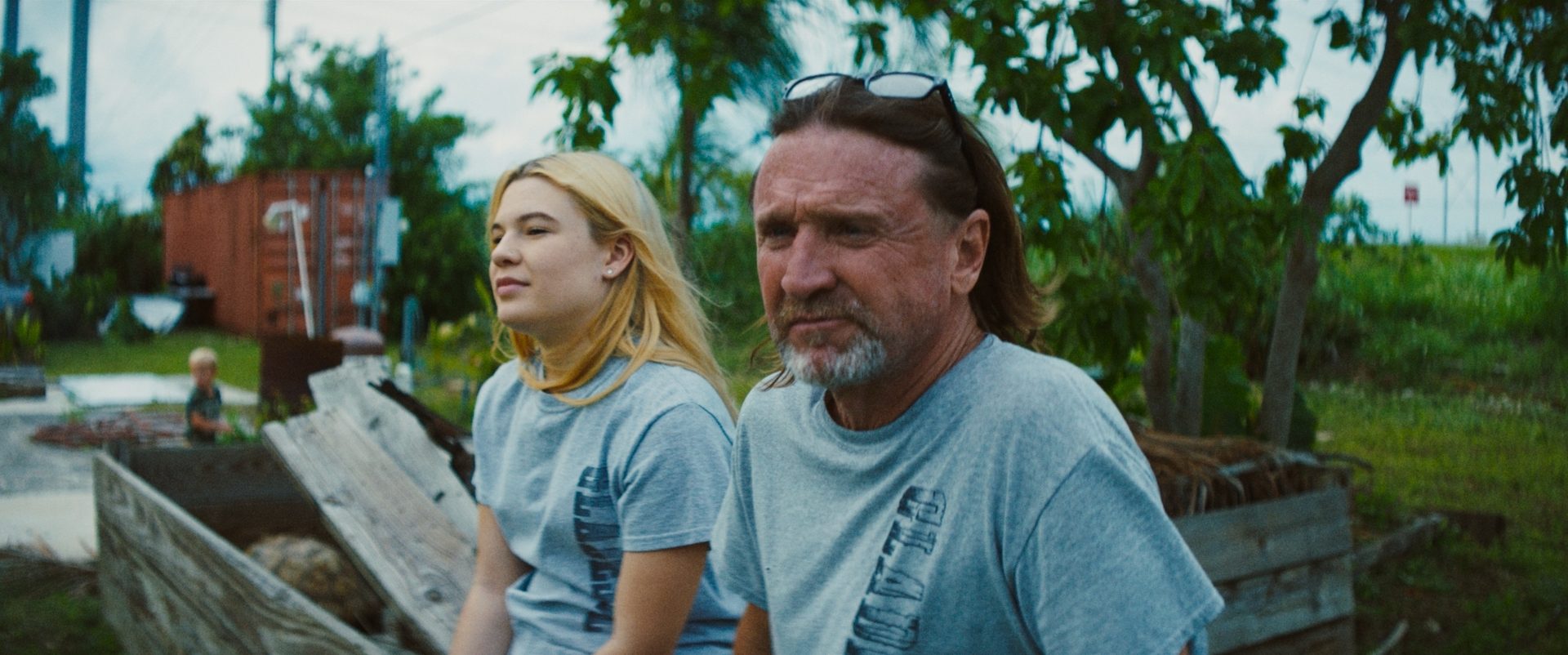
XANDER: What was cool about this project is that we had 3 crews. Each crew is normally 4 people: director, producer, cinematographer, and sound, and then a few in-between support that sort of made it all work. But it felt like we were a little indie film crew out in Everglade City. The people we selected were all just fun, young folks, and I think a lot of the subjects involved were very comfortable around us by the end. David and I had also met a handful of the subjects we ended up filming with at the Python challenge the year before, so they already knew us.
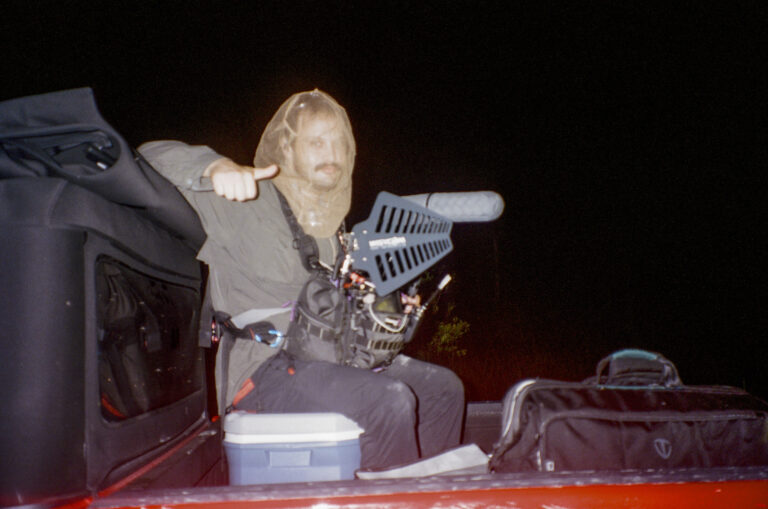
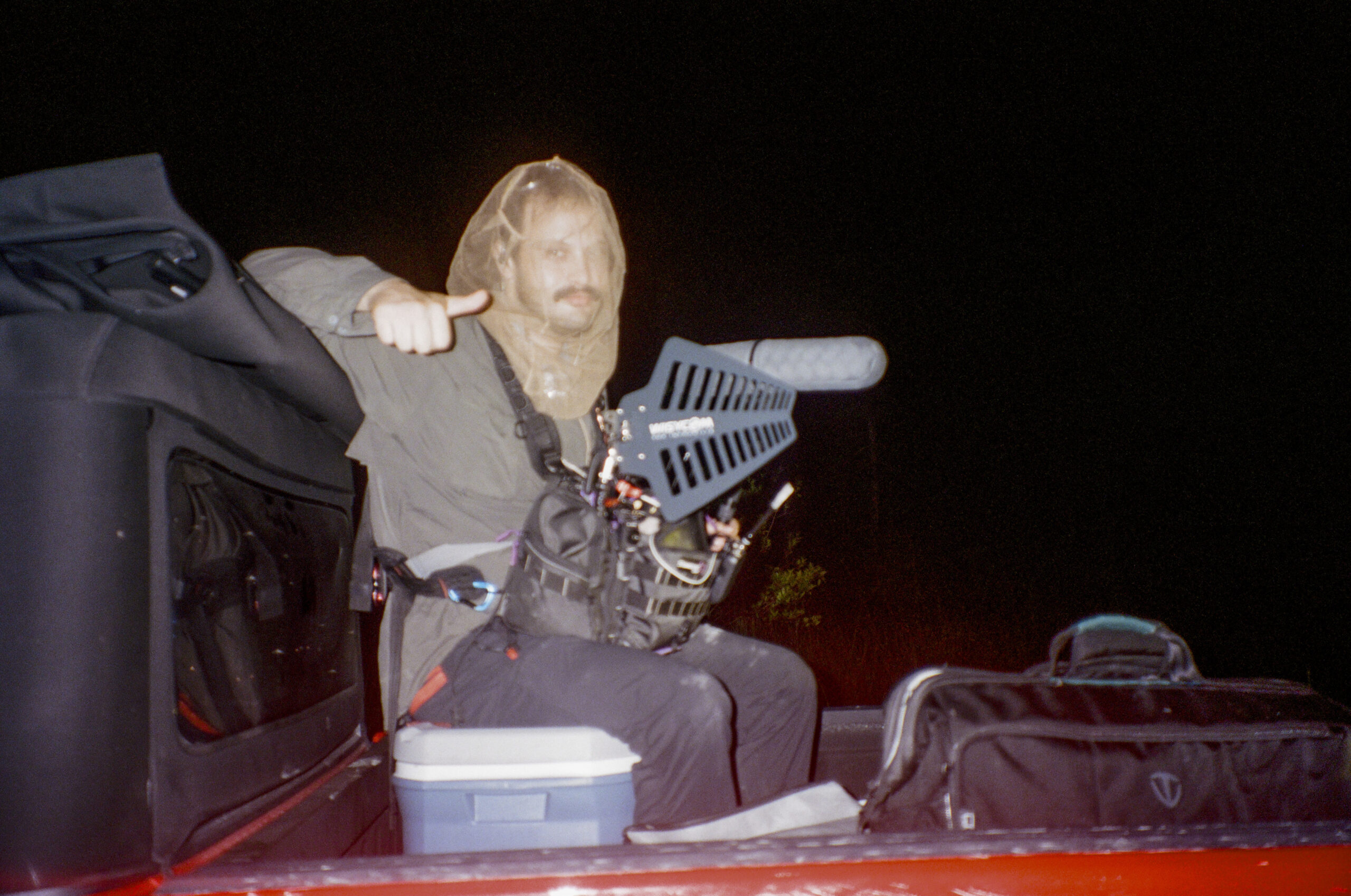
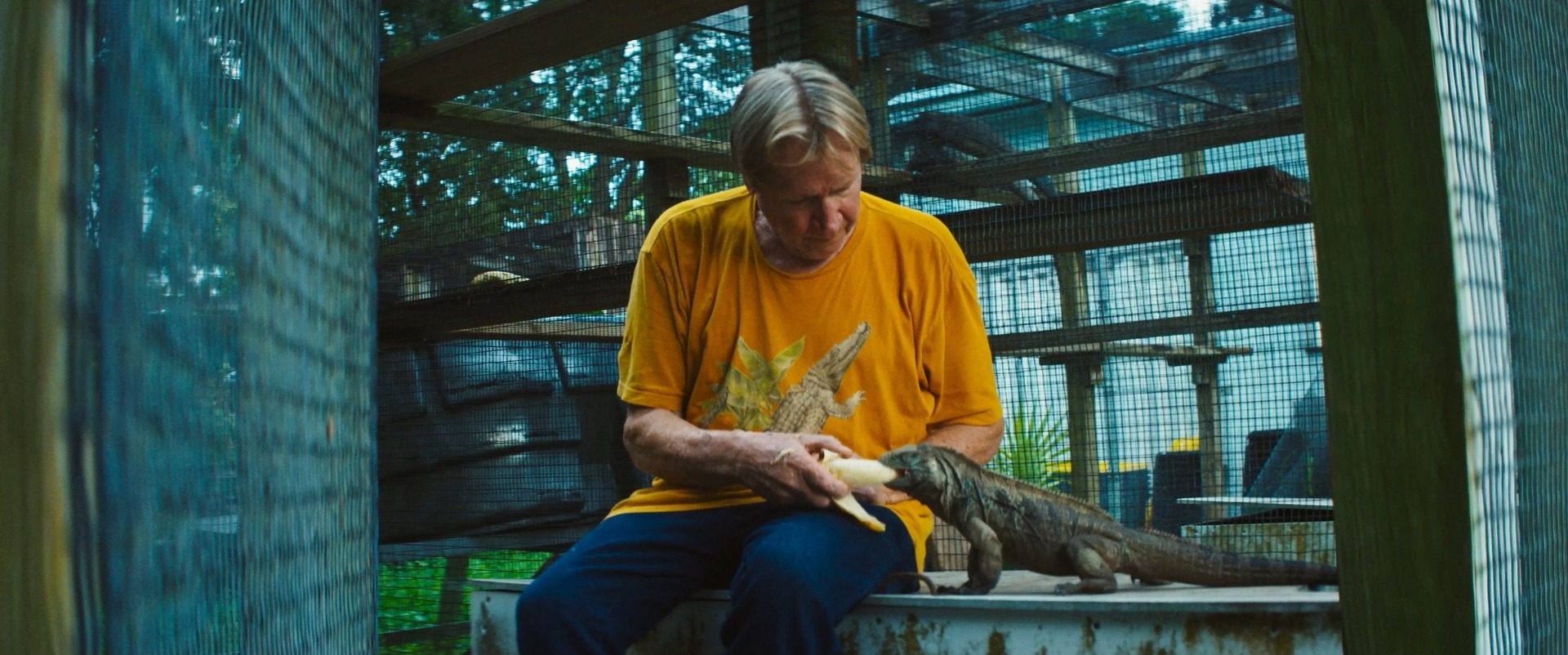
DAVID: One of the advantages of shooting in Florida that I find, more than anywhere in the world, is the people there are down to play. So why not take advantage of that and just go for it? I think documentary filmmakers are always a little too worried about being unobtrusive. We do have to make sure we’re not in their way, but after two hours they’re used to it.
XANDER: I mean, pretty much everyone involved in the Python Challenge is interested in this type of stuff. They’re all watching Animal Planet, or might have filmed some YouTube show. So they all know what filming looks like. Even if it’s just that, when you catch a snake, you hold it up to the camera and you talk about it.
Also, similar to making a scripted film, we not only casted people we thought were interesting, but also people that wanted to be in a film.
What personalities were you looking for when auditioning?
DAVID: I mean, I’m more interested in the people who are going through something personal, than these people who are just out to win. There isn’t much conflict in the story for the winners. They’re catching pythons every night. I found it much more interesting to stay with the people who are going through the experience of, ”we’ve gone 7 nights and we haven’t caught anything.”
XANDER: We didn’t have access to any central database of who was in the contest. The fact that we even filmed with the winners at all was sort of a miracle, even if it was just a little bit of the footage.
Let’s talk more about having multiple teams filming different contestants each night. In other interviews you’ve spoken about a dogma of shooting rules that you had to stick by. Could you explain how you got everyone on the same page?
XANDER: We had worked with every DP before the main 10 day contest of 2023. Some of that was the year before, and we also did a few shoots leading up to the contest with just a crew of 4. It helped us understand what to look out for, and how to maximize everyone’s time.
There’s inevitably gonna be a lot of downtime where nothing interesting is happening. So it was sort of like checking things off on a scavenger hunt, like walk into the woods and film a shot of the car going by. Also some of it was technical, like nights are cooler, the daytime is warmer, what to do when you catch a snake…
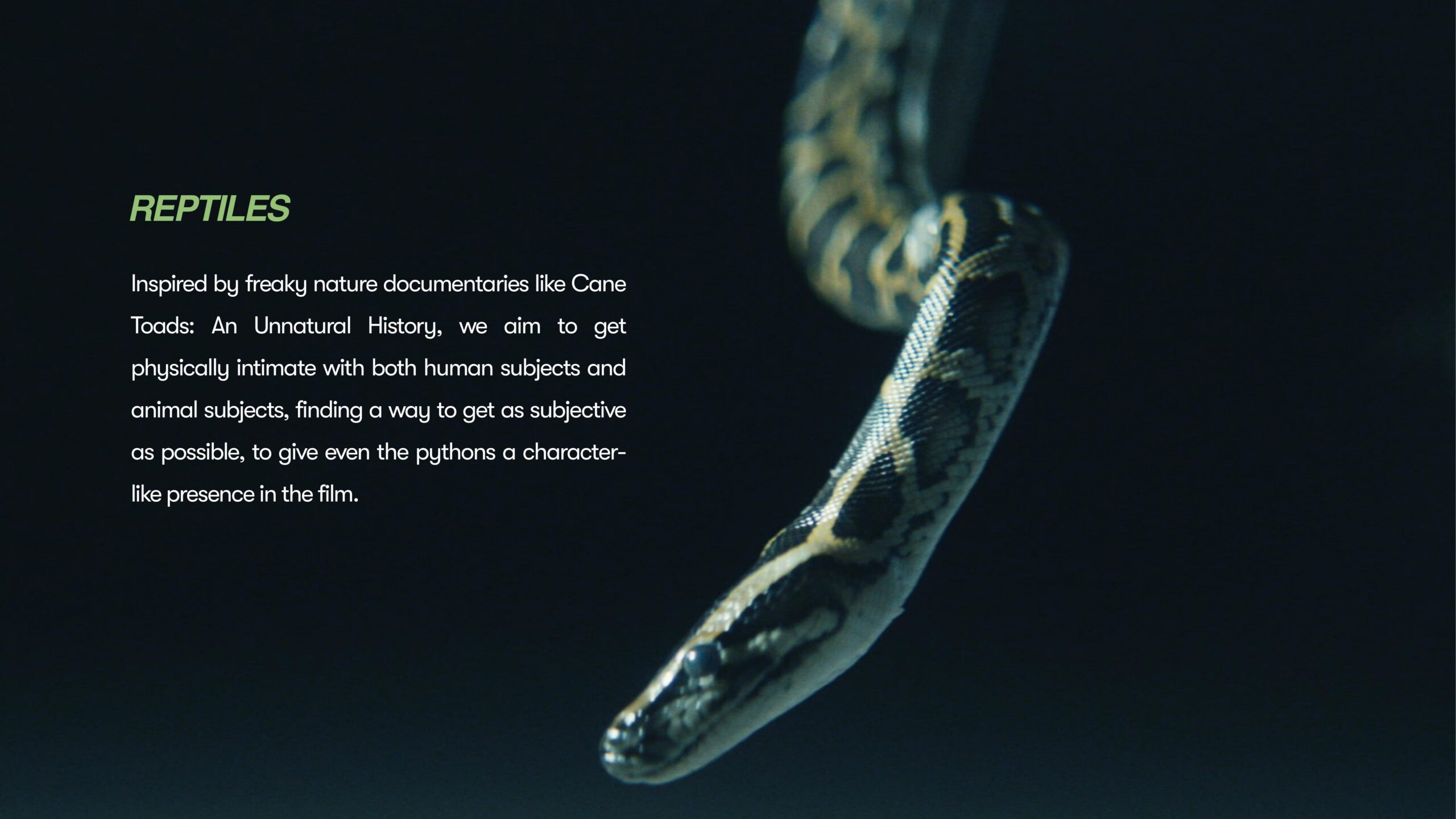
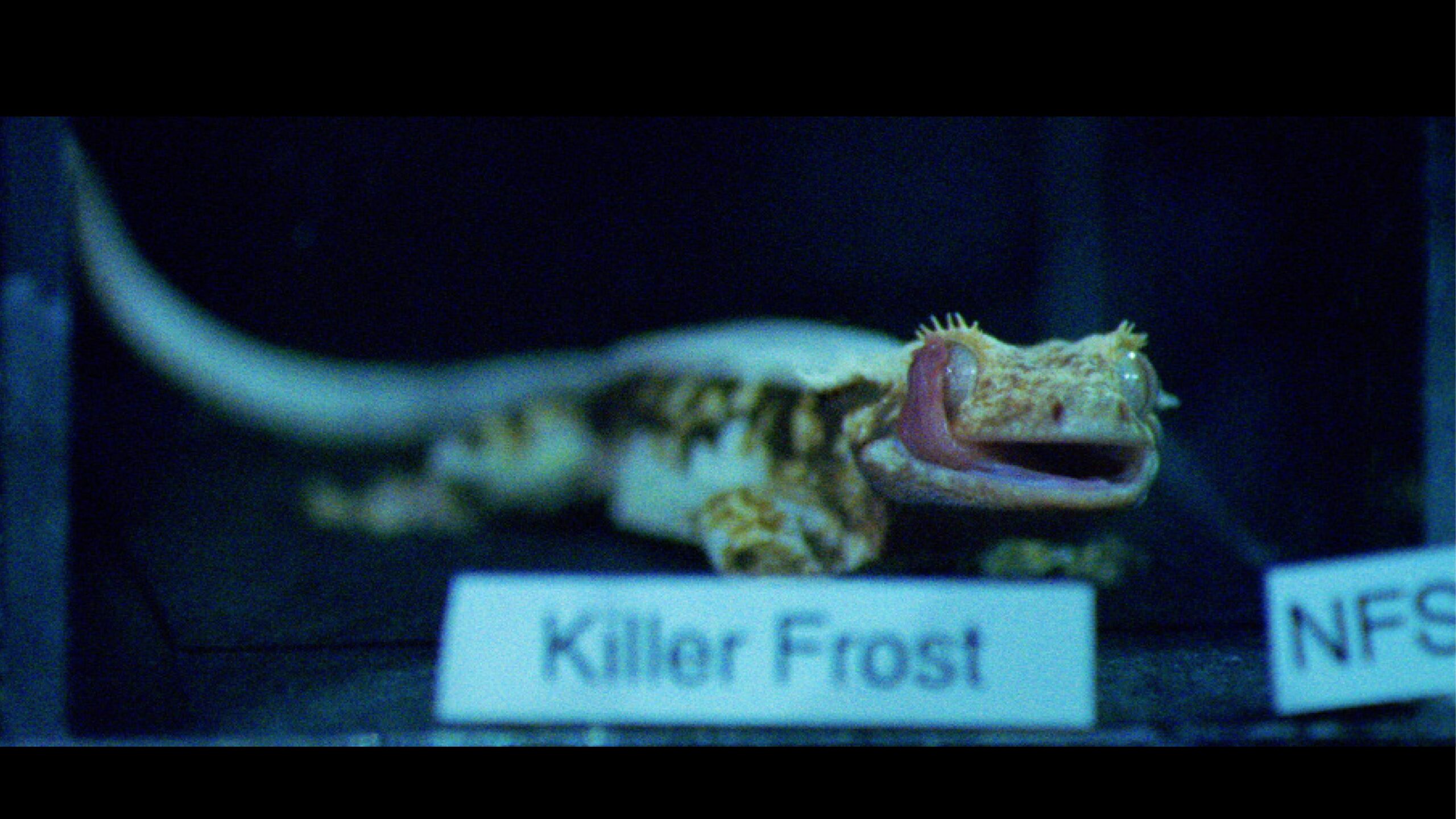
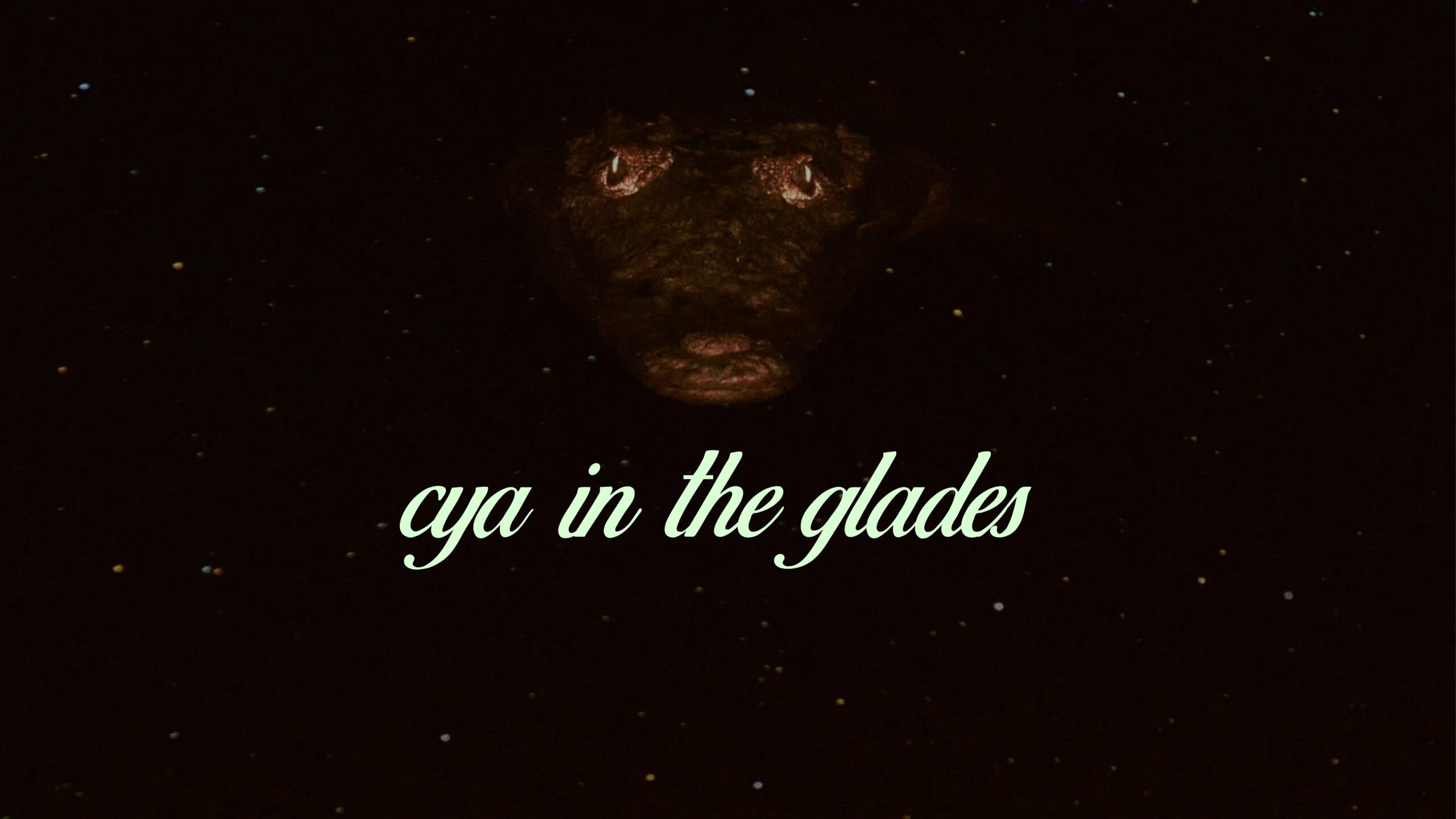
Check out Xander and David’s original lookbook for The Python Hunt below.
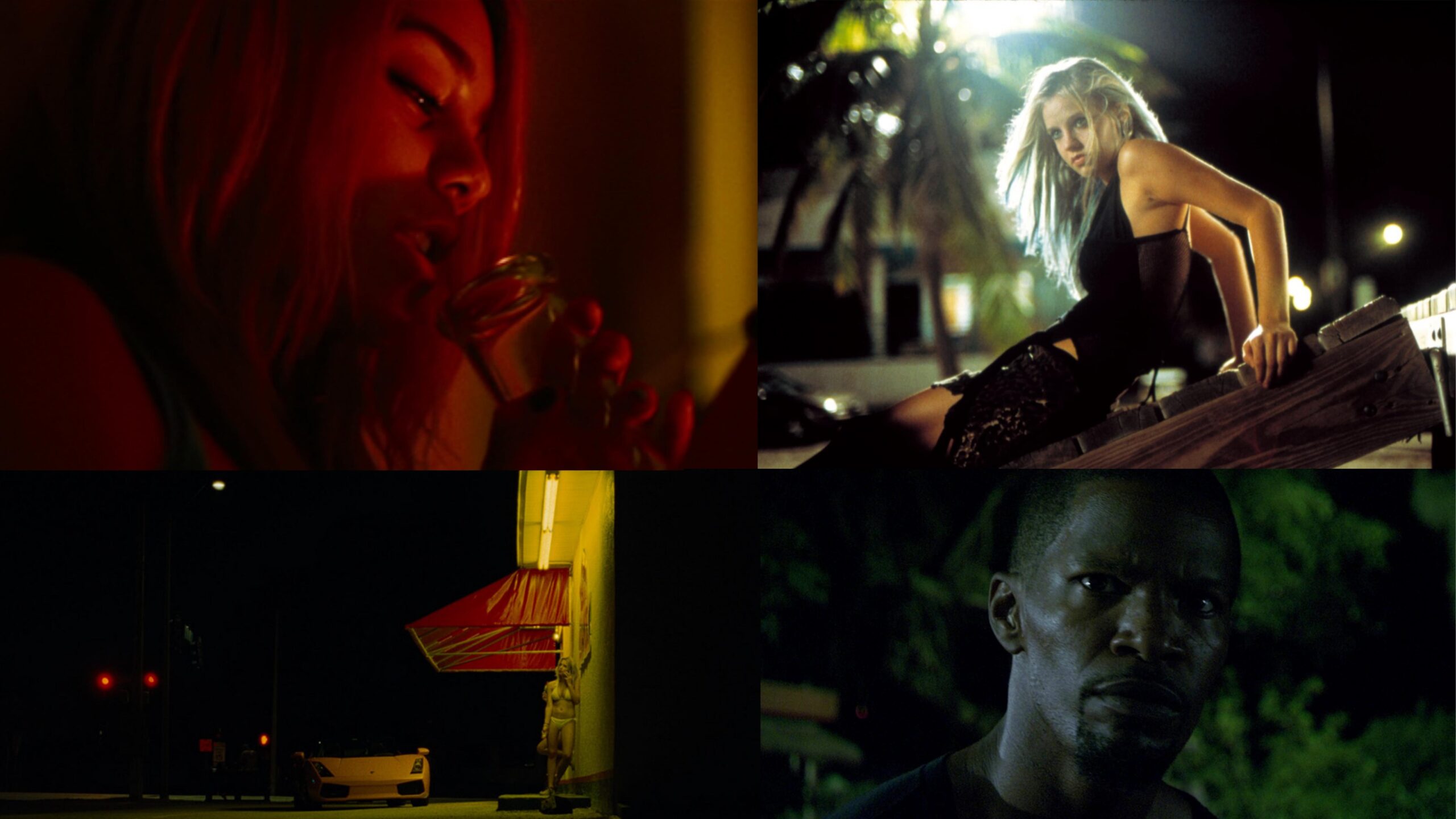
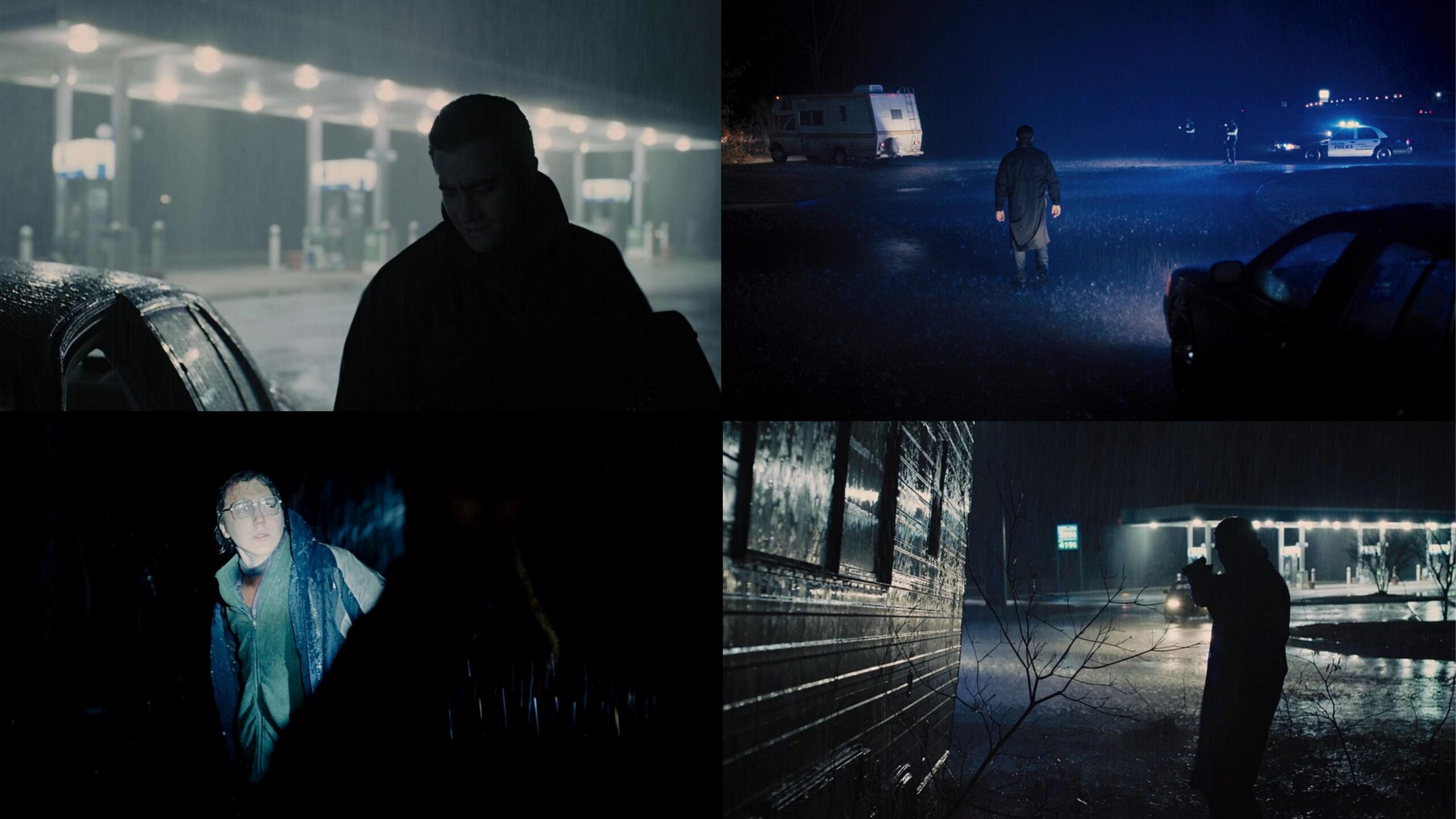
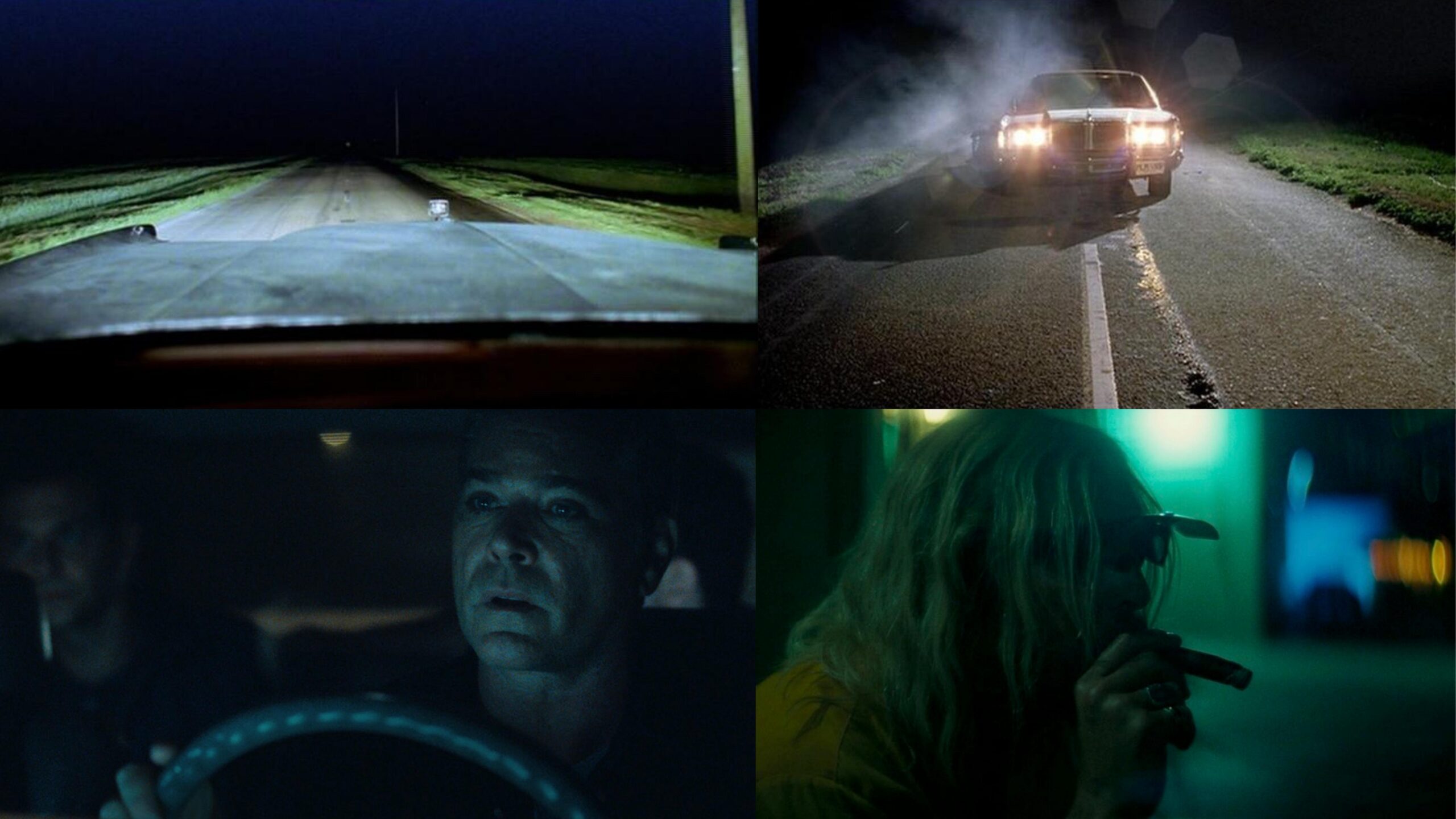
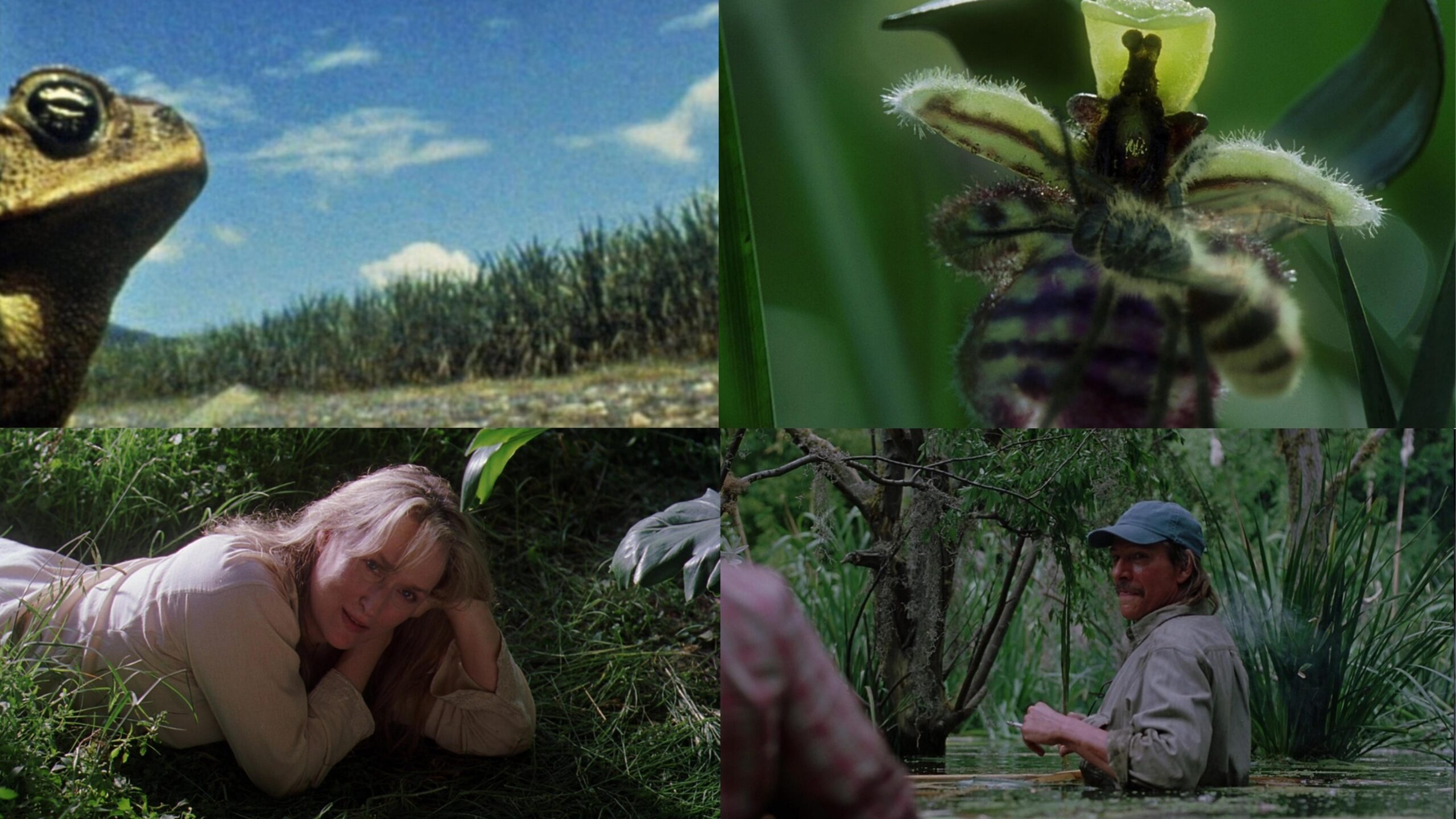
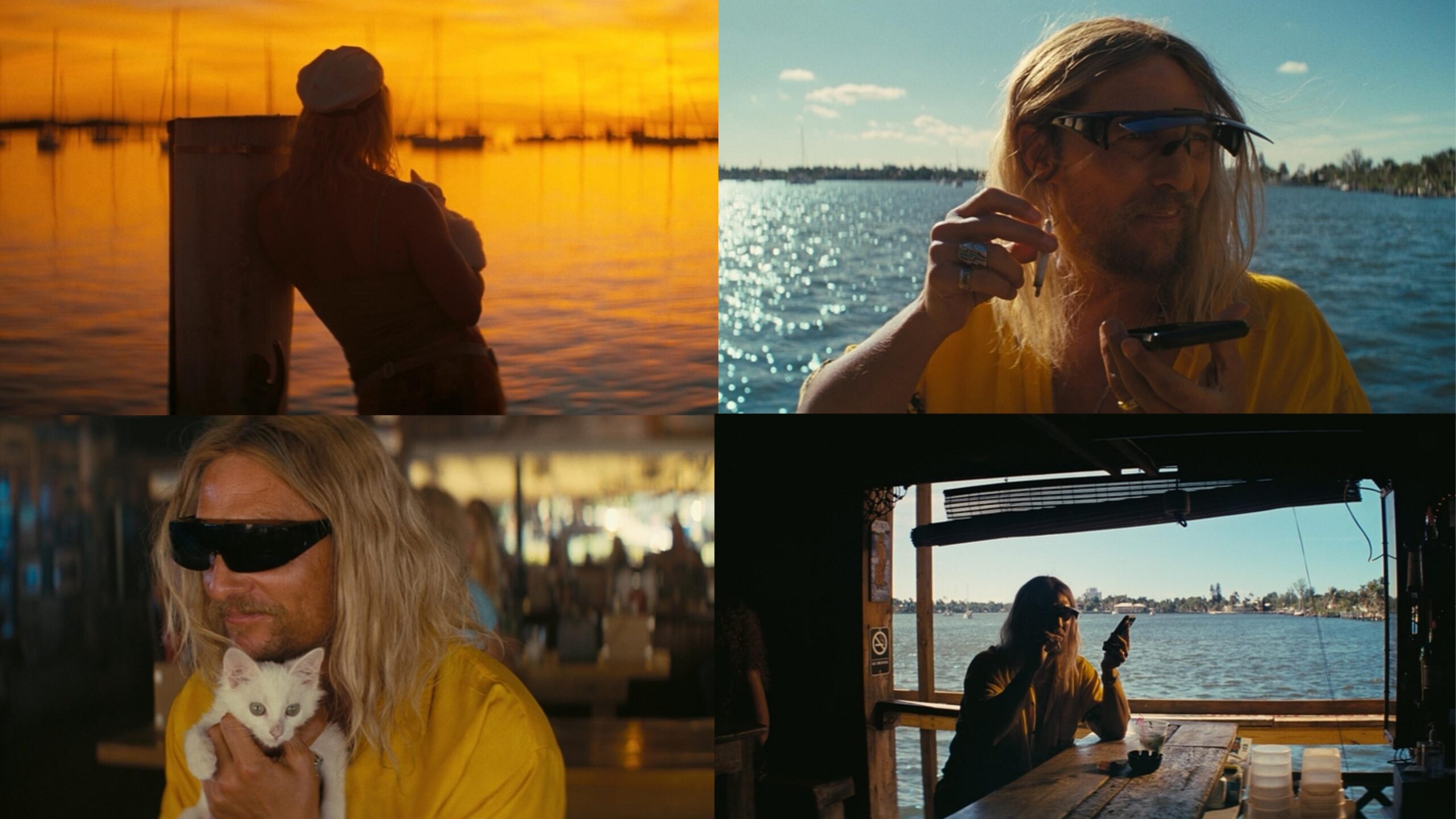
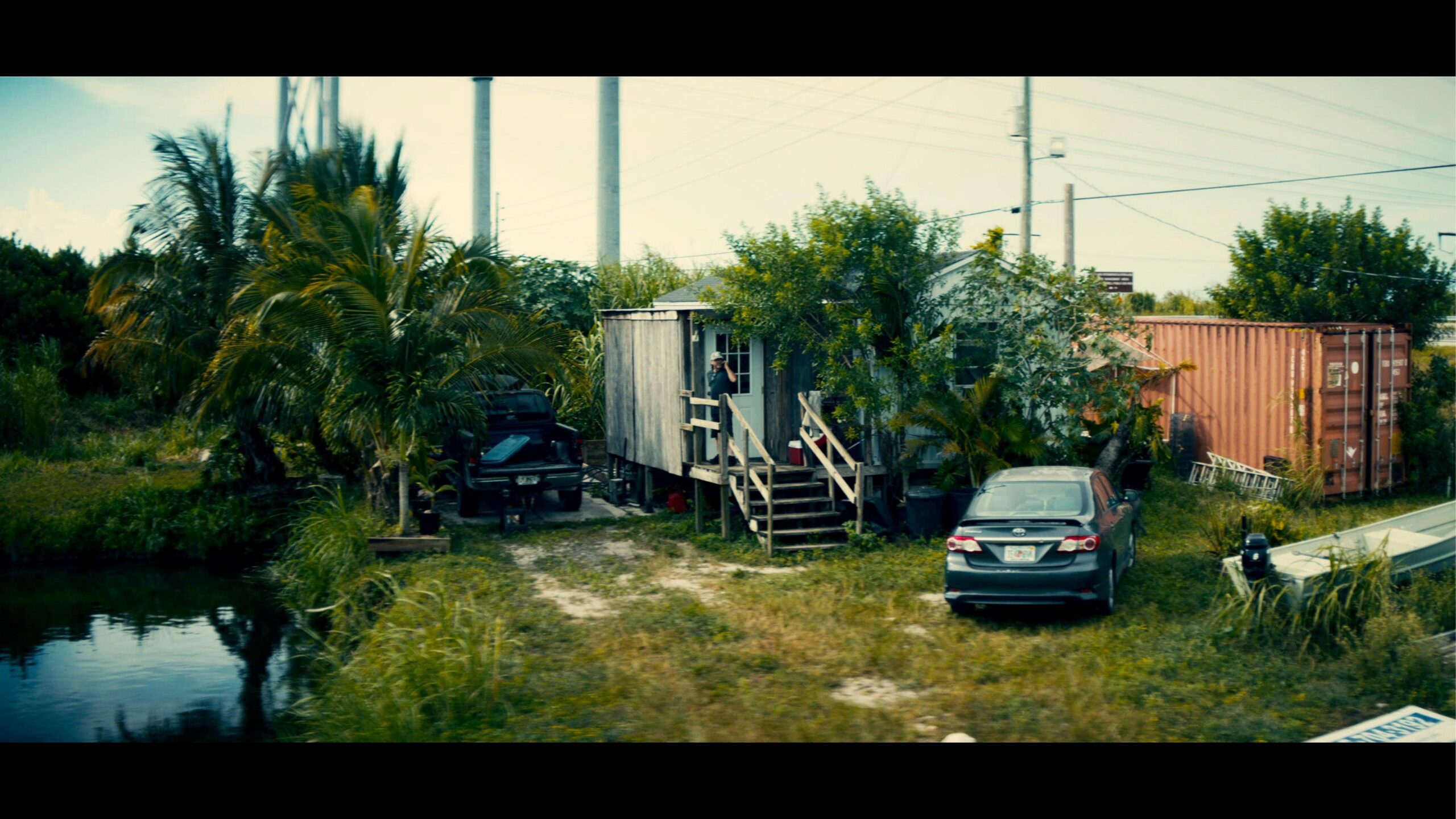
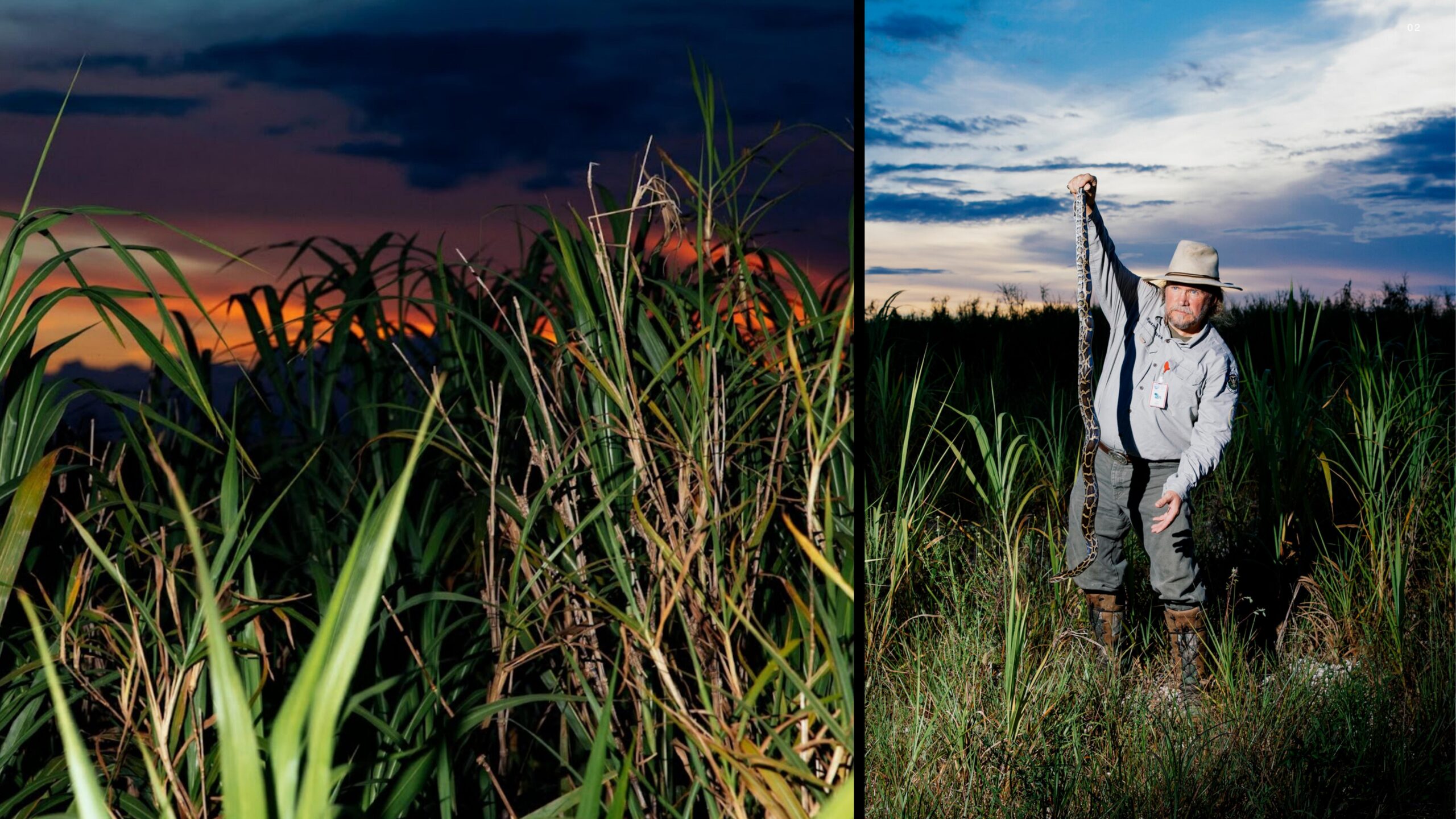
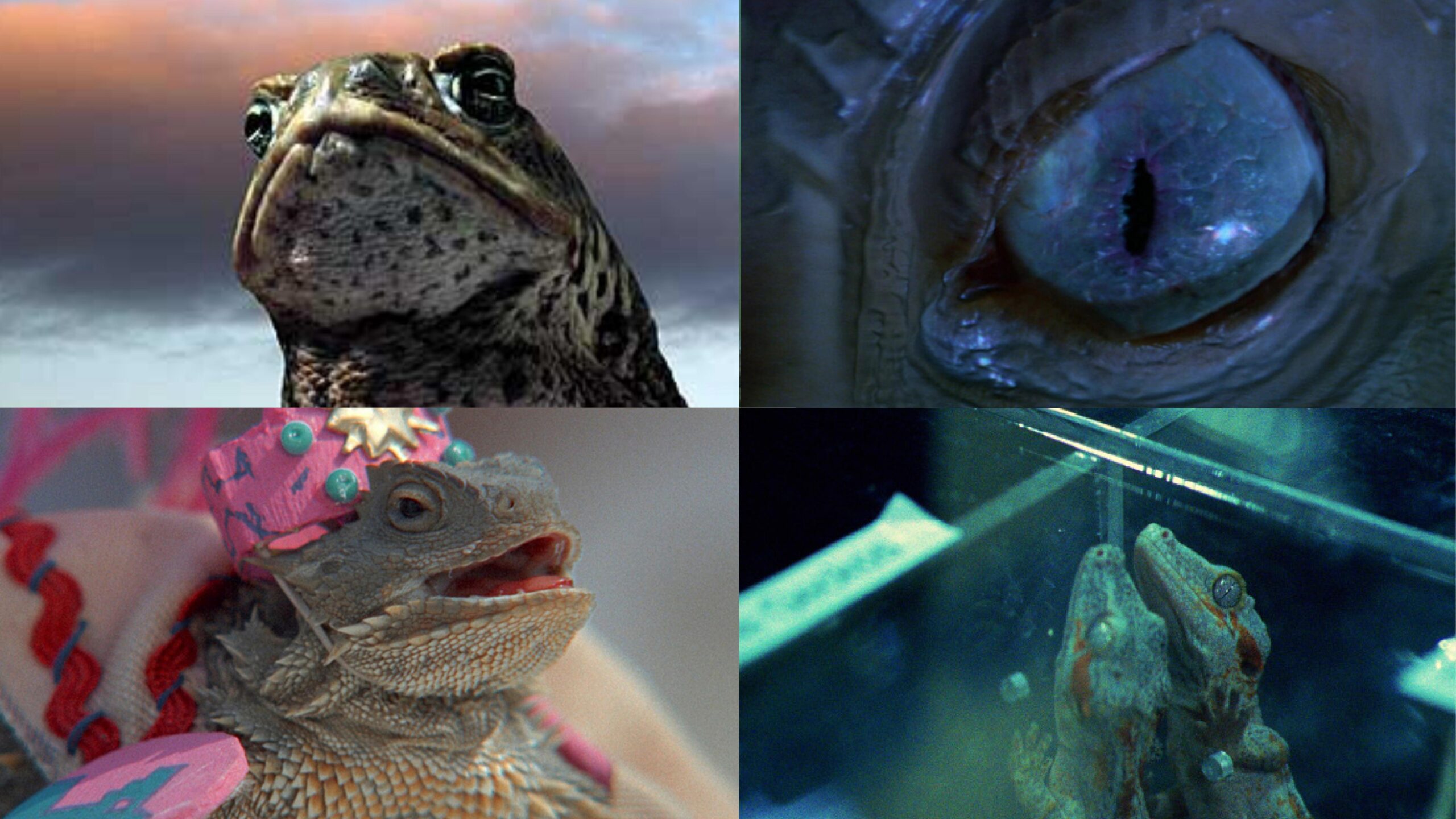
DAVID: The other DPs, Matt Clegg, Nate Hurtsellers, Brandon Somerhalder, and Michael Faller are all pretty longtime collaborators, so collectively we’ve all been developing our styles together in this similar orbit. And when I work with other people, there’s rules that we’ve established, but if there’s something they’re finding inspiring, I always want them to go for it.
XANDER: That was one of the rules. Use your special sauce. What do you bring that no one else brings?
DAVID: We also pushed people to not be afraid of making the image look really messed up. We know we’re not gonna be capturing clean images. We’re on these crazy lenses, shooting in the middle of the Everglades, there’s heat, there’s fog, we’re boosting the ISO to its very max so there’s all this digital noise. If you were in a university cinematography class, you’d probably all be getting Fs.
Did you guys have any influence in the type of lighting gear that the contestants were using for the hunt?
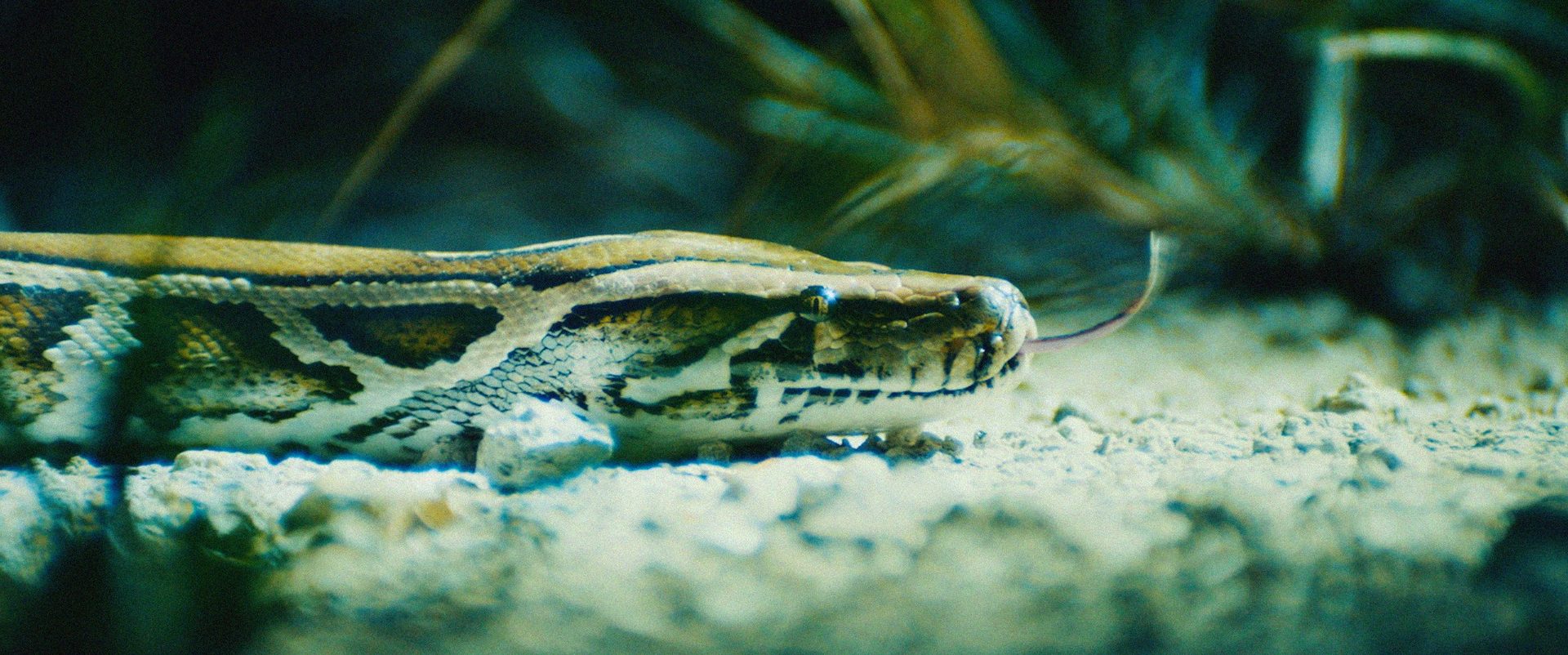
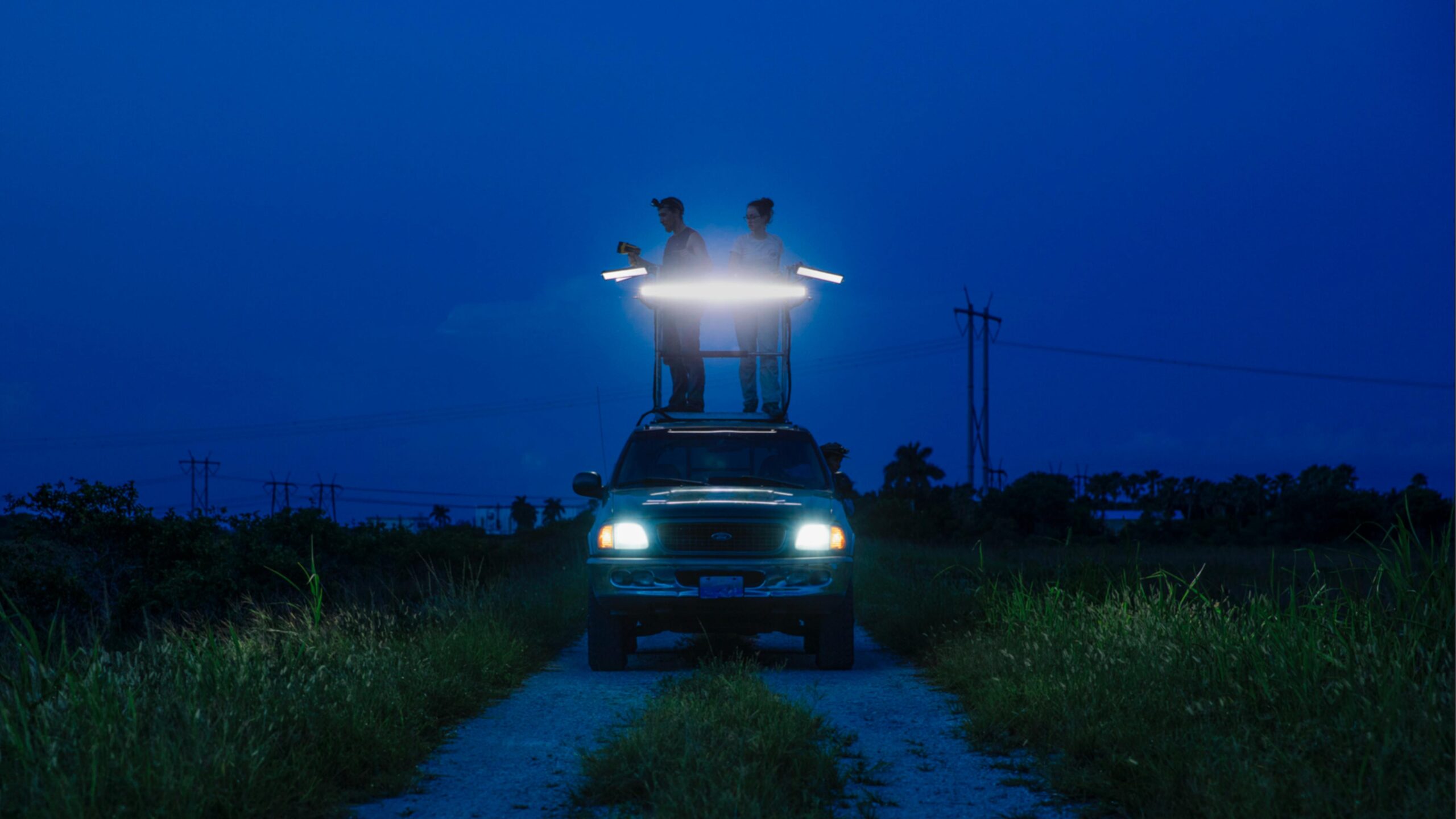
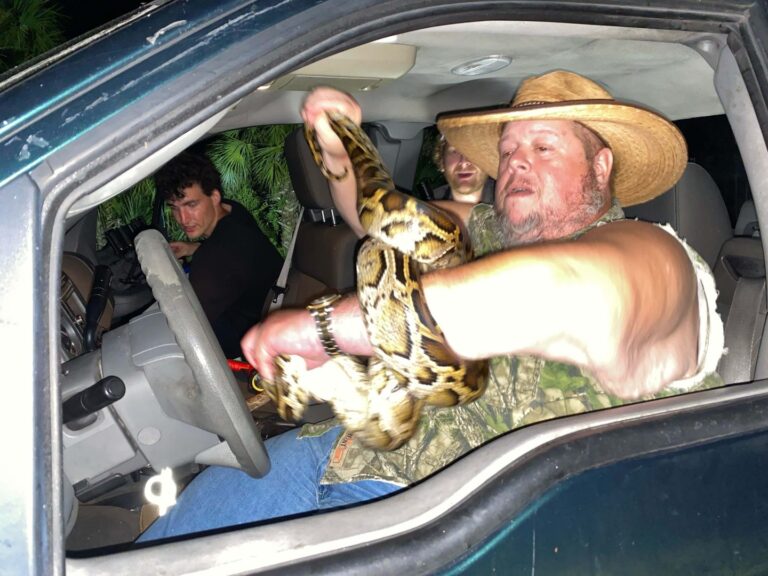
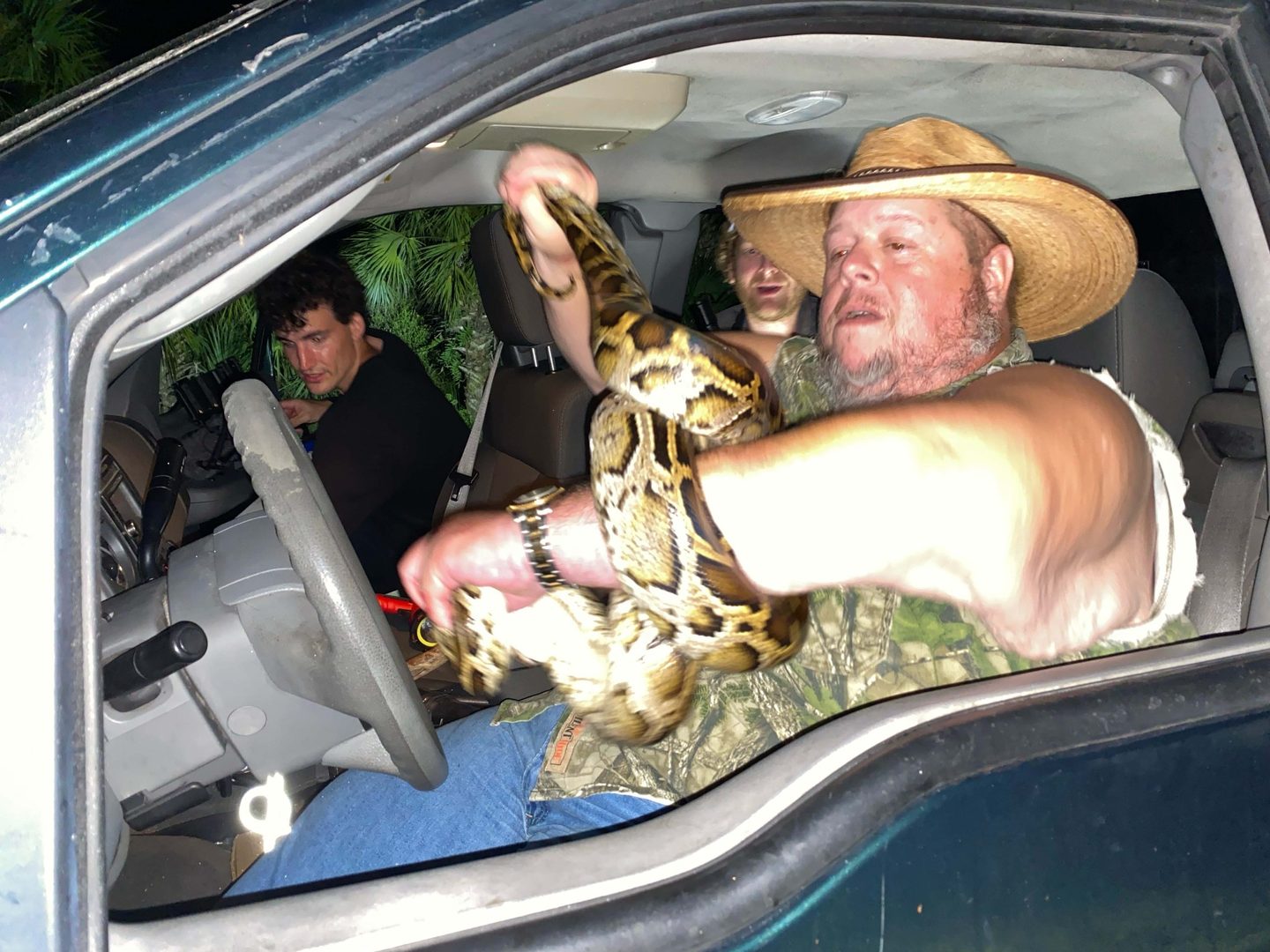
XANDER: I mean, the snakes are so hard to see. They camouflage so well and their eyes don’t reflect like an alligator or a deer. So we were blessed that everyone had these really intense practical lights. Either hunting spotlights on their truck, or professional flashlights, or headlamps. Maybe we would have our own flashlights to help with things, or we might ask them to turn the headlamp on or off, but we were only using the lights that the subjects had.
DAVID: I remember on the first night I was terrified that I wouldn’t be able to see anything, and then we got out there with some of these lit up trucks and the anamorphic lenses and, within 10 seconds, I was like, “oh, this is gonna be really special.”
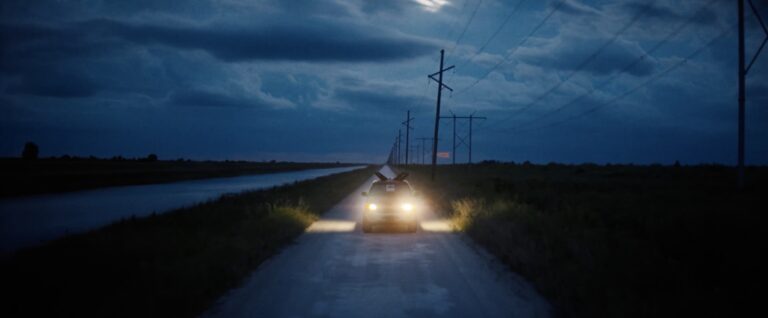
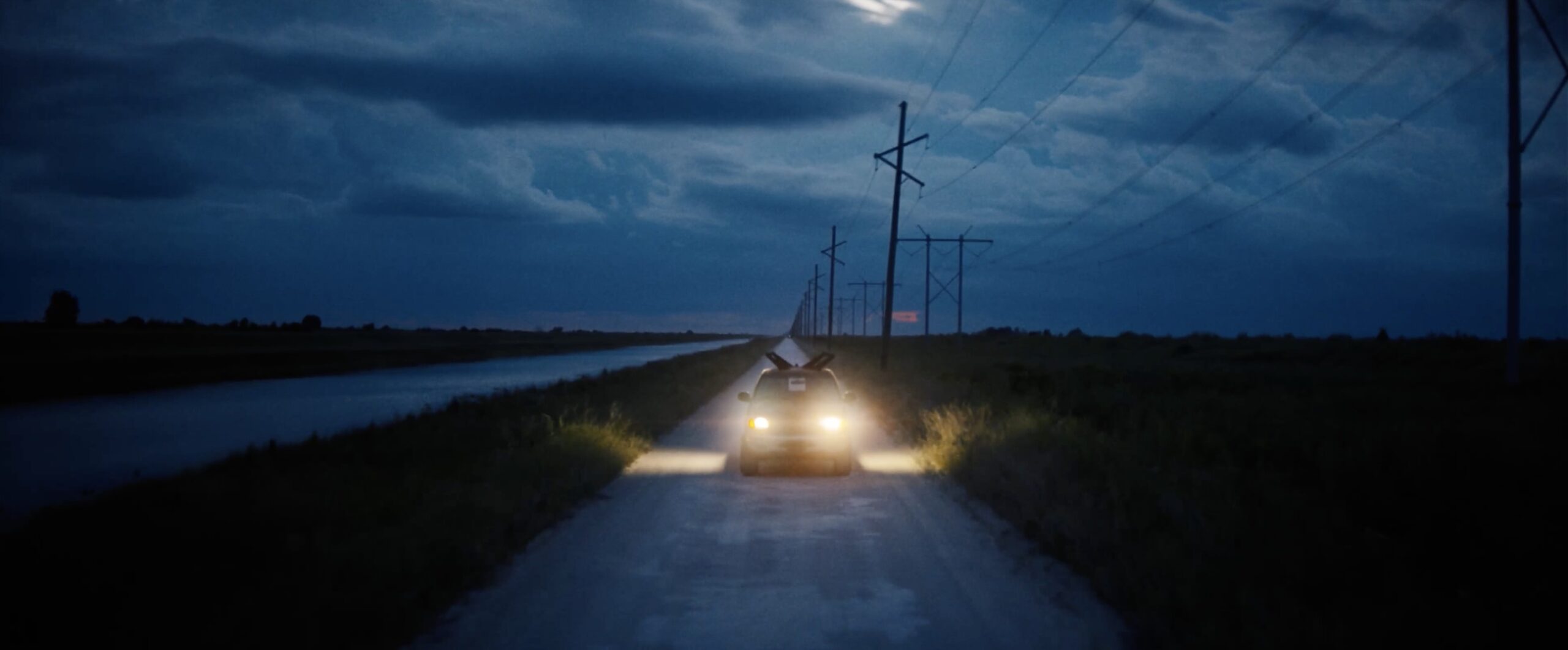
The more we went out there, the more it felt almost like a sci-fi film. Sometimes it felt like we started treating the humans as foreign invaders in this land. Like, if you shot the vehicles at a distance through the Everglades, they really felt like UFOs drifting through the swamp, and I loved leaning into that. Especially with the anamorphics it kinda put the whole film into this kinda dream-like sci-fi state.
XANDER: Also it feels like everyone was kinda losing their mind in the process. So the dream that you’re talking about didn’t feel like a stretch. We’re just capturing something that was already there.
You worked with Supervising Colorist Damien Vandercruyssen on this film. What was that process like?
DAVID: Damien Vandercruyssen is the ultimate Florida colorist. I’ve been working with Damian for probably 8 or 9 years now, and he’s so great at pushing that filmic look on a digital image.
XANDER: We worked with Damien for a day to set the looks, and then Karim El Katari graded the film after that. Then Damien came back for our final session.
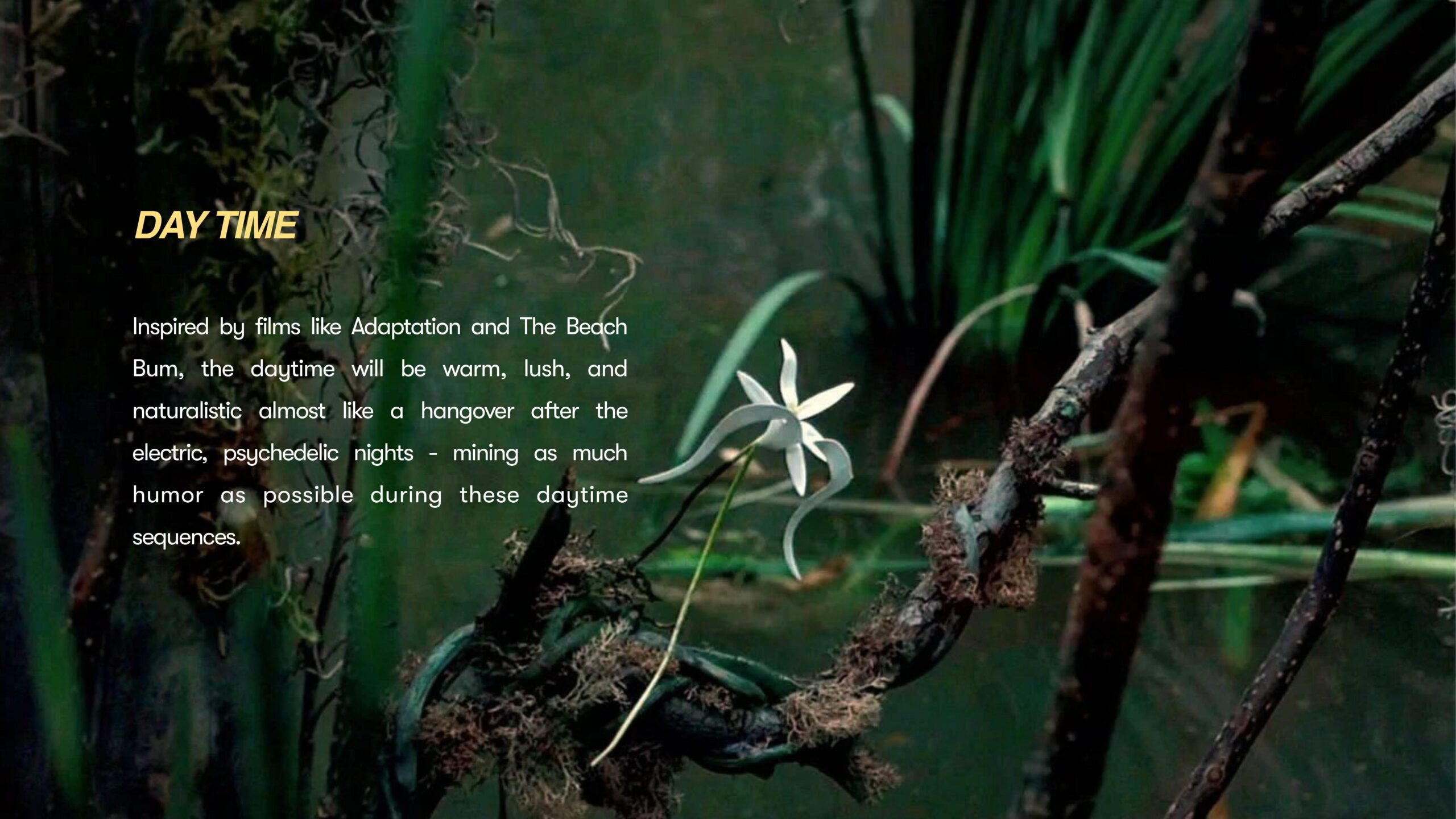
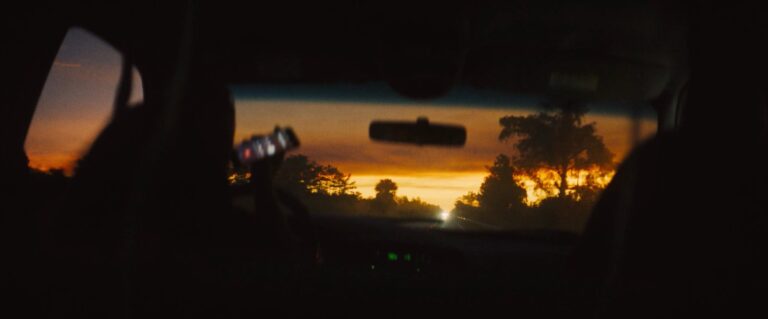
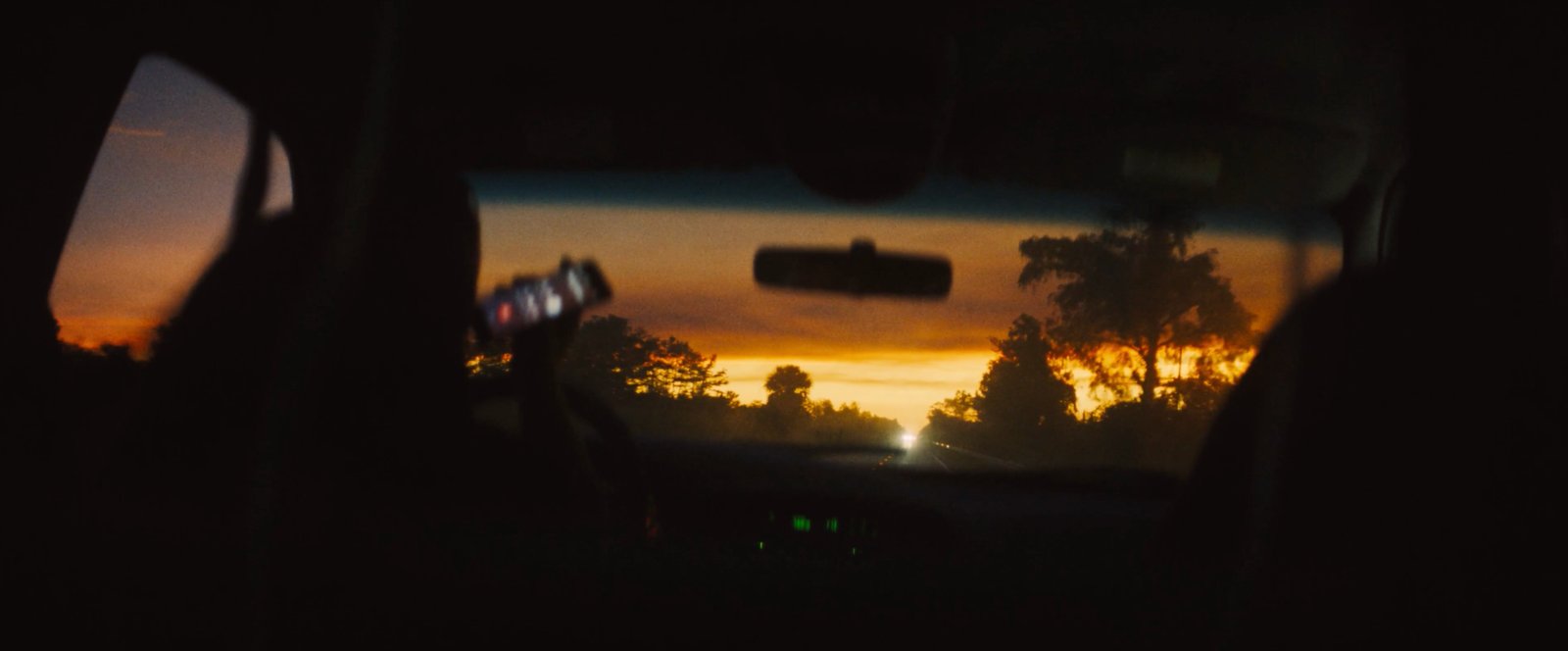
DAVID: Damien and Karim did an amazing job creating these two separate worlds. Pushing that blue look at night where it feels dreamlike, and then warmth during the day, which is a bit more of a snap back to reality. I commend both of those guys, because they are truly artists that bring so much to my work.
Documentaries like this aren’t easy to make, and I imagine that you need good partners to make them in this way. Can you talk about your relationship with Artists Equity on this film?
XANDER: Artists Equity was on board from the beginning on this whole adventure. They were amazing partners in letting us explore this, and giving us the resources to do it with 3 units. It allowed us to go on scavenger hunts and have less pressure on one unit to find the perfect subject.
DAVID: I appreciate any partner nowadays that allows you as documentary filmmakers to actually explore. With more and more documentaries I get sent, it’s like, “this is a 3 part series, and here’s the full script of the series, and this is exactly what’s going to happen, and we’re going to go capture these soundbites.”
You shouldn’t go in with a prewritten story. That’s the fun of documentaries to me. So I just appreciate production companies who still wanna take those risks. We really had the luxury of taking the time to explore and find what the film was, and that’s why I think the film is so special.