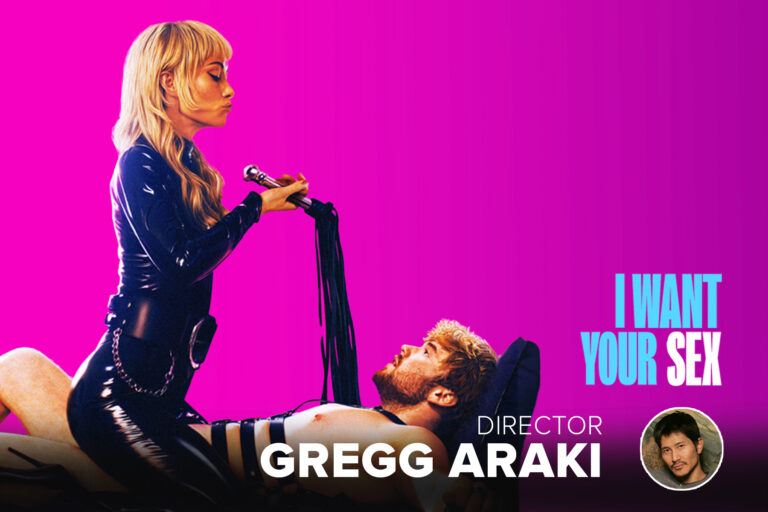
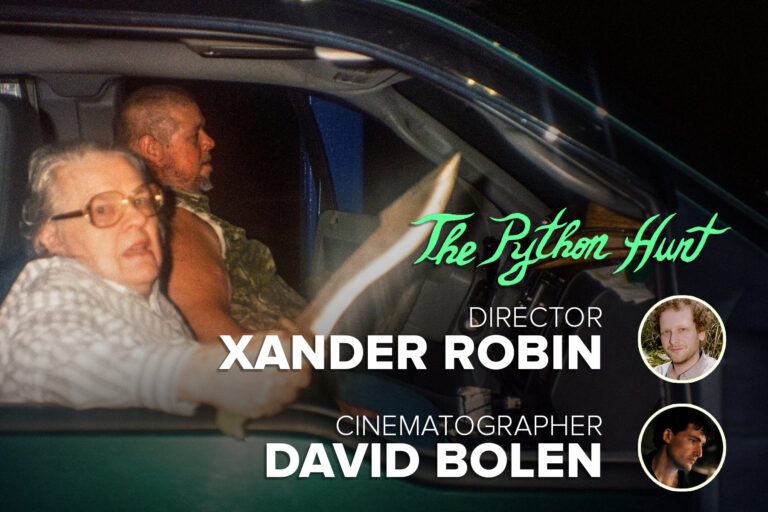
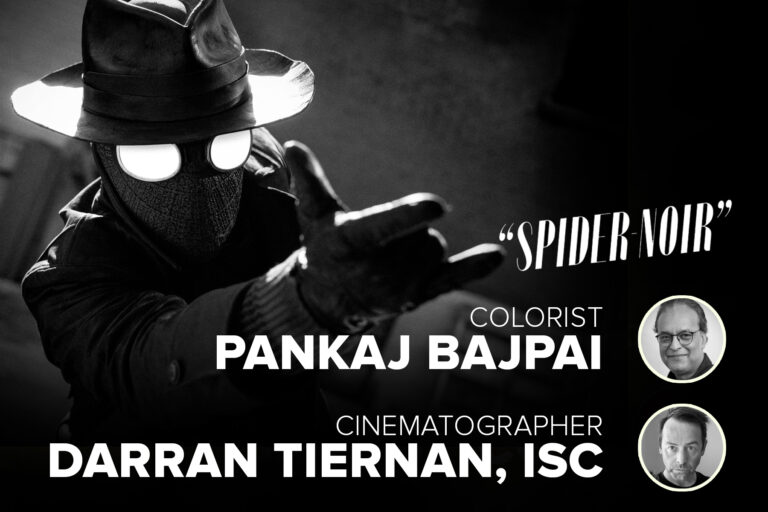
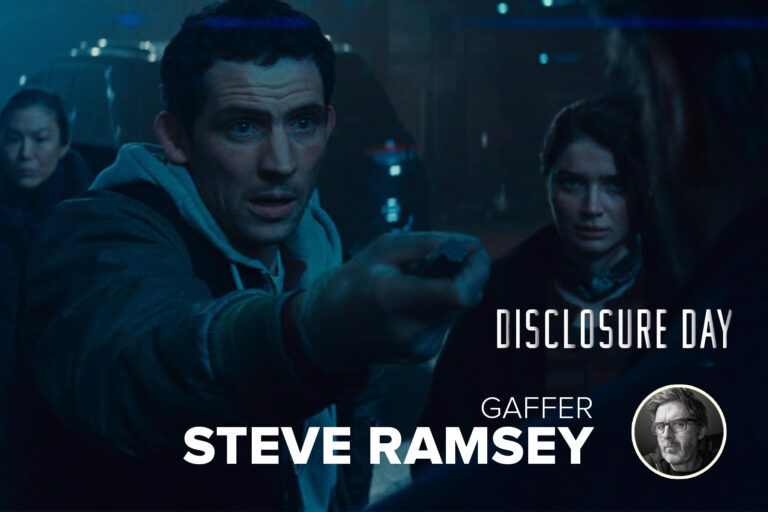
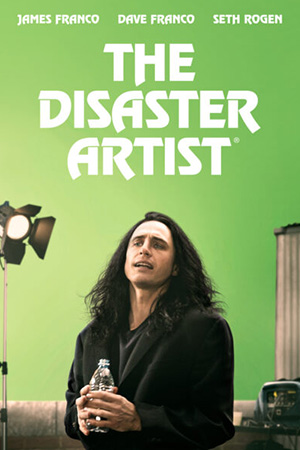
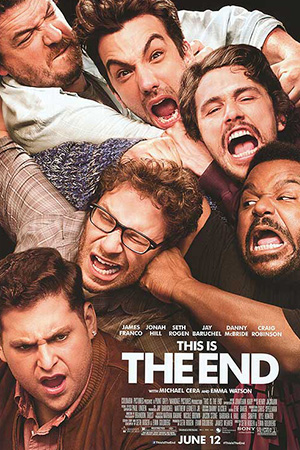
Cinematographer Brandon Trost has brought a bold and versatile visual style to comedies, genre films, and large-scale studio productions throughout his career. A frequent collaborator with Seth Rogen and Evan Goldberg, as well as The Lonely Island, Trost’s work includes This Is the End, Neighbors, The Interview, Popstar: Never Stop Never Stopping, and The Disaster Artist, alongside films like The Diary of a Teenage Girl, Can You Ever Forgive Me?, and Sonic the Hedgehog 2 & 3.
Trost recently served as cinematographer on Coyote vs. Acme, directed by Dave Green. Blending live-action filmmaking with animation, the film follows Wile E. Coyote as he takes the Acme Corporation to court after decades of defective products and disastrous results.
Brandon sat down with Christian Hurley to discuss translating the visual comedy of Looney Tunes into live action, blocking shots around animated characters, and balancing heightened cartoon logic with a grounded cinematic world. You can see a selection of his work below, and catch Coyote vs. Acme in theaters now.
This article has been edited for clarity and length.
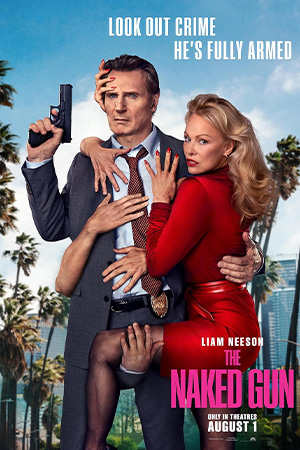
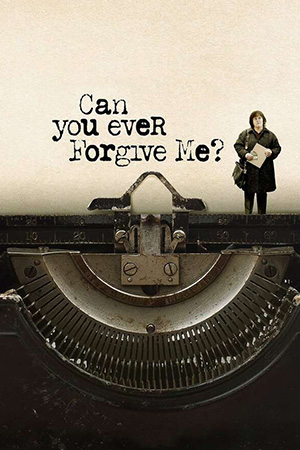
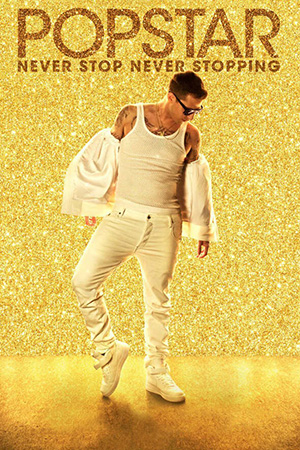
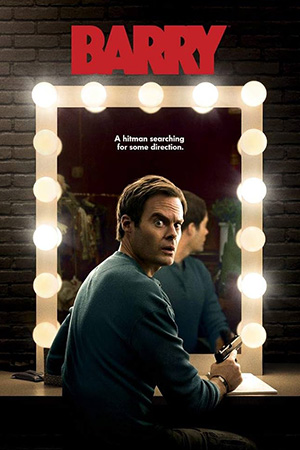
First off, I want to congratulate you and the team. I know what a long journey it’s been to get this into theaters. I watched the film with my dad this past weekend and you had a packed theater at 12:30pm on a Sunday with every age demographic there cracking up. I think that’s a testament to the passion and love behind every shot of this film.
I think it is too. I took my family this weekend as well and similarly there were people laughing and cheering. I’d like to say it happens often, but it doesn’t. It’s so hard to make a movie, let alone a movie that’s genuinely good, and to know that we almost didn’t even get a chance to see it would have been a real tragedy. I’m very proud of how it turned out.
Before we get into the movie specifically, could you talk a little bit about your upbringing and how you found your path to becoming a cinematographer?
Filmmaking has been a part of my life for all of my life. I was born into it, my dad does special effects. So physical, mechanical effects, anything you would film on set like explosions, wind, rain, fire. Ever since I was a little kid I would visit my dad, who was doing all this crazy cool shit, on set. [How do you not] think it’s the best job in the world? My grandpa was in it too, and my great-grandparents, my whole family really. It’s like a family tradition. We all do different things too, so it’s less like a nepotism situation and more like a trade that we all really love.
Sort of a passing of the torch?
Exactly. My sister is a costume designer and my brother is a filmmaker, but I ended up veering into camera. My dad kind of tipped me off to it, I think he saw that I had a little bit more of a need for creative control. So I went to film school and just kind of very big-headedly said, I’m gonna be a DP and just stuck to my guns as much as possible and shot a lot of stuff until I started shooting better stuff and then it turned into a career.
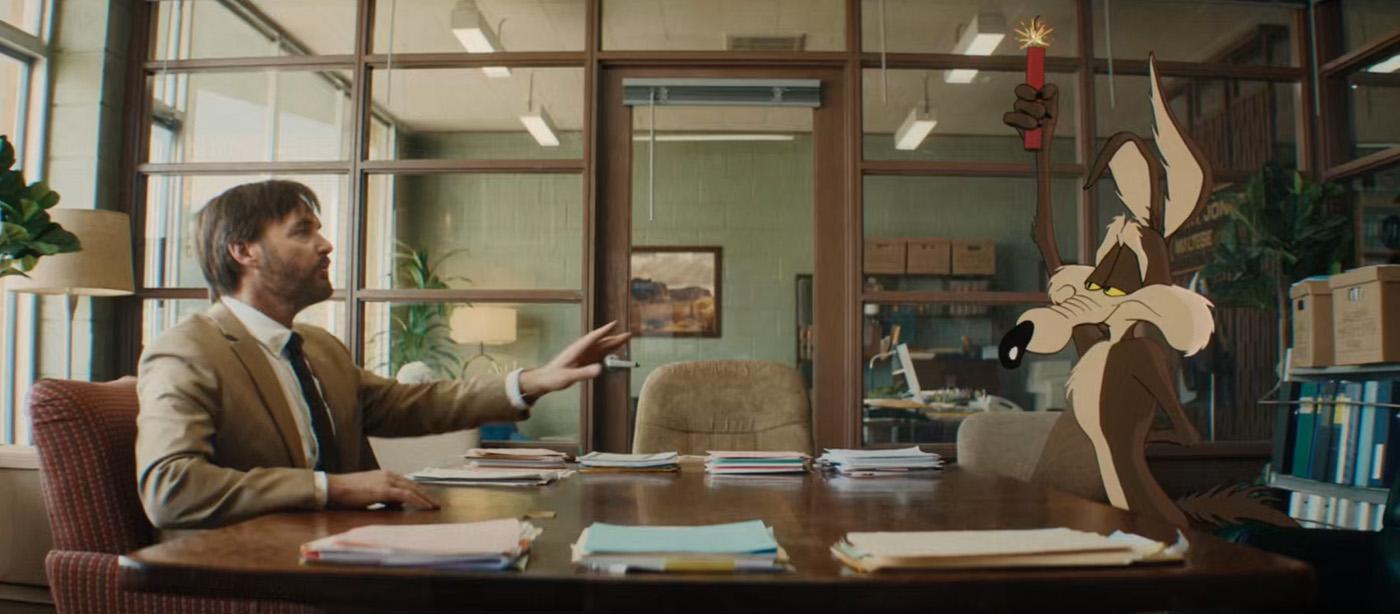
But I would say that my upbringing in special effects really has informed how I shoot. I would work on sets as a kid, which we can’t really do as much anymore. But there’s a point where I thought I was gonna take over my dad’s company and just be an FX man, and that foundation, growing up in that world, really helped me with understanding camera shots. I think that that really applied to Coyote vs. Acme because this type of filmmaking can be such a brain buster when you’re filming for what doesn’t exist yet. You have to lay the groundwork for characters that are interacting with your environment and humans physically, and humans have to be able to look at this character that doesn’t exist and react to everything around that.
Was that challenge part of what initially drew you to Coyote vs. Acme? Was there something you hadn’t done before that made you think, “I don’t know how to do this, but I’m going to figure it out”?
It’s interesting because we did this a while ago. I had just finished Sonic the Hedgehog 2, which was the first film I’d done where it was very heavy animation meets live action. I had a wide variety of experience with VFX sequences and different versions of filmmaking but never a hybrid animated film. Sonic really peeled the band-aid off for me in a way where I was thrust into this new territory and it was very challenging, but also very fun and rewarding to do. It was part of why I was so excited about the opportunity for Coyote, it was really just a chance to keep that ball rolling.
I would say that the hardest part about Coyote vs. Acme was that it was very grounded in reality. It sounds crazy, since there was the Looney Tunes aspect and the cartoons… But we’re not doing a lot of fantasy stuff where we’re on stage and there’s lots of green screen. This is meant to feel very real. A lot of the inspirations for the movie that our director Dave Green had put together, even before I was involved, were legal thrillers and mystery films. The Insider was a heavy influence for us in terms of look and tone and feel, and then of course, movies like Erin Brockovich. I think The Conversation was another film that was in there with visual representations of what we wanted this movie to feel and look like in terms of the anxiety-inducing conspiracy behind the whole case.
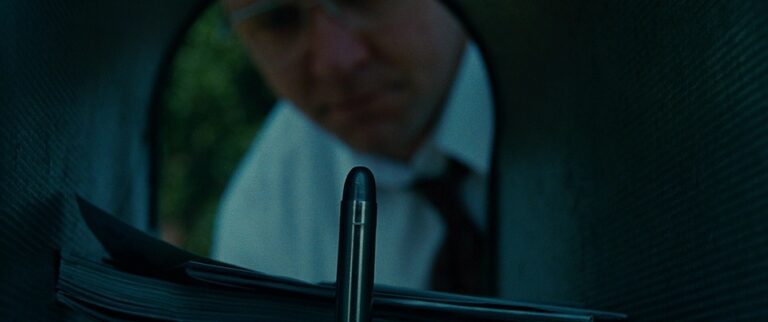
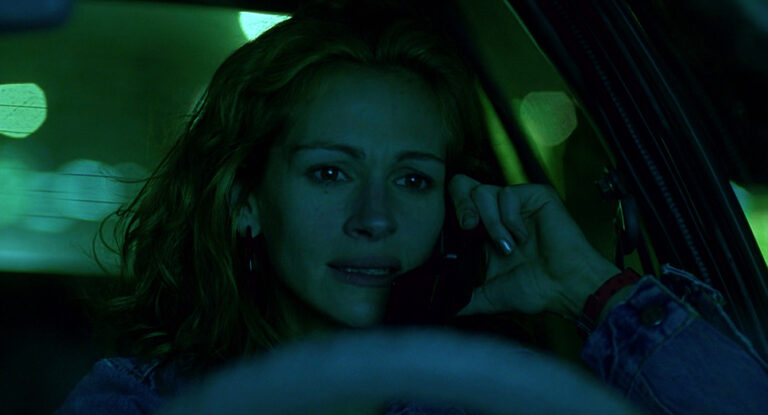
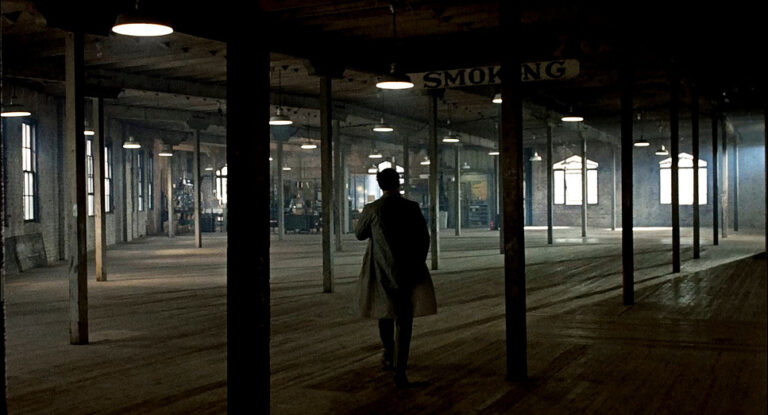
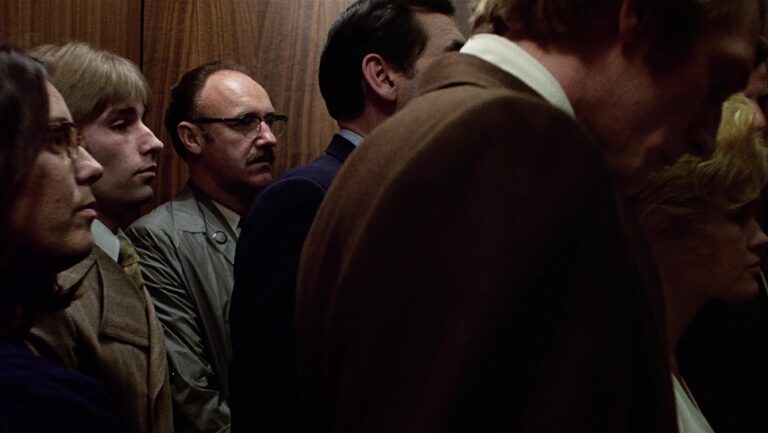
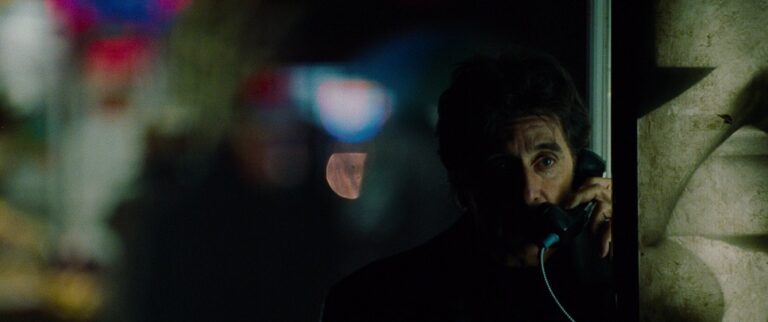
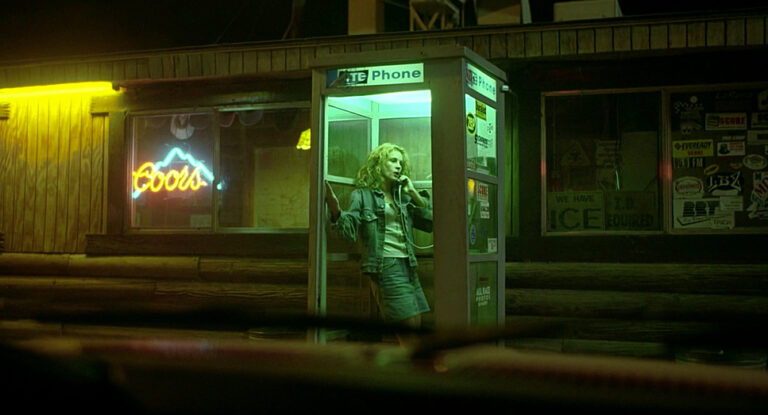
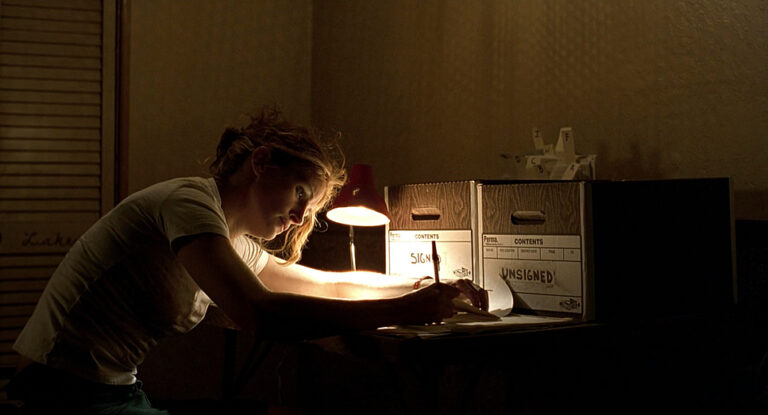
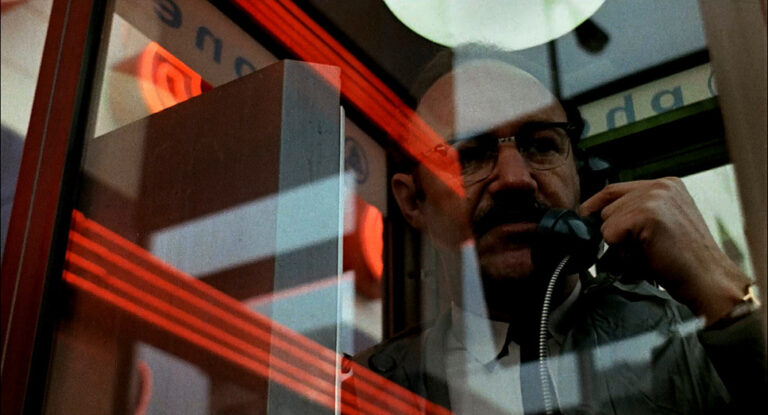
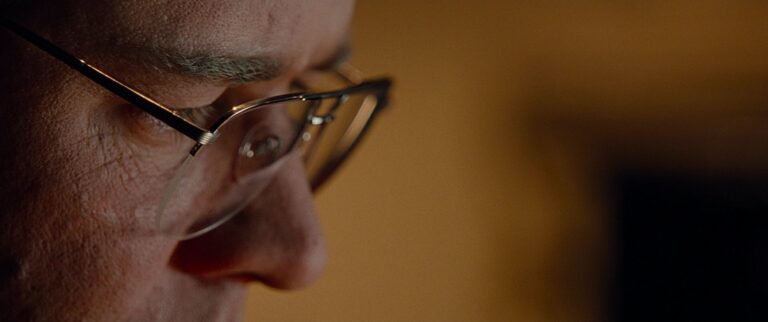
Dave really wanted it to feel like it could be cut from the same cloth as one of those movies and I think for me that was more of a challenge than the technicality of the implementation of all the animated characters because once you start to get the hang of how to include these characters in the frame, you start working on even more levels to try to bring it all to life.
We wanted it to have a little more of a mature, semi-adult tone to it. I was letting the lighting be a little more harsh, a little more gritty, a little rougher around the edges. I leaned into The Insider as a north star [visually] for what we wanted to honor because we just thought it would be funny to have that be the look for the movie. Sometimes when you’re doing that style it’s scary because it might not make someone look the best or it might not have that Hollywood gloss that you assume someone wants. Usually, that’s coming from a studio or someone important that can fire you [laughs]. But we went for it. So that part, for me, was the most anxiety-inducing. Beyond that, everything else is really just a technical challenge that I think is really fun.
Something that stuck out to me while I was watching the film was your use of blocking, specifically these moving masters in the law office set. There’s one shot where Kevin, Will Forte’s character, is freaking out and you’re just tracking him running around the office while there’s all of these visual gags happening in the background with papers flying around and full chaos. Is that something that you’re discovering the day of in any capacity or is this all planned weeks or months in advance? Maybe you can walk me through the process of discovering that on set vs during pre-vis.
It really is both. There was an animatic put together for the whole film that Dave had been constructing. We even had a production meeting where we just walked through the animatic as opposed to reading through the script because it made more sense to present it to everybody as “this is what the story is going to be.”
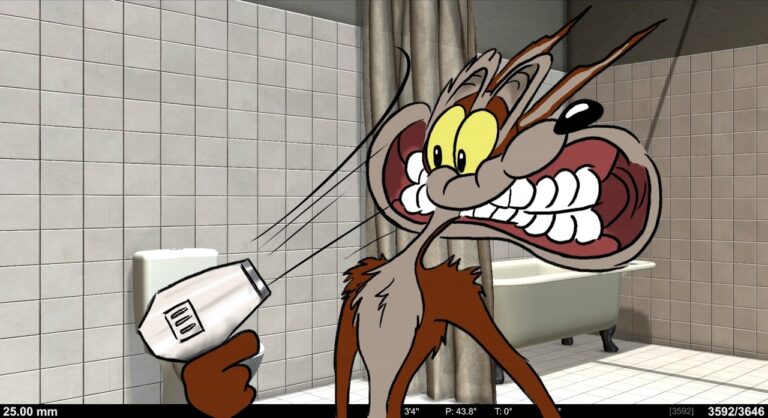
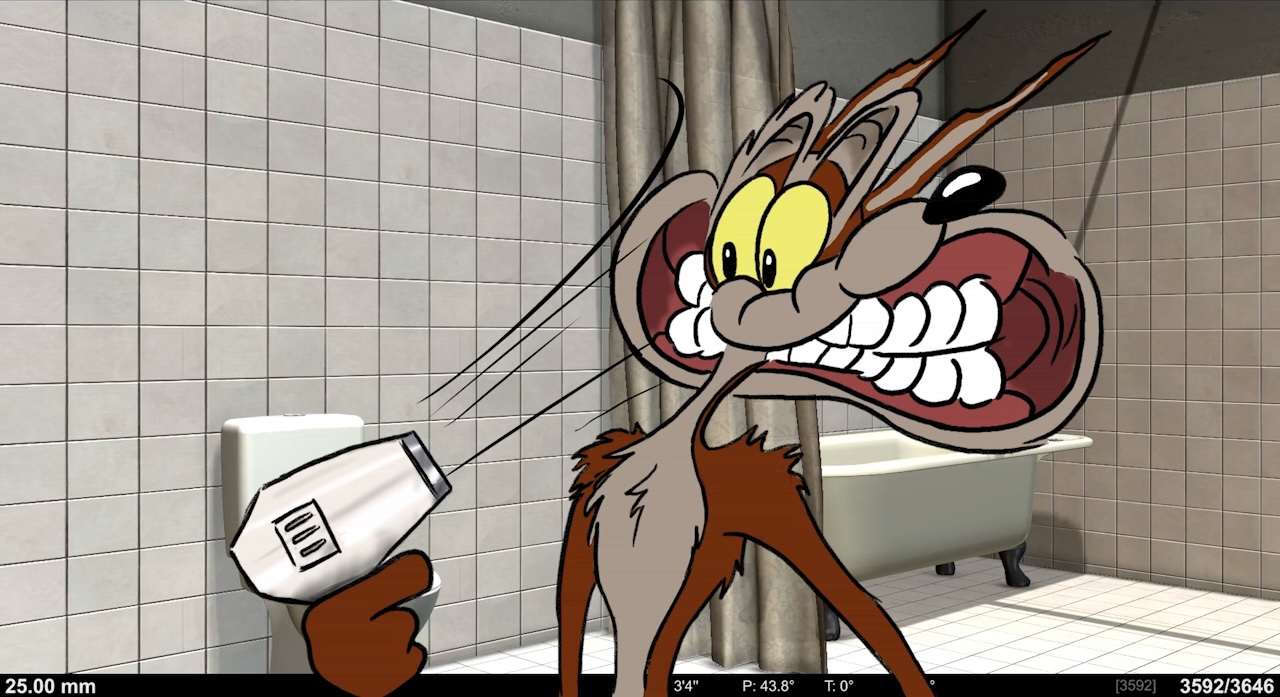
Were you involved with designing those shots or was that already in the works before you joined?
A lot of it was done before I got in. There were some scenes that I probably had a voice in or an idea to add. [That’s usually if] there’s an issue with something or I have an idea to elevate or maybe tell the story in a cleaner way. I feel like I’m trying to both serve the animatic but also beat it, improve, or even eliminate it. Sometimes stuff can get overdrawn and overshot and we don’t often need all of that coverage.
I think you brought up a really good example of that entrance into the law office. I don’t know if that scene was blocked in the animatic. It’s just one continuous Steadicam shot, but if I remember correctly we were probably up against time. I think it was a combination of needing to be efficient but wanting to keep the energy of the story moving forward in that moment. Now, we had this wonderful set that we knew we could take advantage of. That set was built practically in that strip mall and we shot there. It’s not on a stage, and we liked the idea of bridging the outside to the inside and then walking through the space and going into his office in the back.
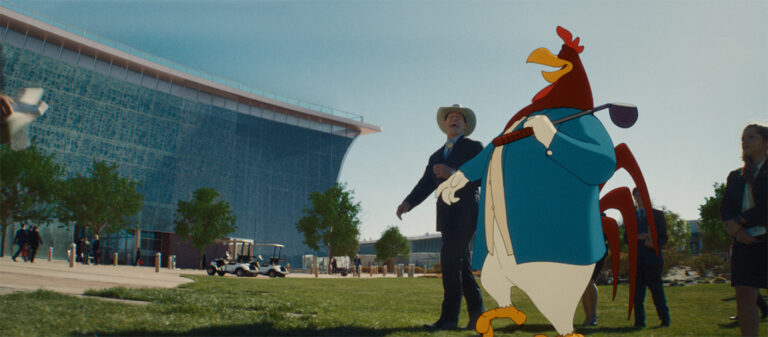
Just to have the ability to block [in that way] was exciting for us, and some gags were definitely prepared for. Like, we knew that there would be the big gorilla character at the desk up front. We knew that there would be a witch over here and some other characters in the background there. But I think we also knew that there would be animated elements added after the fact that we may not have thought of. Like, there’s lots of little details going on in the background of this movie that I don’t remember talking about, or if we did, we talked about it in a certain way, and then some characters ended up being different characters than what we thought they were gonna be when we shot it.
That’s the wonderful part of making a hybrid animated movie. You don’t need to do reshoots because you can oftentimes solve a story issue by changing the animation or the words of a character mid scene, and that’s an easy way to solve something if it’s not functioning the way you intended it to initially.
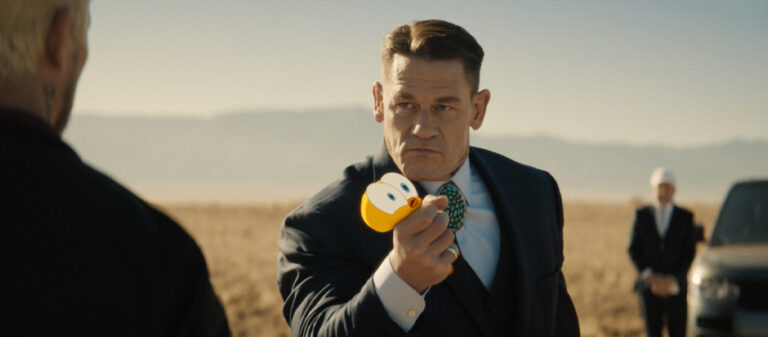
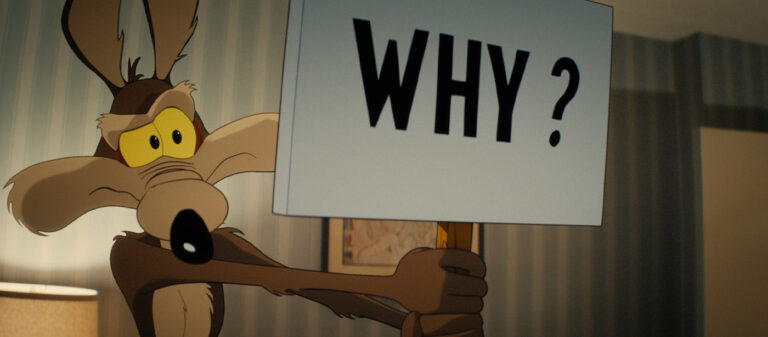
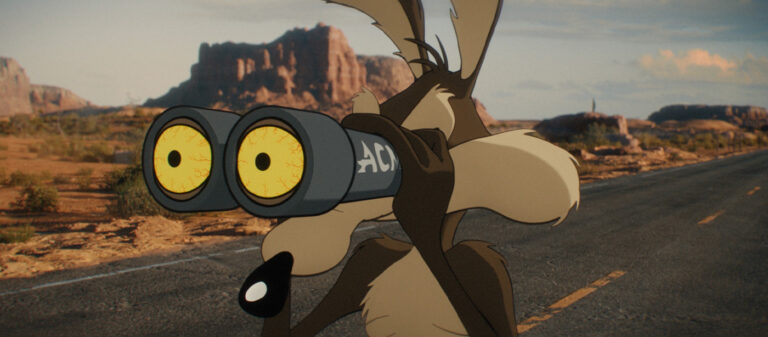
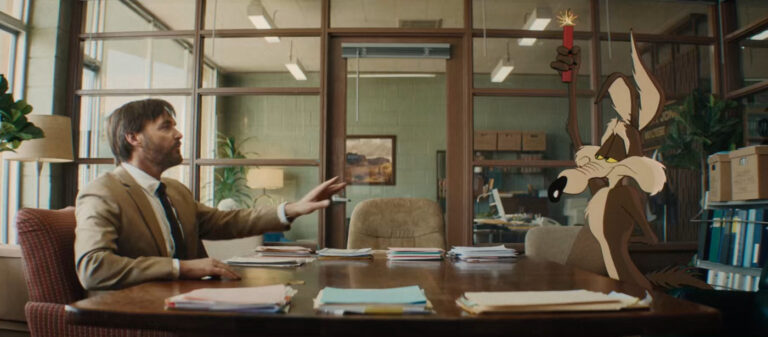
For those in-camera effects, how do the camera, practical-effects, VFX and animation teams work together to build a gag like that?
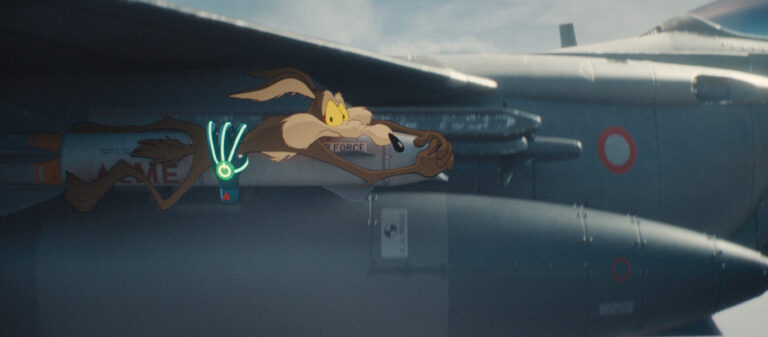
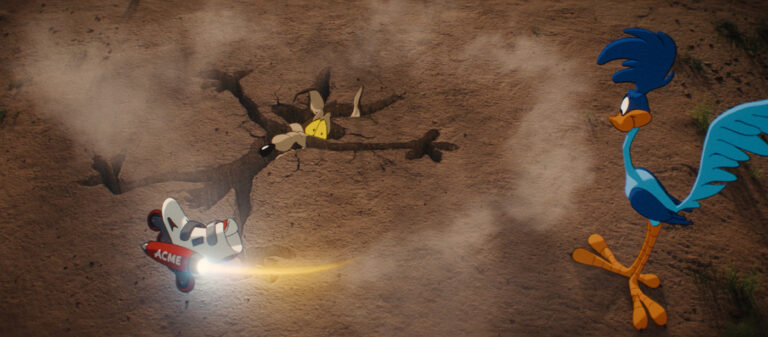
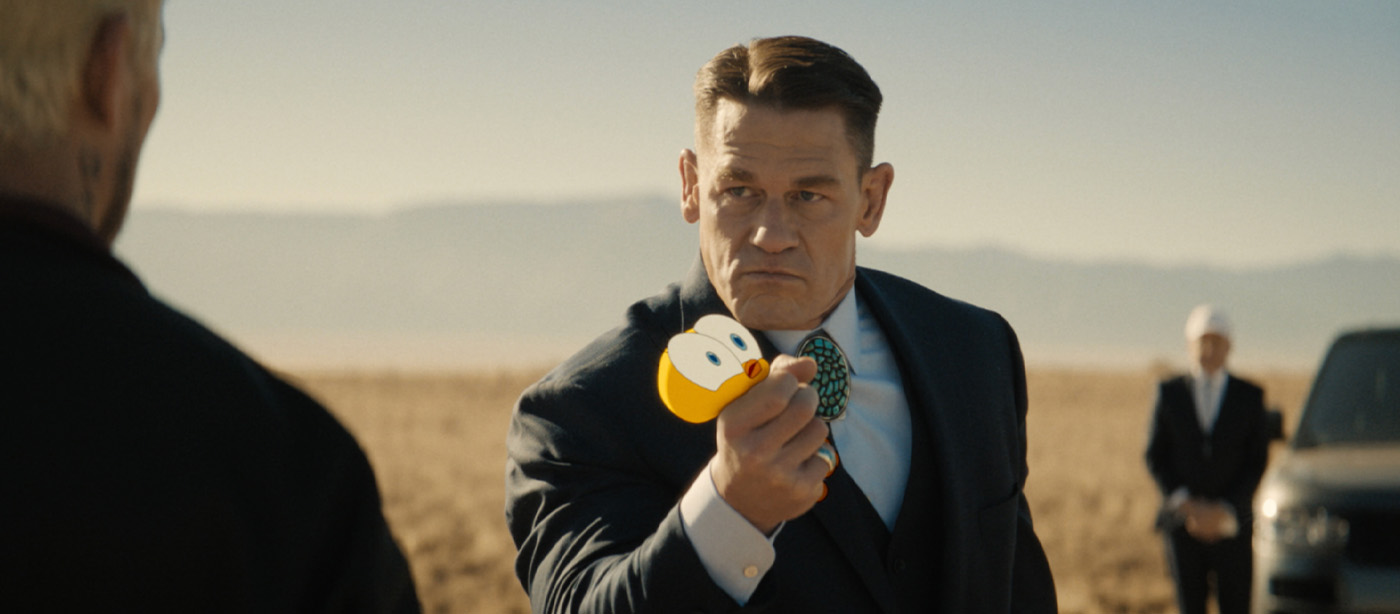
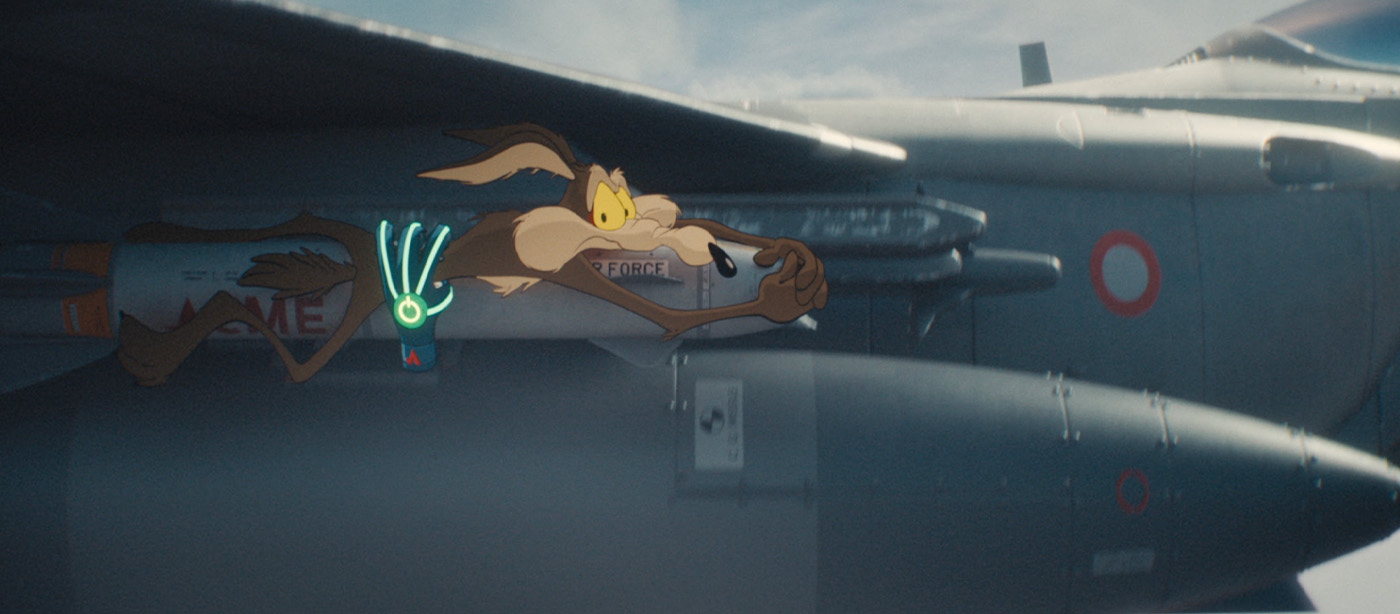
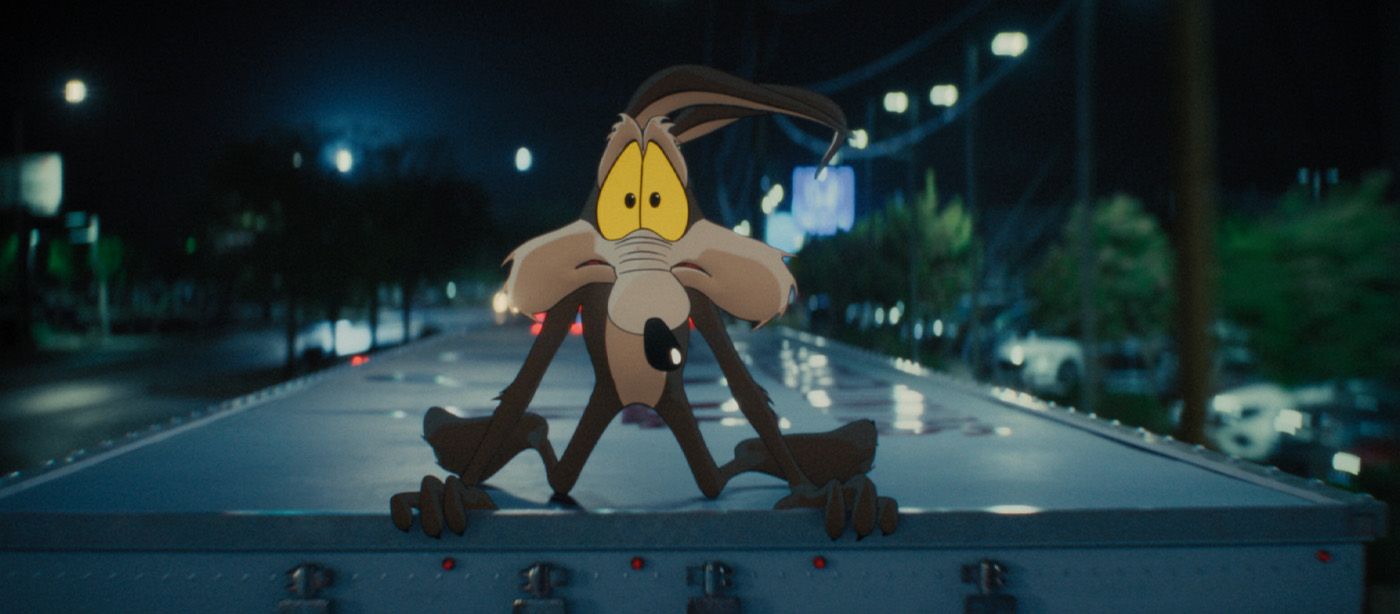
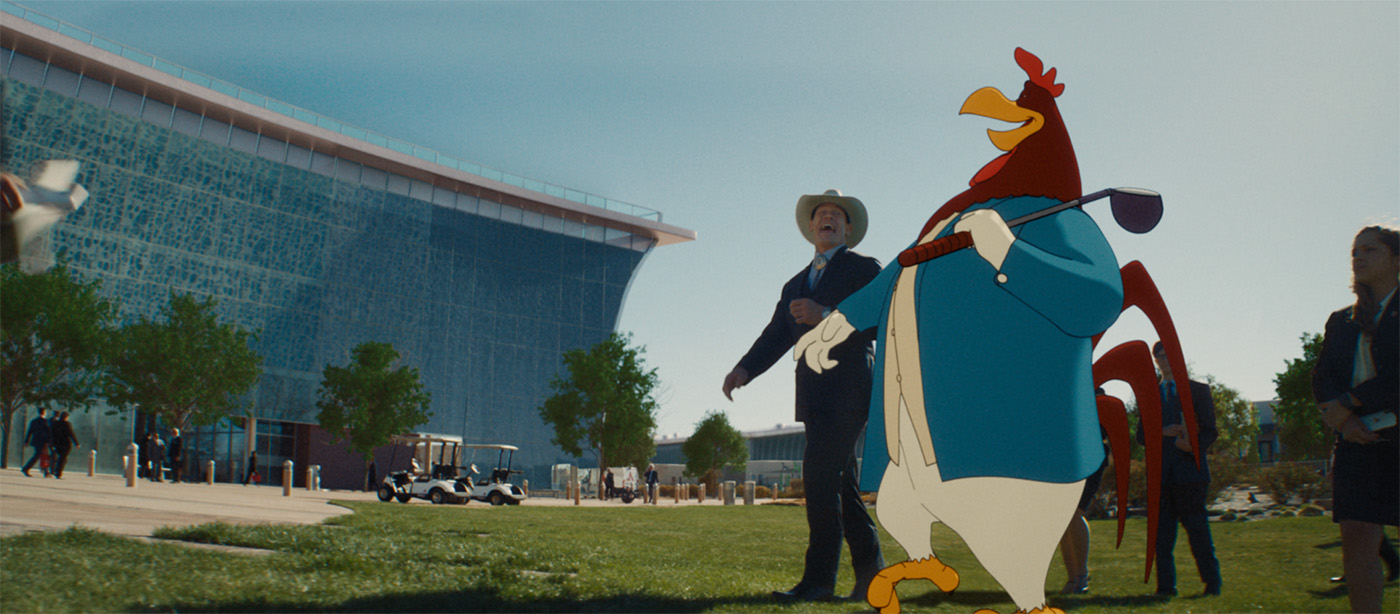
It’s hard to really distill it into just one exact process for each moment. But, I would say that when you’re doing something like this, for the larger gags, there is a real need to keep the physicality as alive as possible for everything. For example, when Will Forte and Wile E. Coyote walk out of the ACME Building to his car and then a piano smashes it and they look up at a guy who has dropped the piano… That’s all one shot and it all came together as you see in the movie, but you really need a physical effect to bridge the VFX into the animation for it to work cohesively. The closer you can get something in reality to hand off to VFX, the more successful it always is. For that shot specifically, we had to film a shot first as a layer where it’s the whole move. The door opened from an empty armature we had built that was sitting there in place and would fall and drop from his hand. Then we would bring in the car and put it in that same place so we could film a plate for reference.
I think we dropped something on the car to give it a little bit of a concussive force. So you’ve got the door doing its own thing, you’ve got the car imploding as another thing, and then that has to be buttoned together with the VFX. Then there’s the animation element of the piano going on top of that, as well as leaving room in the frame for Wile E. to be there. It’s all these different layers that you have to discuss and plan for in order to find the best way to achieve the shot.
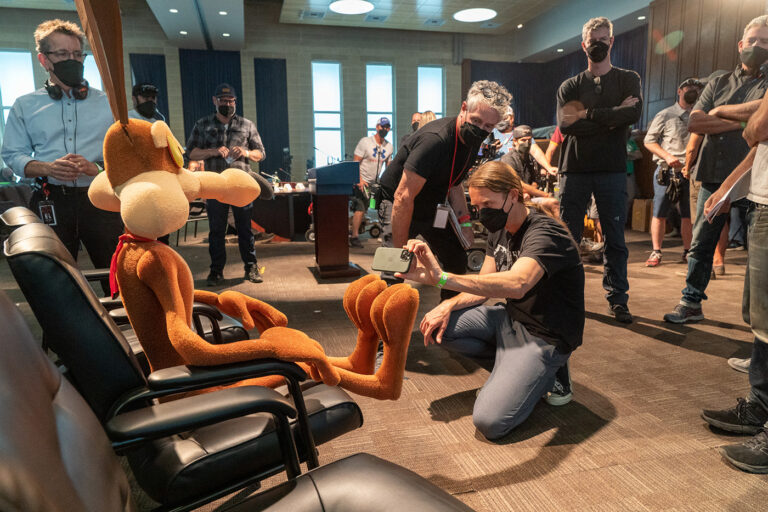
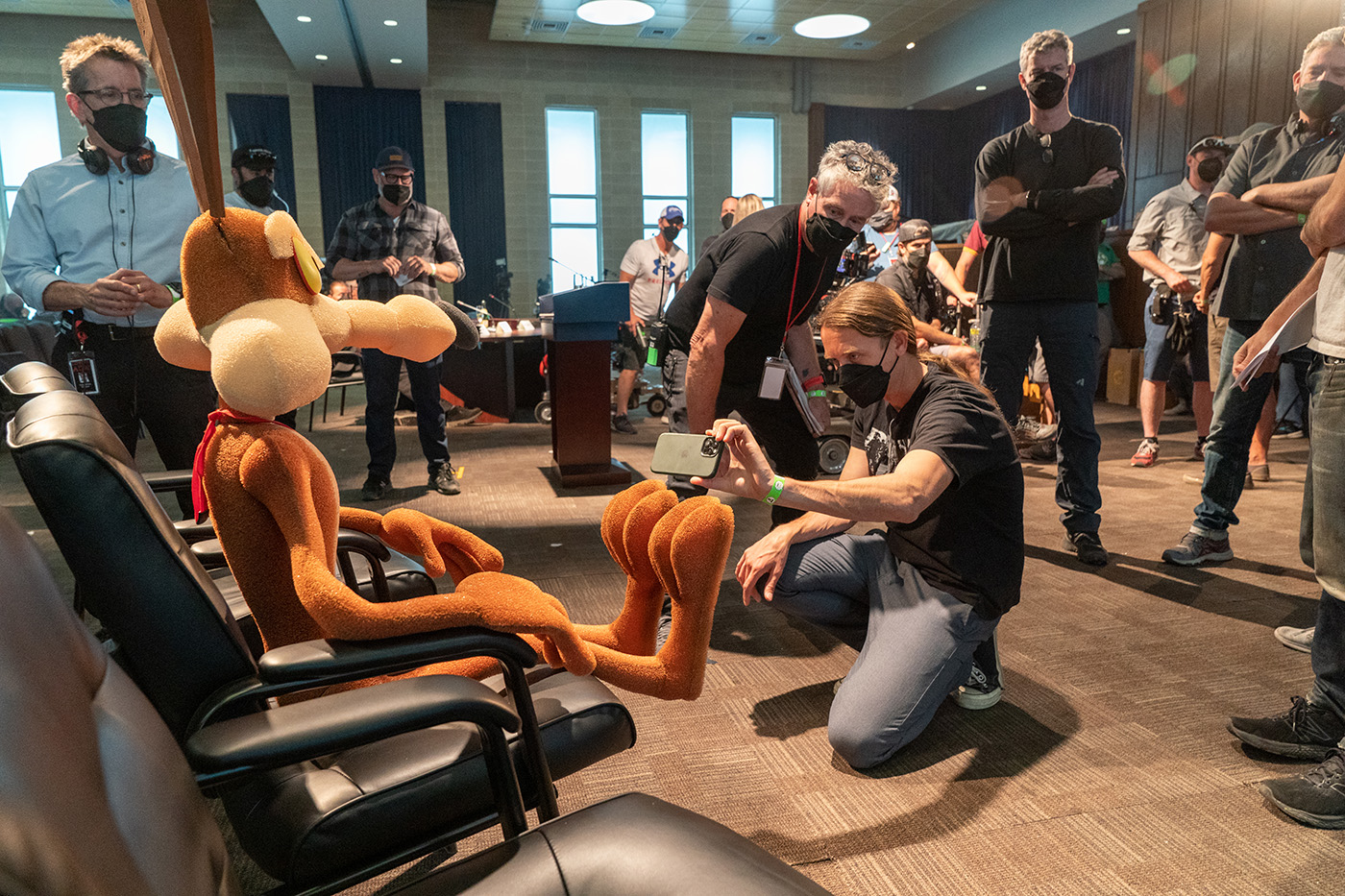
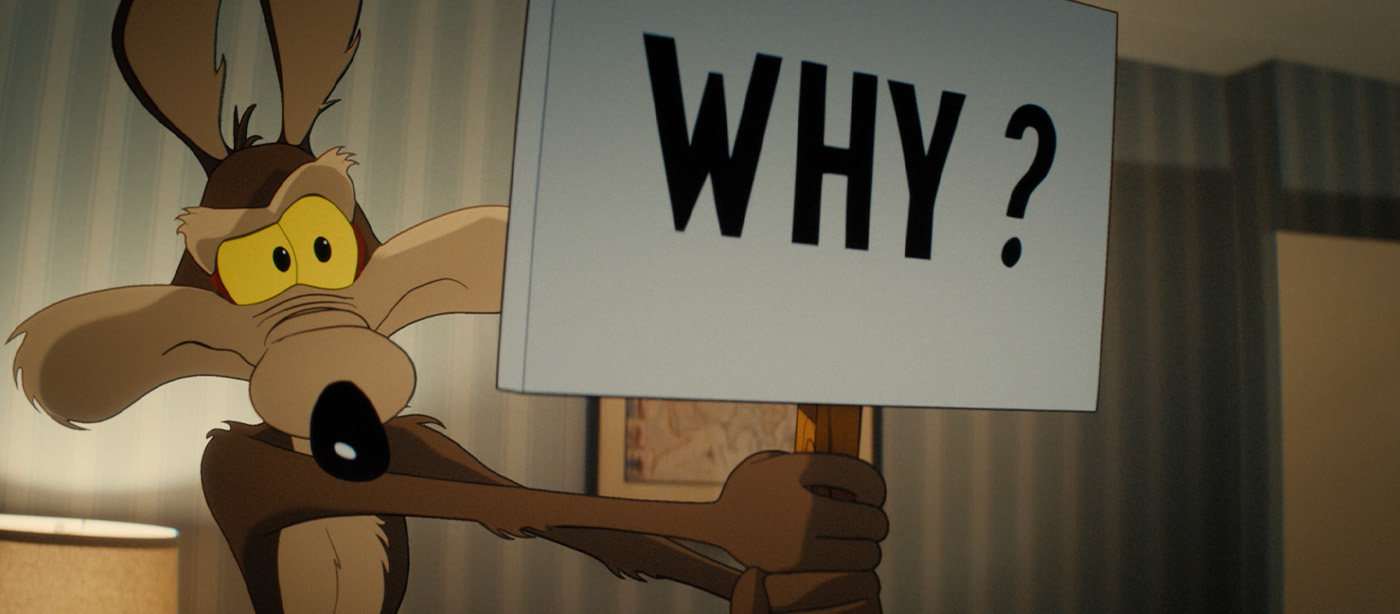
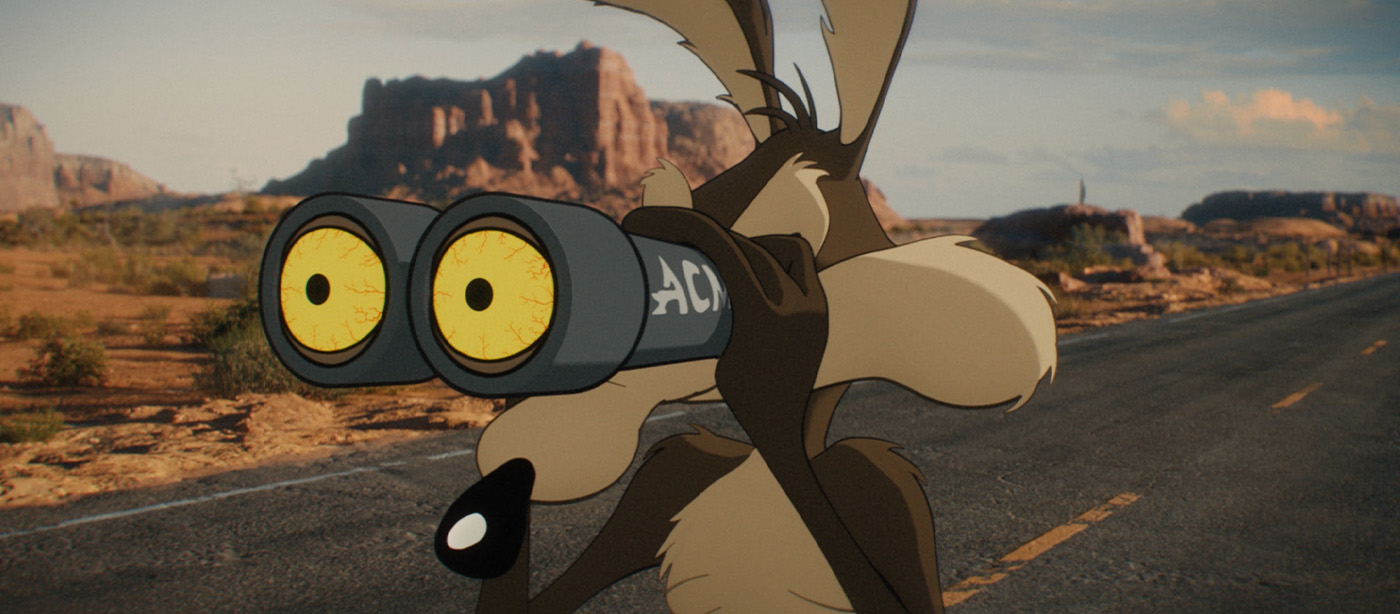
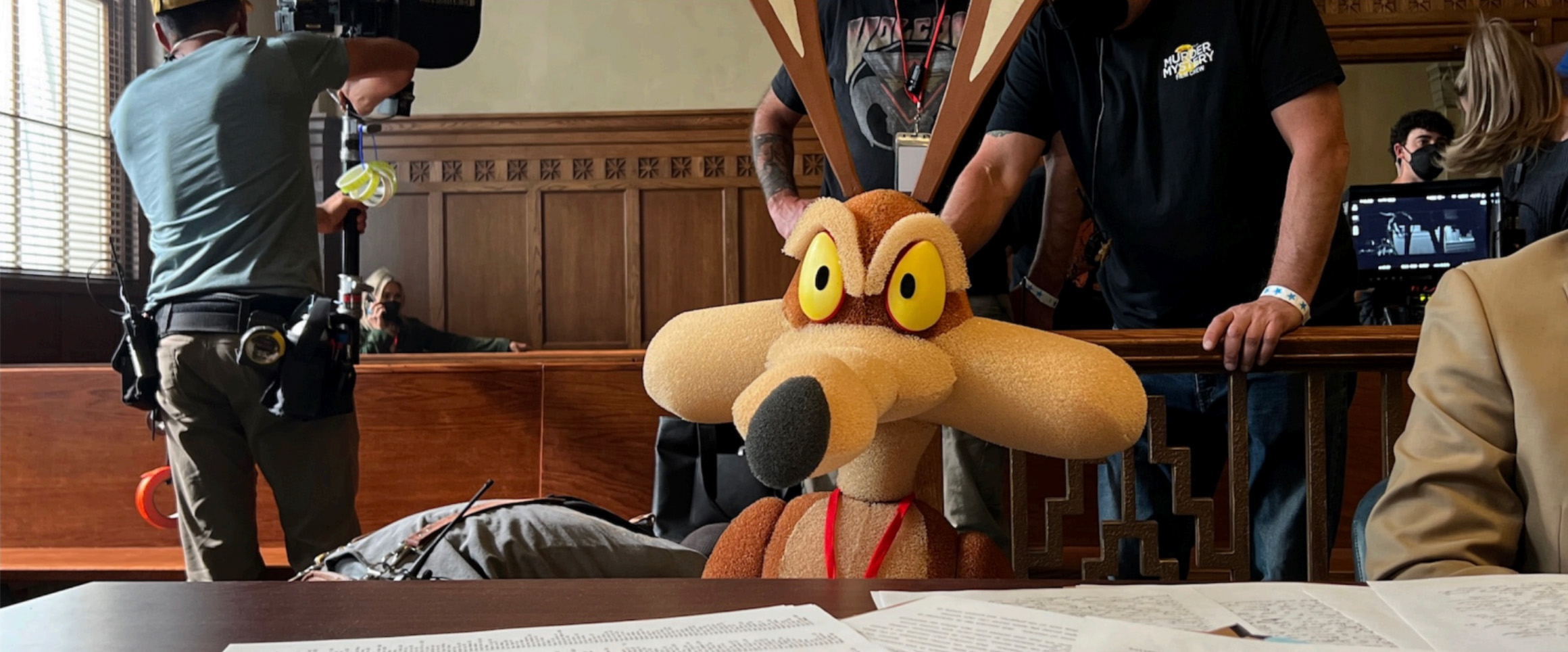
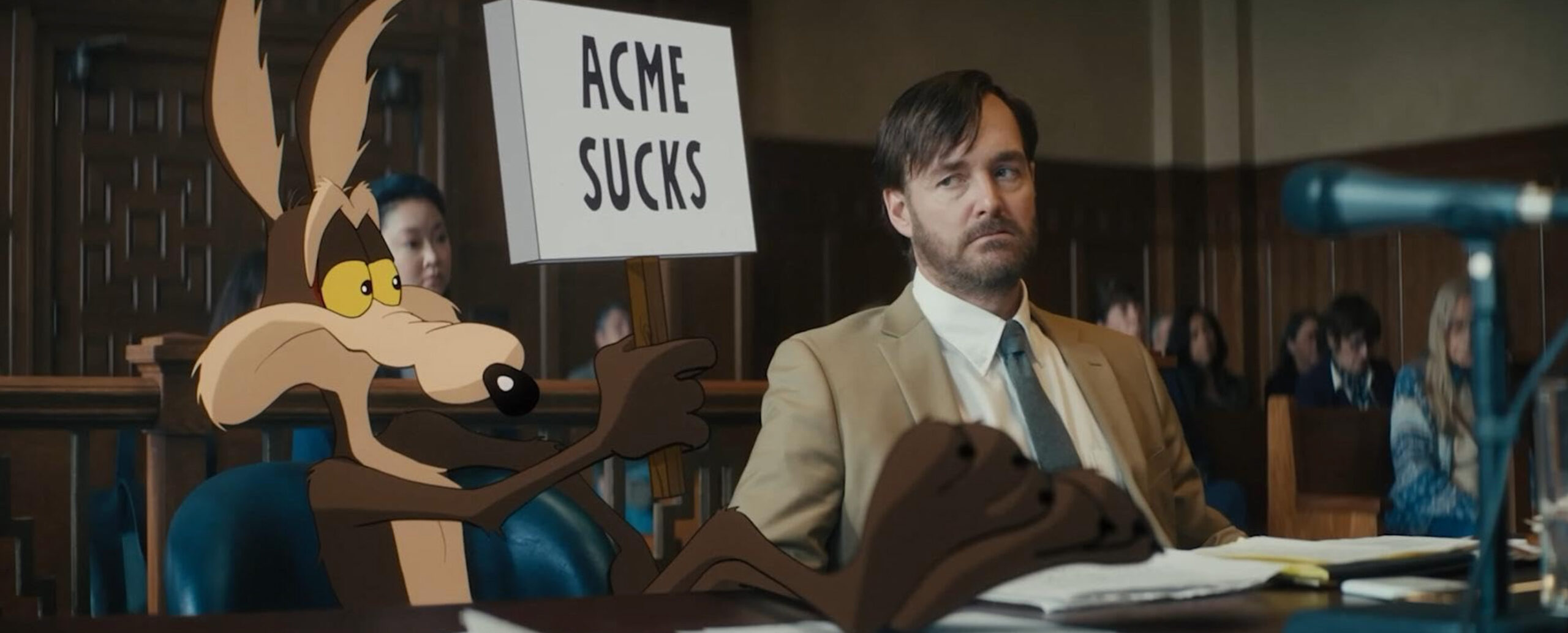
We had this wonderful puppeteer named David Barclay, who’s a legendary puppeteer. He did all these same puppet tricks on Roger Rabbit, which for us is the be-all end-all version of this movie. Like, there’s no way to make a movie as good as that movie. But Dave built a full-size Wile E. Coyote puppet that he would puppet in shot. He’d be there, just holding it in place, and he had some triggers to do eyebrow moves and stuff like that to emote with the performers. When you have a puppet in the space it really ties everything together in such a good way because Dave is also a performer and gives [Wile E.] attitude. I liked that process so much that we used it on Sonic 3 not too long after this movie.
It also makes things hard though because if you’re filming a puppet and a puppeteer in frame next to one of the actors, VFX has to be able to clean that actor out of the frame and get a clean version of the background before they can add the animation. So it ends up being more work and we end up shooting clean plates of everything just so that they have a fighting chance of making the background look a little more uniform once they remove them.
Do you build your own kind of internal lookbook or mood board to share with your team in addition to anything Dave might have already brought to the table for visual references?
It depends. Sometimes I do. I think in this case I don’t remember doing as much digging because Dave had done so much heavy lifting. It was easy to take his multi-page document and say “this is what we’re going for”. To be honest, he knew exactly what he wanted this to feel like, and I was just trying to achieve that the best that I could. But I use ShotDeck often to put together boards for scenes or ideas to pitch to a director. Sometimes I don’t like this or that, and it helps us land on an idea for where we want to go, so it’s very useful.
Sort of off of that, what ended up being the hardest scene to accomplish, either from a cinematography or story perspective?
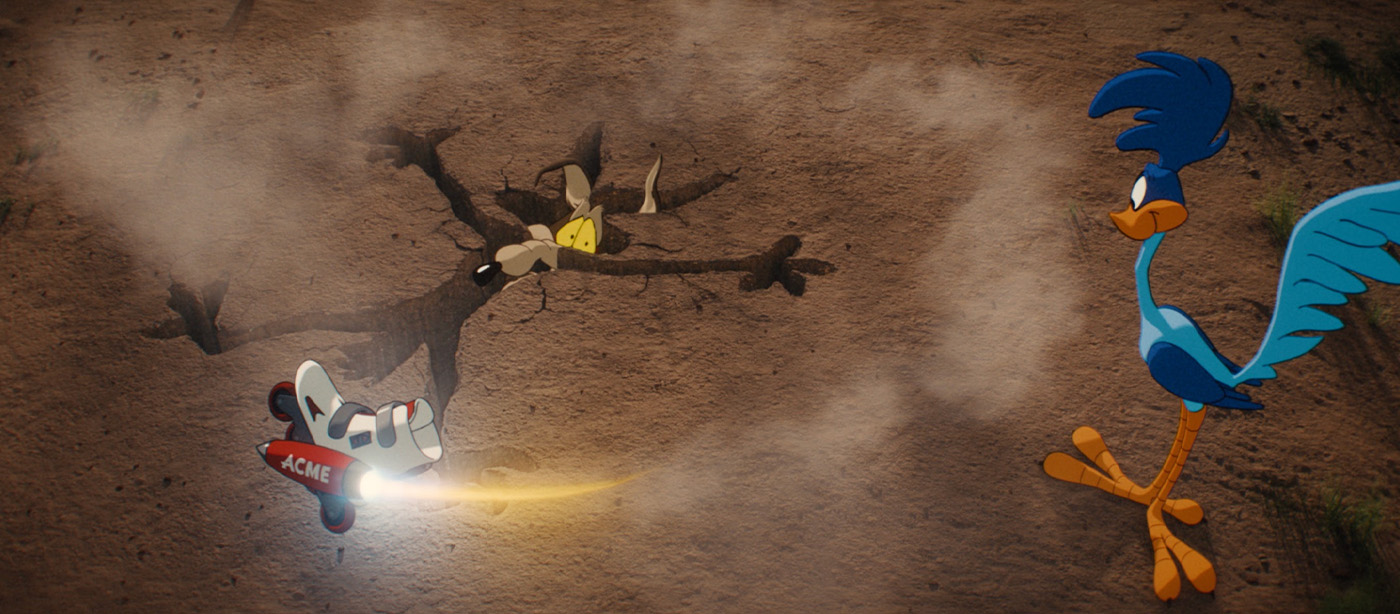
It’s an interesting question just because almost every scene had some sort of intricate gag or physical comedy element. I mean, even just getting into the Rube Goldberg traps of Wile E. Coyote and all the stuff that we had done for real…
There’s that one motel sequence, which ends with Will Forte falling into the pool. I imagine those rooms were a set that you had to blend with the actual location in the wider shots.
Exactly, and that was fun too because we did a stunt of a guy falling into a pool which was a Texas switch. Will Forte was in that pool holding his breath, and once the stunt guy fell in the water then Will popped up and that was all done live. It was pretty great. But I love this kind of sleight of hand filmmaking that we were using all across the board on this movie.
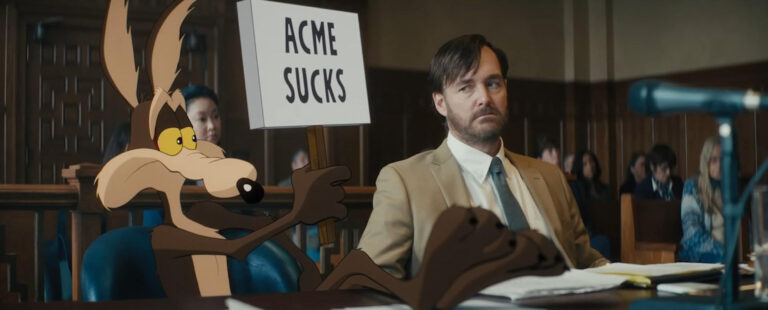
But honestly one of the hardest scenes for me, maybe because there was just so much to shoot and it would have been difficult, even if it was just humans, was the final courtroom sequence in the film, the congressional hearing. If you look at it, there’s a lot of people so it needs a lot of coverage and a lot of different blocking and moving around and there’s different POVs and perspectives that we’re trying to maintain. It was deceptively difficult.
If you watch that scene again, there’s so many different shots cut within that sequence to make it feel the way that it does, and I was even rewatching it again now remembering, man, we had three cameras running on that scene for multiple days just to try to capture the whole thing. It’s like when you shoot a wedding or anything where every person needs their shot, their piece of coverage. It’s just a lot to do and manage and it’s kind of a boring answer but it’s true.
I mean, to give you credit, you also have an elaborate Rube Goldberg-esque action sequence as part of that scene as well [laughs].
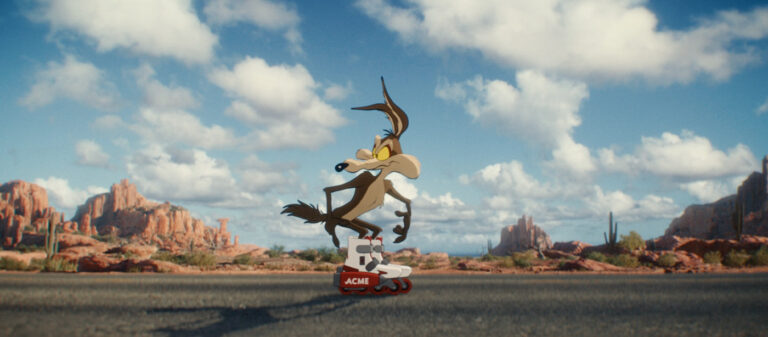
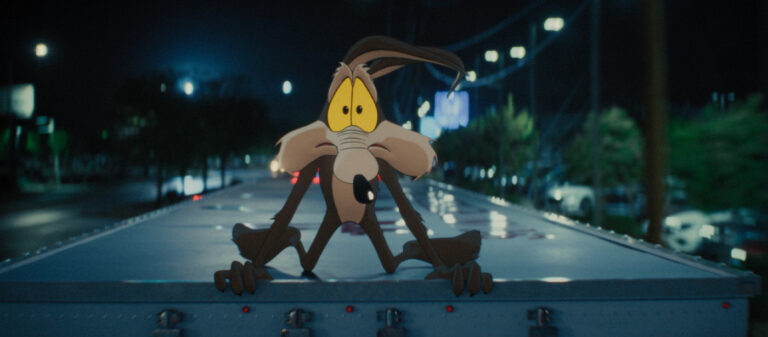
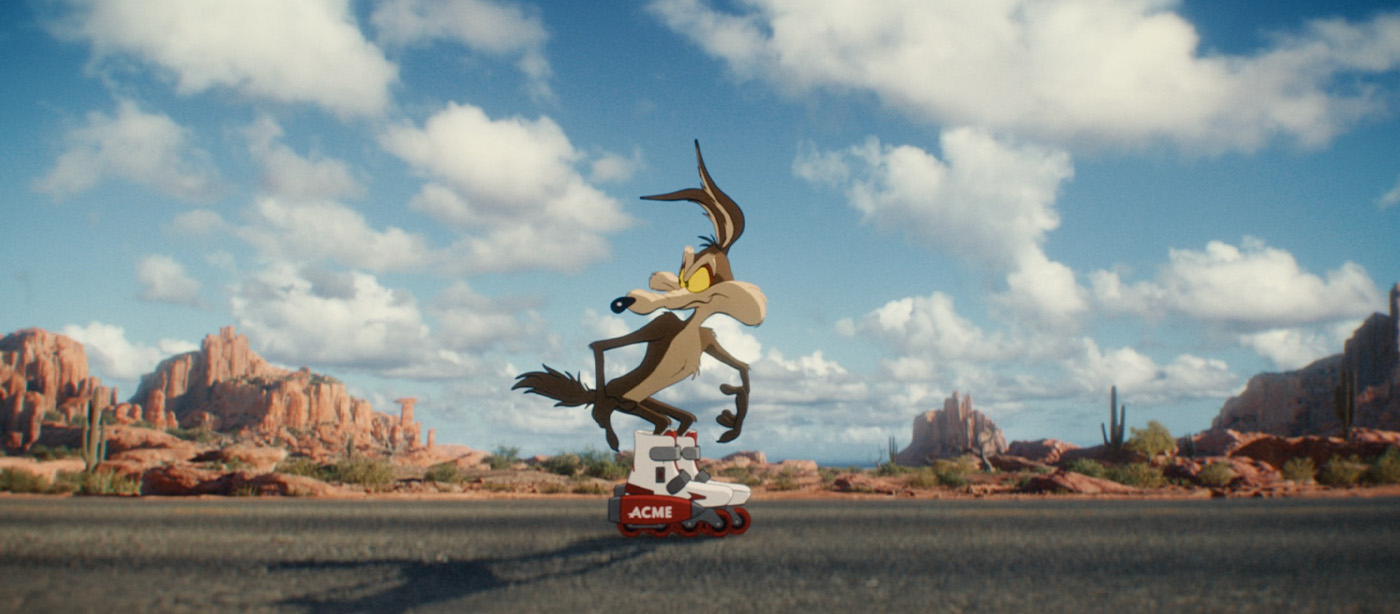
No that’s true, that scene was so big. For the Rube Goldberg sequence we were following all of the animation. We didn’t even have time to do that as the main unit. Our second-unit Director and DP, Peter Lyons Collister, ended up shooting that. We had set up the scene and the lighting but that’s another sequence where we have an animatic and a storyboard where we know what we want to do and we had to leave that in there for him to achieve as expertly as he did. He also did the heavy lifting of the truck chase action sequence where they were roller skating on the road at night.
How long was your shooting schedule?
I wanna say it was somewhere in the forties, in terms of days to shoot the movie. I could be wrong, but it was something like that. There was a lot to do, and we were very enthusiastic and ambitious, and we never had enough time or money to do any of it, which is kind of the case with most movies these days. But we would just go in and figure it out and sometimes it was very rough and tumble. I kinda love that about this movie.
This is the 10-year anniversary of Popstar: Never Stop Never Stopping. Rewatching it recently, I’d forgotten just how much visual comedy is packed into that film, from the wolves to Jorma’s bass helmet. Looking at your own work over those ten years, how do you think visual comedy has evolved?
That’s interesting. It’s harder for me to pinpoint how it’s evolving because I’m always approaching the job independently. You know? Like, I’m always just trying to support the story in the moment. So with Popstar we were trying to emulate the big budget, glossy, popstar documentaries of the time. I think Justin Bieber had a couple of them, but you know the kind of flashy, behind-the-scenes films that would cut to these crazy multicam concert setups that all feel super professional and well shot.
The joke was making it feel like this character [Connor4Real] really existed and we wanted it to have depth. I think maybe a year goes by over the course of the movie? Maybe less but it’s a whole tour that’s traveling from location to location. I remember just looking at the location list and it was massive, it was hundreds of locations because of where it dips in and out of stories.
It’s such a trick to shoot a fake documentary because part of what makes it feel real is the random nature with which [the footage] is gathered. You have this expanded scope of time spent in different places and then we have to figure out how to achieve that within thirty or forty days. We shot it all in LA, and we were very smart about location control.
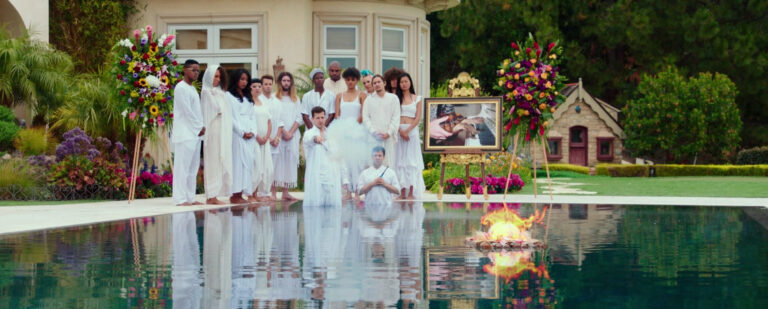
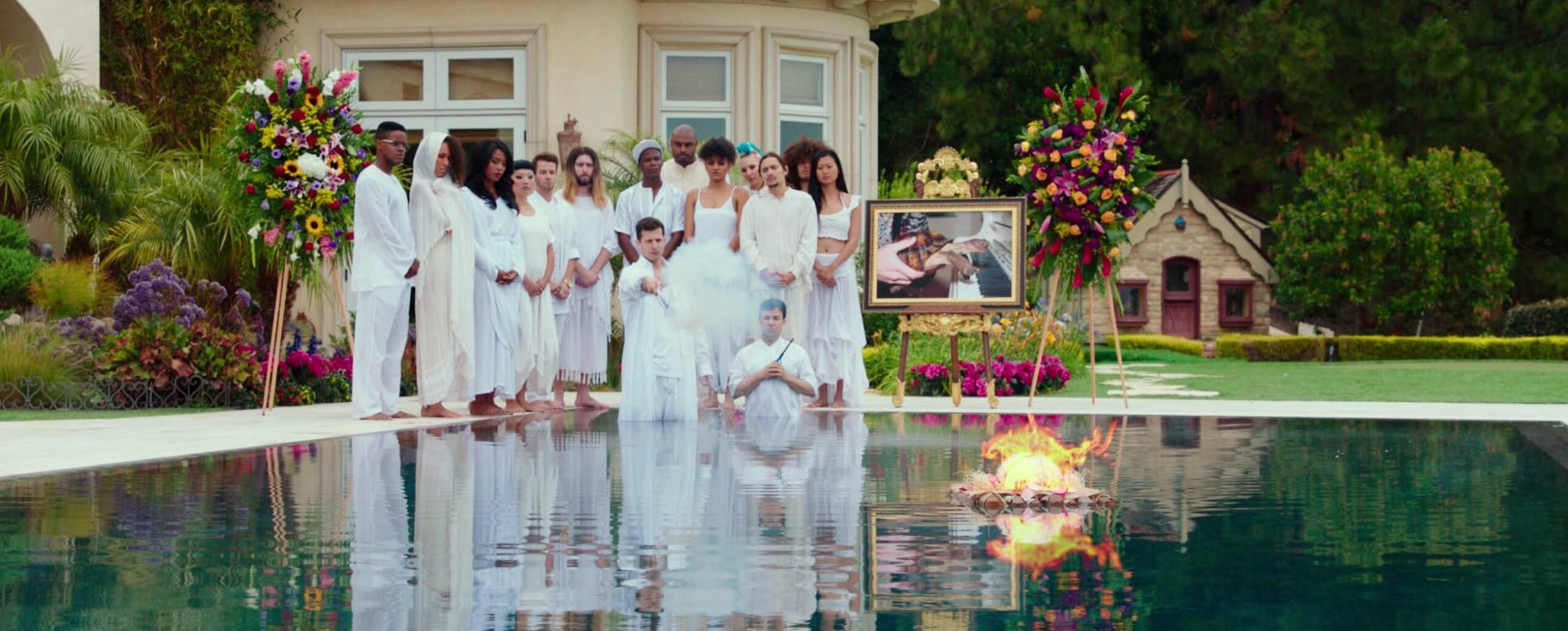
We were going to be at the Forum for two weeks, but it had to play as twenty different venues over the course of the movie so you find different ways to change things. We used different formats. We did little iPhone bits and small camera stuff. We did whatever we could to elevate the random quality of how it was put together, and honestly, their edit was difficult. I mean, that edit was seven months or something because we shot so much and, as you can imagine, there’s so much improv with that movie. The three of them together, Akiva, Andy, and Jorma, they’re ruthless when it comes to their own comedy and how they put it together.
But how have I seen things evolve? It’s tricky because I feel like in the last few years we’ve seen comedy take a big hit. It’s such a bummer to not have a comedy in theaters. Laugh with a bunch of strangers in a dark room… You don’t realize how cathartic of an experience that is until it’s gone, and then you go back and see it again and that’s part of why I’m so happy Coyote’s out right now.
I remember feeling that way when we did The Naked Gun last year. I remember being in a theater with everyone just laughing and I was like, holy shit this is fantastic. I missed this because I think I took it for granted. I just sort of assumed that that was what we did and what people liked. Slowly but surely, comedy stopped making money theatrically, and everything went into streaming. But it’s so much less fun to laugh at a movie when you’re just on your couch by yourself or with a friend. There’s something more rewarding about seeing it with an audience. I guess, for me, that’s what I feel like the evolution has become lately, and I don’t know what the answer is other than to just keep making good movies and hope that people will find that and go see them.